Software Product Development

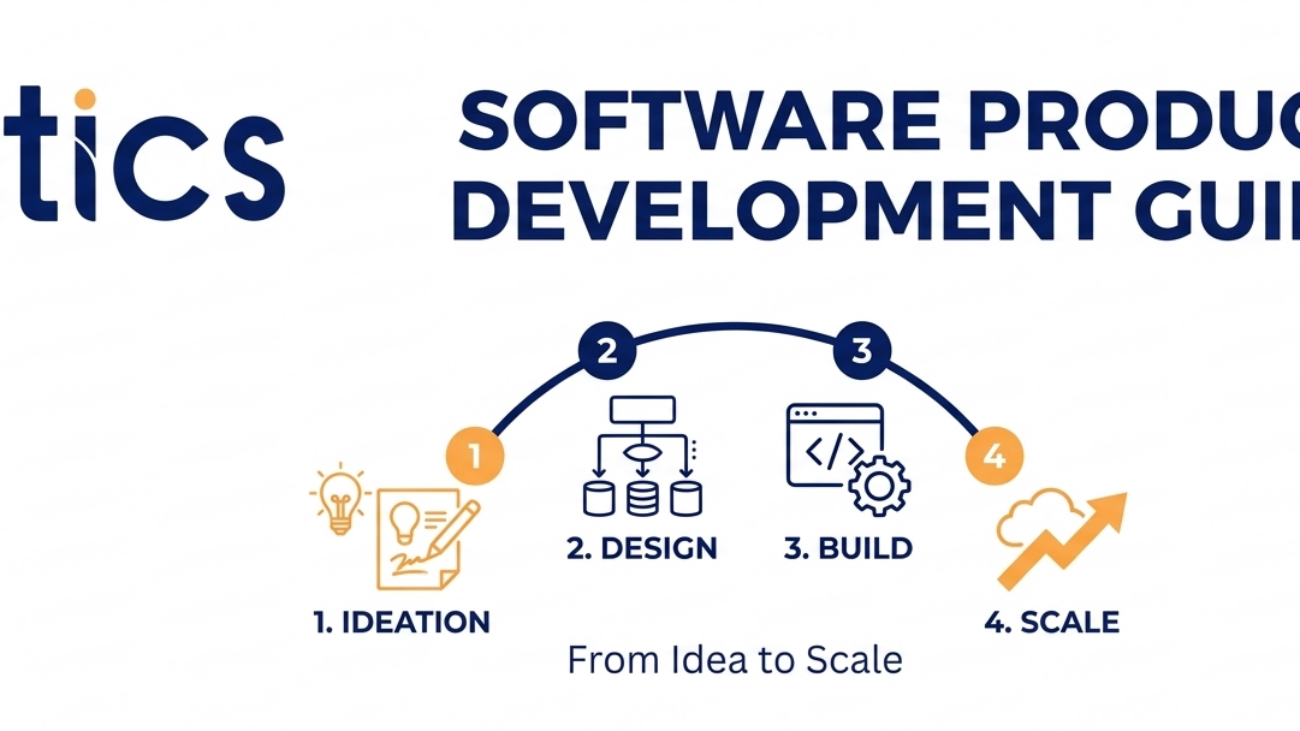
Complete Software Product Development: From Idea to Scale

The journey of transforming a concept into a market-leading application is rarely a straight line. In an era where digital disruption is the norm, Complete Software Product Development requires more than just clean code; it demands a fusion of strategic vision, engineering excellence, and a relentless focus on the end-user. Whether you are a startup founder or an enterprise leader, understanding the mechanics of this lifecycle is the difference between a product that exists and a product that thrives.

The Foundation of Ideation and Strategic Innovation

Every successful product begins with a problem that needs solving. However, ideation is not just about having a “lightbulb moment.” It is a structured process of market validation and feasibility analysis. During this phase, teams must move beyond general concepts to identify specific pain points within their target market. This involves deep-dive research into competitor weaknesses and emerging technological trends that can be leveraged to create a unique value proposition.

Innovation in this context means finding a more efficient, scalable, or user-friendly way to deliver value. It’s about asking if the proposed solution truly requires custom software development or if it can be solved with existing tools. By the end of the ideation stage, you should have a clear product vision that outlines not just what you are building, but why the market needs it right now. This strategic clarity prevents the common pitfall of building features that no one actually uses.

Translating Vision into Software Design and Architecture

Once the idea is validated, the focus shifts to the technical blueprint. This is where software design and architecture play a pivotal role. A product’s architecture is its skeleton; if it is poorly constructed, the application will struggle to support growth, security, or updates later on. Architects must decide on the tech stack, data structures, and integration points that will define the system’s performance.

At this stage, professional product development solutions emphasize modularity. By building a system composed of independent but interconnected services, you ensure that future changes in one area of the app won’t cause a total system failure. This foresight is what separates high-quality engineering from quick-fix coding. It is also the point where user experience (UX) and user interface (UI) designers collaborate with engineers to ensure the technical constraints align with a seamless, intuitive journey for the user.

The Building Phase: Agile Engineering and Execution

The building phase is the engine room of the product development lifecycle. Here, the abstract plans become functional reality through iterative development. Using Agile methodologies allows teams to break down the massive project into manageable “sprints,” typically lasting two to four weeks. This approach ensures that the stakeholders can see progress in real-time and provide feedback before the project veers off course.

Quality assurance is not a final step in this process; it is woven into every sprint. By implementing automated testing and continuous integration, developers can identify and resolve bugs as they appear, rather than dealing with a mountain of technical debt at the end. For many businesses, partnering with Datics Solutions LLC provides the high-level engineering talent necessary to navigate these complexities, ensuring that the code is not only functional but also maintainable and secure for years to come.

Scaling for Growth and Market Dominance

Building a product that works for a hundred users is a different challenge than building one for a hundred thousand. Scaling is the ultimate test of a software product. It involves optimizing the backend to handle increased loads, refining the database queries, and perhaps migrating to a more robust cloud infrastructure. This phase often reveals the underlying hurdles that were invisible during the initial launch, such as latency issues or API bottlenecks.

Scaling also requires a shift in mindset from “feature building” to “system optimization.” As your user base grows, you must collect and analyze data to understand how the product is being used in the real world. This feedback loop informs the next generation of features, ensuring that the product evolves in lockstep with user needs. Successful scaling is a continuous process of monitoring, tweaking, and expanding the infrastructure to maintain a high-performance experience regardless of traffic spikes.

Software Deployment and Maintenance: The Long-Term Commitment

The launch of a software product is actually just the beginning of its life. Software deployment and maintenance involve the ongoing tasks of keeping the application healthy, secure, and relevant. Deployment strategies like “Blue-Green” or “Canary” releases allow teams to push updates without downtime, minimizing risk for the user.

Once live, the product requires constant vigilance. Security patches, OS updates, and library upgrades are essential to protect user data and maintain compatibility with new hardware. Furthermore, as market conditions change, the product must be updated to stay competitive. A dedicated approach to software development services ensures that the product doesn’t become a legacy liability, but remains a dynamic asset that continues to drive business value and satisfy users in a shifting digital landscape.

Frequently Asked Questions

1. How do I know if my software idea is actually ready for development? 

A software idea is ready for development only after it has undergone rigorous market validation. This means you have identified a specific audience, confirmed their pain points, and analyzed the competitive landscape. If you can clearly articulate the unique value your product provides and have a basic map of the core features (an MVP), you are ready to engage with professional development teams to begin the technical blueprinting and architecture phase.

2. What is the difference between a prototype and a Minimum Viable Product (MVP)? 

A prototype is a preliminary model used to test a concept or a specific flow, often without real functionality behind it. An MVP, however, is a functional version of your product that includes only the essential features needed to satisfy early adopters and gather validated learning. While a prototype helps you visualize the “what,” an MVP allows you to test the “how” in a real-market environment with actual users and live data.

3. Why is the architecture of a software product considered so critical for scaling? 

Architecture is the foundation upon which your software sits. If you choose a rigid or outdated architecture, adding new features or handling more users becomes exponentially more expensive and technically difficult. A modern, scalable architecture—such as microservices or serverless—allows different parts of the system to grow independently. This ensures that a surge in users on one feature doesn’t crash the entire platform, providing the stability needed for global growth.

4. How long does the complete software product development cycle typically take? 

The timeline varies significantly based on the complexity of the project, but a standard MVP usually takes between three to six months to develop. The full lifecycle, from deep ideation to a scaled, mature product, is an ongoing journey that can span years. The key is to focus on iterative releases; by launching early and updating often, you can start generating value and collecting user data much sooner than if you waited for a “perfect” final version.

5. What are the ongoing costs associated with software maintenance after launch? 

Maintenance typically accounts for 15% to 25% of the initial development cost annually. These costs cover essential security updates, bug fixes, hosting fees, and third-party API subscriptions. More importantly, maintenance includes “adaptive” work—updating the software to remain compatible with new versions of iOS, Android, or web browsers. Neglecting this phase leads to “technical debt,” which eventually makes the software unusable or insecure for the end-user.

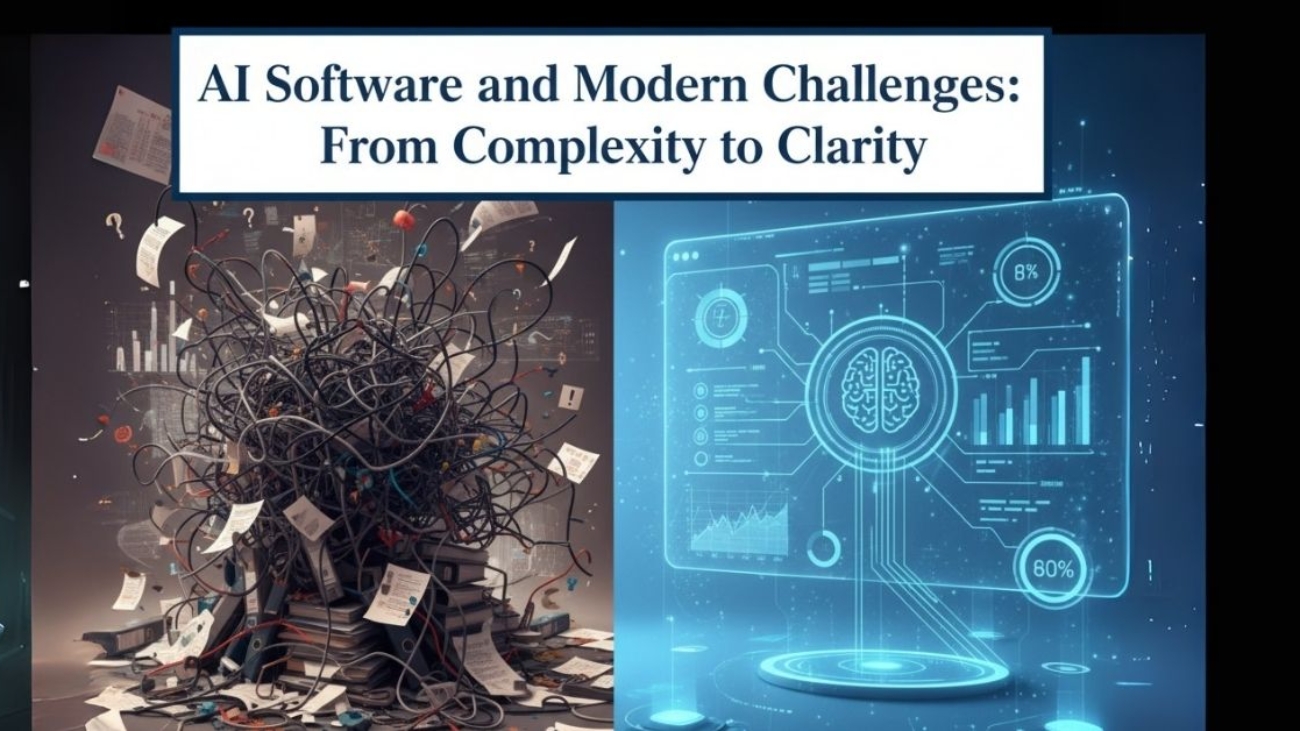
AI software addressing modern challenges, transforming complexity into clarity for enhanced understanding and decision-making.

AI Software and Modern Challenges: From Complexity to Clarity

Modern businesses face challenges that are bigger, faster, and more complex than ever before. From handling massive datasets to delivering seamless customer experiences, companies are under pressure to move quickly without sacrificing quality. This is where AI software Development  emerges as a problem-solver, helping organizations cut through complexity and find clarity in decision-making, operations, and growth strategies.

But what does this really mean for businesses today? Can AI software truly make things simpler, or is it just another layer of complexity? This article explores the role of AI in solving modern challenges and how businesses can harness it to create clarity and impact.

Understanding the Complexity of Modern Business Challenges

Today’s organizations are navigating:

  • Data Overload: Millions of interactions, transactions, and records that need real-time analysis.
  • Market Uncertainty: Rapid shifts in customer behavior and unpredictable global trends.
  • Operational Inefficiency: Manual processes that slow down innovation and scalability.
  • Customer Expectations: Consumers demand faster, smarter, and more personalized services.

Traditional approaches are struggling to keep up. That’s why companies are now turning to AI software development to not only manage but also simplify these challenges.

How AI Software Brings Clarity

AI-driven tools transform complex problems into actionable insights. Here’s how:

1. Data Simplification

AI organizes raw, unstructured data into clear patterns and predictions, helping leaders make smarter decisions without drowning in spreadsheets.

2. Automation of Repetitive Tasks

Instead of teams spending hours on routine tasks, AI automates them—freeing human talent for creative and strategic work.

3. Predictive Analytics for Strategy

By learning from past data, AI forecasts trends, reduces uncertainty, and guides companies toward better growth opportunities.

4. Enhanced Customer Experience

From chatbots to personalization engines, AI enables businesses to engage customers with speed and precision.

5. Scalability Made Simple

AI allows businesses to grow operations without proportionally increasing resources, reducing both costs and complexity.

AI Software vs. Traditional Problem-Solving Approaches

Traditional methods often rely on human analysis, lengthy development cycles, and manual troubleshooting. While reliable in structured environments, they are too slow for today’s fast-paced market.

By contrast, AI software uses real-time analysis, machine learning, and intelligent automation to anticipate problems before they escalate. For example, predictive AI can alert a logistics company about potential supply chain delays before they even occur.

This ability to move from reactive to proactive problem-solving is what makes AI a game-changer.

Real-World Applications of AI Software in Overcoming Challenges

1. Healthcare

AI algorithms detect patterns in medical images, helping doctors diagnose diseases faster and more accurately.

2. Finance

AI-powered fraud detection systems identify suspicious activities in real-time, reducing financial risks.

3. Retail

AI software personalizes shopping experiences, increasing sales while reducing decision fatigue for customers.

4. Manufacturing

Predictive maintenance powered by AI ensures machines run smoothly, minimizing downtime and costs.

5. Startups and SaaS

AI helps startups validate product-market fit quickly by analyzing data-driven customer insights—turning risky assumptions into informed strategies.

How AI Software Helps Businesses Move from Complexity to Clarity

One of the greatest advantages of AI is its ability to turn messy, complex challenges into structured solutions. A prime example is the way AI accelerates product development. Instead of relying entirely on traditional methods, companies like Datics.ai integrate AI-driven development processes that cut timelines, reduce manual effort, and enhance accuracy.

For businesses unsure where to begin, adopting AI may feel overwhelming. But as highlighted in this article on innovation transforming challenges into opportunities, the key is to view AI not as a disruption but as a bridge—transforming difficulties into scalable opportunities.

Overcoming Resistance to AI Adoption

Despite its potential, businesses sometimes hesitate to adopt AI software. Common concerns include:

  • Fear of high costs
  • Lack of technical expertise
  • Uncertainty about data security
  • Skepticism around automation replacing human jobs

However, most of these challenges can be addressed with the right strategy. For instance, starting with small AI-driven projects, partnering with AI software development experts, and ensuring transparency in implementation can build trust and clarity across the organization.

Future Outlook: AI Software as a Clarity Engine

As industries grow more complex, AI software will not just be an option—it will be a necessity. The companies that succeed in the future will be those that learn to use AI as a tool to cut through noise, make faster decisions, and keep customers at the center of innovation.

AI isn’t about replacing humans. It’s about empowering businesses to solve problems in ways that were previously impossible, moving from uncertainty to confidence, from confusion to clarity.

FAQs

1. What is the role of AI software in problem-solving?

AI software simplifies data, automates processes, and predicts outcomes, making it easier for businesses to solve problems faster.

2. Can AI replace traditional problem-solving methods?

Not entirely. AI complements traditional methods by enhancing speed and efficiency while humans provide oversight and creativity.

3. Is AI software development expensive?

Initial investments may be high, but long-term savings from automation and scalability often outweigh costs.

4. Which industries benefit most from AI software?

Healthcare, finance, retail, manufacturing, and SaaS companies see significant gains from AI adoption.

5. How does AI bring clarity to business operations?

By organizing complex data, automating routine tasks, and providing predictive insights that guide decision-making.

What Are the Benefits of AI Language Translation in Schools?

Empowering Every Student Through AI Language Translation

In today’s increasingly multicultural and multilingual educational landscape, schools face the challenge of ensuring every student can access lessons and resources in a language they understand. AI language translation technology is rapidly becoming an essential tool for educational institutions, bridging language barriers and creating more inclusive, efficient, and engaging learning environments.

At Datics.ai, located at 1353, 701 Tillery Street Unit 12, Austin, TX, Travis, US 78702, we specialize in developing advanced AI solutions tailored to the needs of modern schools. By implementing AI language translation tools, schools can provide equitable access to education for every student while streamlining administrative processes.

1. Breaking Down Language Barriers

One of the most immediate and visible benefits of AI language translation in schools is its ability to break down language barriers. In classrooms with students from diverse linguistic backgrounds, teachers often struggle to ensure that every student fully understands lesson content. AI translation tools allow real-time translation of lesson materials, assignments, and instructions into multiple languages.

For example, a Spanish-speaking student in an English-dominant classroom can receive translated study materials instantly. This ensures that no student falls behind due to language limitations. By integrating AI translation into everyday learning, schools can create an inclusive environment where all students can thrive.

2. Enhancing Teacher Efficiency

Teachers often spend hours translating materials or explaining lessons individually to students who struggle with the primary language of instruction. AI language translation can significantly reduce this workload.

With AI translation software, educators can:

  • Automatically translate lesson plans, worksheets, and presentations.
  • Communicate effectively with non-English-speaking students or parents.
  • Focus more on interactive teaching rather than repetitive translation tasks.

By freeing up valuable time, teachers can dedicate more energy to improving student engagement, designing creative lesson plans, and providing personalized support.

3. Supporting Multilingual Parent Communication

Effective communication between schools and parents is crucial for student success. AI language translation tools enable school administrators and teachers to communicate effortlessly with parents in their native languages.

Important notices, progress reports, event invitations, and newsletters can all be automatically translated. This improves parent engagement, strengthens the home-school connection, and ensures that families remain informed and involved in their children’s education.

4. Improving Academic Performance and Learning Outcomes

AI language translation can directly impact student performance. When students can access learning materials in a language they understand, they are more likely to grasp complex concepts, complete assignments accurately, and participate in class discussions.

Schools that adopt AI translation tools often see improvements in:

  • Student comprehension and retention.
  • Participation in collaborative projects.
  • Overall academic performance.

By enabling all students to fully engage with educational content, AI translation tools contribute to a higher standard of education for the entire school community.

5. Scalability for Growing School Districts

School districts often serve students from a wide variety of linguistic backgrounds. As districts expand, maintaining consistent quality education for multilingual students can become challenging. AI language translation solutions are scalable, allowing schools to:

  • Add support for additional languages quickly.
  • Provide uniform educational materials across multiple campuses.
  • Maintain consistent teaching quality regardless of student demographics.

This scalability ensures that as the student population becomes more diverse, schools can continue delivering high-quality education for everyone.

6. Promoting Digital Literacy and Technological Integration

Incorporating AI language translation tools encourages students and educators to adopt modern educational technology. Students become comfortable using AI-powered platforms, enhancing their digital literacy skills, which are essential in today’s technology-driven world.

Teachers also gain expertise in managing AI tools, preparing them to integrate additional AI-driven solutions in areas such as grading, attendance, and administrative management. This fosters a technologically advanced learning environment that benefits everyone in the school ecosystem.

7. Cost-Effective Solution for Schools

Hiring additional bilingual staff or investing in manual translation services can be costly and time-consuming. AI language translation provides a cost-effective alternative, offering real-time translation at scale with minimal ongoing expense.

By reducing reliance on external translation services and streamlining teacher workflow, schools can save both time and resources while maintaining high educational standards.

Why Choose Datics.ai for AI Language Translation in Schools?

At Datics.ai, we understand the unique challenges faced by modern educational institutions. Our AI language translation solutions are designed to:

  • Support multilingual learning environments.
  • Enhance communication between teachers, students, and parents.
  • Improve overall efficiency and learning outcomes.

We provide personalized consultations to assess your school’s needs, implement AI solutions, and provide ongoing support. Our expertise ensures that schools in North America and beyond can confidently adopt AI to create smarter, more inclusive learning environments.

📍 Address: 1353, 701 Tillery Street Unit 12, Austin, TX, Travis, US 78702
📞 Call: 1 (945) 297-6257
✉️ Email: business@datics.ai to schedule a consultation and see how AI language translation can transform your school.

FAQs

1. Can AI language translation work in real-time during classroom lessons?
Yes. Modern AI translation tools can provide instant translations of spoken or written content, enabling seamless communication in multilingual classrooms.

2. Are AI language translation tools suitable for all grade levels?
Absolutely. AI translation software can be customized to suit the reading and comprehension levels of students across all grades, from elementary to high school and even higher education.

3. How secure is AI translation software for school data?
Datics.ai ensures that all AI solutions are  maintaining strict security standards for sensitive student and school data.


1__I8WA0rYCjWpoj7UAuht1Q

How Can Education Software Help Teachers Automate Grading and Feedback?

In today’s fast-paced digital world, teachers face increasing pressure to manage large classes, personalize learning, and provide timely feedback, all while balancing lesson planning and administrative tasks. Manual grading consumes hours that could otherwise be spent on engaging with students or improving teaching strategies. This is where education software powered by AI custom software development becomes a game-changer.

At Datics AI, based in Austin, TX, we specialize in building customized education software development that helps teachers save time, reduce workload, and improve learning outcomes. If you’re an educational institution or an edtech entrepreneur, the right software can completely transform how your classrooms operate.

The Challenge Teachers Face with Manual Grading

Grading assignments, quizzes, and tests manually is time-consuming. For teachers managing large groups, this process can take several hours every week. Manual grading also comes with challenges such as

  • Human error: Mistakes are natural when reviewing hundreds of papers.
  • Delayed feedback: Students may wait days or weeks for results, reducing the impact of learning.
  • Limited personalization: Teachers often struggle to give detailed, individualized feedback.

This is exactly why education software has become essential in modern classrooms.

How Education Software Automates Grading

Education software, powered by AI custom software development, leverages machine learning and automation to streamline grading and provide instant, accurate results.

Here’s how it works:

  1. Automated Test Evaluation
    Software can automatically grade multiple-choice, true/false, and even essay-type answers using AI-driven natural language processing.
  2. Instant Feedback for Students
    Instead of waiting, students receive feedback immediately, helping them identify mistakes and improve faster.
  3. Customizable Rubrics
    Teachers can set grading criteria once, and the system applies it consistently across all assignments.
  4. Data Analytics for Performance Tracking
    Teachers get insights into class-wide performance, spotting learning gaps and tailoring lessons accordingly.

Why Choose AI Custom Software Development for Education

Not all education software is the same. Off-the-shelf solutions may lack flexibility, while AI custom software development ensures your platform is tailored to your exact needs.

Benefits include:

  • Scalability: The system grows as your school or institution expands.
  • Integration: Works with existing LMS platforms like Moodle, Canvas, or Blackboard.
  • Personalization: Customized grading models for different teaching styles and subjects.
  • Future-Proofing: AI continuously learns and adapts for better accuracy.

At Datics AI, we don’t just build software, we design solutions that improve teaching efficiency while enhancing the student experience.

Real Impact: How Automated Grading Helps Teachers

  • Saves Time: Teachers can reclaim up to 10+ hours per week.
  • Enhances Accuracy: Reduces bias and grading inconsistencies.
  • Boosts Student Engagement: Faster feedback encourages continuous improvement.
  • Supports Innovation: Teachers can focus more on interactive and creative teaching methods.

By automating grading, education software empowers teachers to do what they do best: teaching and inspiring students.

Why Educational Institutions in Texas Trust Datics AI

Located in Austin, TX, Datics AI specializes in AI-driven custom software solutions for education and other industries. With proven expertise in ideation, innovation, maintaining, and scaling, our team ensures your software not only works today but also evolves with your future needs.

📍 Address: 1353, 701 Tillery Street Unit 12, Austin, TX, Travis, US 78702
📞 Call: +1 (945) 297-6257
📧 Email: business@datics.ai


Whether you’re a school district, college, or edtech startup, we’re here to help you transform your operations with custom education software.

Take Action: Transform Your Classrooms Today

The future of education is smart, automated, and personalized. Don’t let your teachers struggle with outdated manual processes. With Datics AI’s AI custom software development, you can unlock efficiency, improve student outcomes, and scale your education system for long-term success.

Q1. Can education software really grade essays accurately?
Yes. With AI-powered natural language processing, software can evaluate grammar, coherence, and content relevance. Teachers can still review results, but the system handles initial grading to save time.

Q2. How secure is student data in custom education software?
At Datics AI, data security is a top priority. Our solutions comply with FERPA and other education data privacy regulations, ensuring student records remain safe.

Q3. Is custom education software better than off-the-shelf tools?
Absolutely. While off-the-shelf solutions offer limited features, custom-built software adapts to your unique grading policies, integrates with your existing systems, and scales with your institution.

images (4)

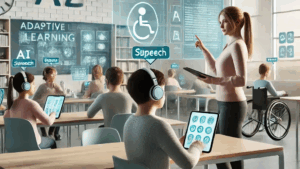
AI in Education: Smart Solutions for the Modern Classroom

Empowering Students and Teachers with AI-Driven Education Solutions

In today’s rapidly evolving digital world, the way we teach and learn is being transformed by artificial intelligence (AI). From smart classrooms to personalized learning platforms, AI-powered education solutions are helping students, teachers, and institutions achieve more than ever before.

At Datics (Austin, TX), we specialize in AI education software development tailored to the education sector. By leveraging AI technology, we design scalable, intelligent solutions that improve learning outcomes, optimize administrative processes, and make education more accessible to all.

Get in Touch with Datics

If you’re ready to bring innovation to your educational services, we’re here to help.

 Address: 1353, 701 Tillery Street Unit 12, Austin, TX, Travis, US 78702
Call: +1 (945) 297-6257
Email: business@datics.ai

Why AI Matters in Education

Education is no longer limited to textbooks and traditional lectures. Modern students are digital natives who expect engaging, personalized, and efficient learning experiences. AI helps bridge this gap by:

  • Personalizing learning: Creating tailored learning journeys based on student strengths, weaknesses, and pace.
  • Reducing administrative workload: Automating grading, scheduling, and record-keeping so teachers can focus on teaching.
  • Improving accessibility: Tools like real-time translation and voice-to-text transcription make learning inclusive.
  • Data-driven insights: Tracking performance and providing actionable analytics to improve teaching strategies.

Key AI-Powered Education Solutions

Here are some ways AI is transforming education:

  1. Intelligent Learning Platforms
    Adaptive platforms recommend lessons, give instant feedback, and track progress in real time.
  2. Virtual Classrooms with AI Integration
    Smart attendance, automated note-taking, and adaptive teaching improve student engagement in remote learning.
  3. AI-Based Assessment Tools
    Advanced analytics move beyond multiple-choice testing to give a deeper understanding of student performance.
  4. Predictive Analytics for Student Success
    Helps identify students needing extra support, allowing early interventions and improving retention rates.
  5. Administrative Automation
    AI streamlines admissions, grading, scheduling, and parent communication, saving time and reducing errors.

Why Partner with the Right AI Experts?

Choosing the right technology partner is critical. Institutions benefit from:

  • Deep expertise in AI custom software development tailored to education.
  • Proven record of delivering scalable, reliable, and innovative solutions.
  • A people-first approach that ensures measurable results and enhances the learning experience.
  • Ongoing consultation and support for smooth AI adoption.

The Future of AI in Education

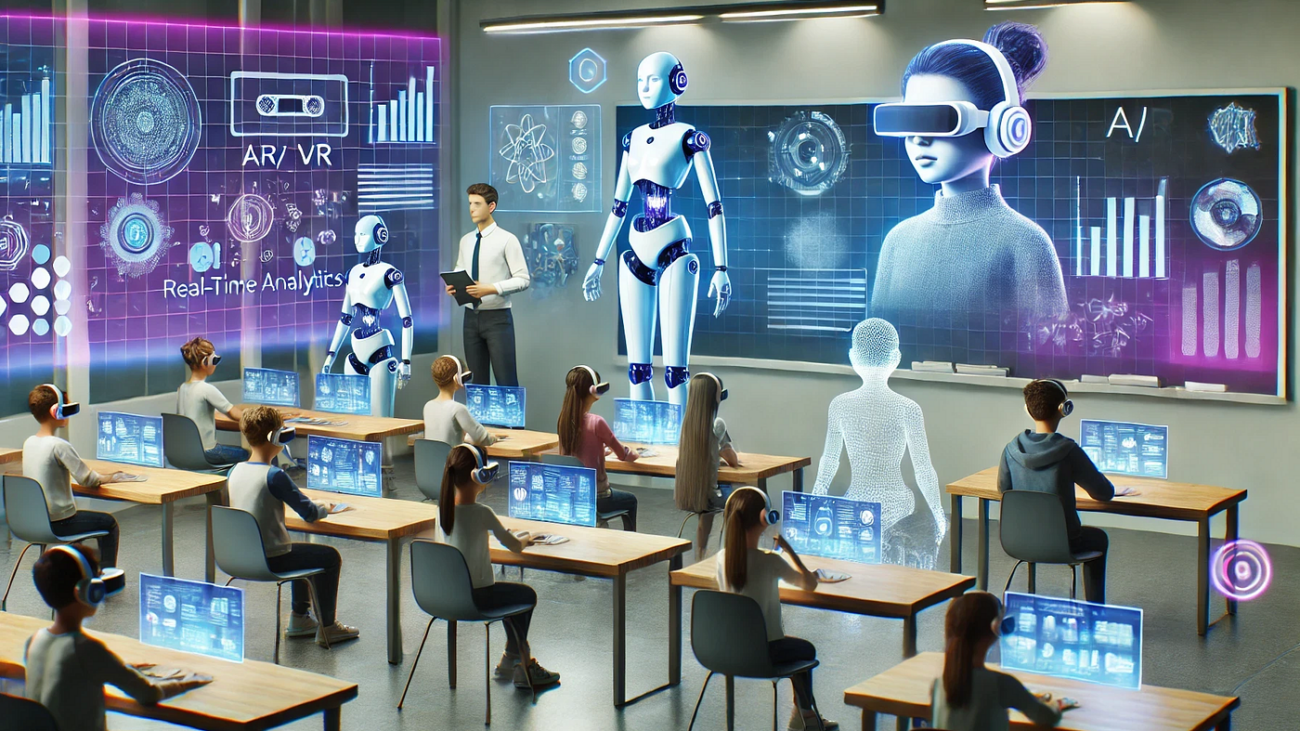
AI in education is not just a trend; it’s the future. From immersive AR-driven learning to advanced predictive lesson planning, opportunities for innovation are endless. Institutions that adopt AI today will be better prepared for tomorrow’s challenges.

Transform Education with AI: Custom Software Solutions by Datics

The education industry is undergoing a revolution, and AI is at the heart of it. Schools, universities, and training centers that embrace AI will not only stay ahead of the curve but also deliver unmatched learning experiences.

If you’re ready to transform your educational services with cutting-edge AI, Datics is here to help. With expertise in AI custom software development, we deliver solutions that empower students, teachers, and institutions to achieve new heights.

Address: 1353, 701 Tillery Street Unit 12, Austin, TX, Travis, US 78702
Call: +1 (945) 297-6257
Email: business@datics.ai

FAQs

Q1: What is AI custom software development in education?
It’s the creation of tailored AI-driven solutions that meet the specific needs of schools, universities, and training providers.

Q2: How does AI improve student learning outcomes?
By personalizing learning paths, tracking progress in real time, and offering actionable data insights to support students effectively.

Q3: Why choose Datics for AI-powered education solutions?
Because of their expertise in AI, people-first approach, and commitment to delivering scalable, innovative, and long-term results.


1729493115827

AI Education Software & Chatbots Transforming Learning

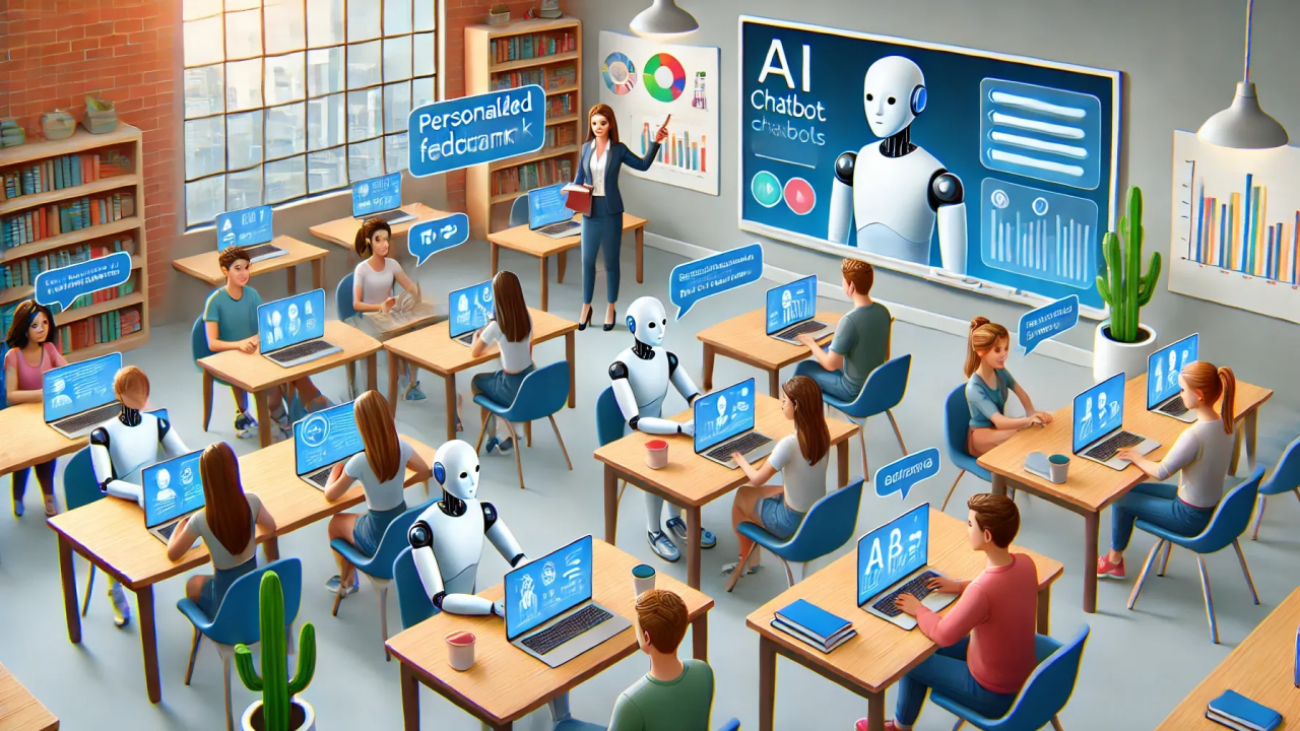
The way students learn and interact with schools is evolving rapidly. AI education software, including AI chatbots, is leading this transformation by providing instant support, personalized learning, and a more engaging educational experience

At Datics.ai, we create smart AI chatbot solutions that empower educators and students alike, making education more interactive and efficient.

📍 Address: 1353, 701 Tillery Street Unit 12, Austin, TX, Travis, US 78702
📞 Call: +1 (945) 297-6257
✉️ Email: business@datics.ai

🔹 24/7 Student Support That Really Works

Students often have questions outside of classroom hours, and waiting for answers can slow learning. AI chatbots act as virtual teaching assistants, ready to:

  • Answer queries instantly, any time of day.
  • Deliver interactive quizzes and learning exercises.
  • Guide students through tough topics in simple, clear language.

The result? Higher engagement, faster learning, and better retention.

🔹 Giving Teachers More Time to Teach

Teachers spend hours on repetitive administrative tasks, from answering common questions to tracking attendance. AI chatbots take care of the routine, including:

  • Automating responses to frequently asked questions.
  • Sending reminders for assignments, schedules, and deadlines.
  • Compiling performance data into actionable insights for educators.

This frees teachers to focus on what they do best—teaching and inspiring students.

🔹 Learning That Adapts to Each Student

One of the biggest advantages of AI education software, including AI chatbots, is its ability to personalize learning. By analyzing student interactions, these tools can:

  • Suggest learning materials tailored to individual progress.
  • Identify areas where students struggle and recommend practice exercises.
  • Provide instant, meaningful feedback on assignments.
  • Personalized support like this boosts confidence and improves academic performance.

🔹 Easy Integration With Existing School Systems

Modern AI chatbots are designed to fit seamlessly into schools’ existing technology. Whether it’s an LMS, website, or mobile app, chatbots ensure:

  • Smooth adoption without disrupting daily operations.
  • Centralized data for insights on student engagement and performance.
  • Scalable solutions that grow with the school’s needs.

At Datics.ai, we tailor every chatbot solution to the unique requirements of each school.

🔹 Future-Ready Learning for Every School

AI chatbots are more than just convenient; they’re preparing schools for the future. Benefits include:

  • Enhanced student engagement and motivation.
  • Streamlined administrative processes and reduced costs.
  • Adoption of innovative technology that evolves with education trends.

With AI chatbots, schools in Austin, TX, and beyond are ready for the digital learning era.

Why Partner With Datics.ai?

At Datics.ai, we focus on human-centered AI for education. Our chatbots are:

  • Customizable for each school’s unique needs.
  • Secure, protecting sensitive student and institutional data.
  • Supported with training, implementation, and ongoing assistance for long-term success.

Contact Us Today:

📍Address: 1353, 701 Tillery Street Unit 12, Austin, TX, Travis, US 78702
📞 Call: +1 (945) 297-6257
✉️ Email: business@datics.ai

FAQs

Q1: Can AI chatbots help students after school hours?

Yes! AI chatbots are available 24/7, answering questions and guiding students whenever they need help.

Q2: How do AI chatbots personalize the learning experience?

By analyzing student progress and interactions, chatbots provide tailored lessons, exercises, and feedback for each student.

Q3: Will AI chatbots work with my existing school system?

Absolutely! Our chatbots integrate smoothly with LMS platforms, websites, and mobile apps without disrupting your current setup.

How-does-AI-improve-learning-outcomes

How Can AI Software Improve Student Learning Outcomes?

As education continues to evolve rapidly, schools and colleges are seeking cutting-edge solutions to boost student learning and foster greater engagement. Artificial Intelligence (AI) software has emerged as a powerful tool that not only streamlines administrative tasks but also personalizes learning experiences, enabling educators to focus on teaching effectively. At Datics.ai, we specialize in developing AI-powered education software that empowers both students and teachers to achieve better outcomes.

Personalized Learning for Every Student

Every student learns differently, and traditional classroom methods often struggle to address individual learning needs. AI software leverages Large Language Models (LLMs) and advanced analytics to provide personalized learning paths. By analyzing student interactions, test results, and learning patterns, AI can:

  • Recommend customized lessons based on strengths and weaknesses.
  • Adjust content difficulty in real time to match student comprehension.
  • Identify knowledge gaps and suggest targeted interventions.

Personalized learning ensures that each student progresses at their own pace, improving retention and overall academic performance.

AI-Powered Assessment and Feedback

Assessments are crucial to measure learning outcomes, but grading and evaluation can be time-consuming for educators. AI software automates these processes by:

  • Automating grading of multiple-choice, short-answer, and essay-type questions.
  • Providing instant feedback to students, highlighting areas of improvement.
  • Generating performance dashboards for teachers to track progress efficiently.

This real-time feedback loop enables educators to adapt their teaching strategies quickly, ensuring that students stay on track and achieve better learning results.

Engaging Learning Experiences with AI Chatbots

AI-powered chatbots are revolutionizing classroom interaction by providing 24/7 support to students. These chatbots can:

  • Answer student queries instantly, even outside classroom hours.
  • Provide interactive quizzes and learning exercises.
  • Guide students through difficult topics using natural language explanations.

By making learning more interactive and accessible, AI chatbots improve student engagement, motivation, and knowledge retention.

Data-Driven Insights for Educators

AI software processes large volumes of educational data to provide actionable insights. Teachers can benefit from:

  • Predictive analytics to identify students at risk of falling behind.
  • Recommendations for curriculum improvements based on real-time data.
  • Insights on classroom engagement and participation trends.

These data-driven decisions allow educators to optimize teaching methods and ensure that each student receives the support they need.

Seamless Integration with School Systems

Modern AI education software is designed to integrate smoothly with existing Learning Management Systems (LMS) like Google Classroom or Canvas. This ensures:

  • Minimal disruption to daily school operations.
  • Easy adoption by teachers and administrative staff.
  • A centralized system for managing student progress, assignments, and performance analytics.

Seamless integration ensures that schools can leverage AI effectively without technical barriers, making the implementation process simple and efficient.

Scalability and Future-Readiness

AI education software is not just about improving current learning outcomes—it also prepares schools for the future. With scalable solutions from Datics.ai, schools can:

  • Adapt to growing student populations without compromising quality.
  • Implement AI features incrementally as needs evolve.
  • Stay ahead with cutting-edge technology that evolves with educational trends.

By adopting AI, educational institutions ensure long-term benefits for students, teachers, and administrators alike.

Why Choose Datics.ai for AI Education Software

At Datics.ai, we specialize in creating human-centered AI solutions that prioritize the needs of both educators and students. Our team of experts in AI development ensures that every software solution is

  • Reliable and secure, protecting student data.
  • Customizable, tailored to your institution’s specific requirements.
  • Easy to implement, with comprehensive training and ongoing support.

We help schools in Austin, TX, and beyond unlock the full potential of AI in education.

Contact Us Today:

Address: 1353, 701 Tillery Street Unit 12, Austin, TX, Travis, US 78702

Call: +1 (945) 297-6257

Email: business@datics.ai

FAQs

Q1: How does AI personalize learning for students?

AI analyzes student performance and learning patterns to provide customized lessons, adaptive content, and targeted feedback that address individual learning needs.

Q2: Can AI software integrate with existing school systems?

Yes! AI education software from Datics.ai is designed to seamlessly integrate with LMS platforms like Google Classroom and Canvas, minimizing disruption.

Q3: How does AI improve teacher efficiency?

By automating grading, providing real-time insights, and reducing administrative workload, AI frees educators to focus on teaching and student engagement.

images (1)

How Can AI Education Software Integrate with Existing LMS Effectively?

In modern education, Learning Management Systems (LMS) are essential for organizing courses, tracking student progress, and facilitating digital learning. However, many institutions are realizing that LMS platforms alone have limitations; they lack the intelligence to adapt learning paths, provide instant feedback, or analyze large volumes of student data effectively.

That’s where AI-powered education software comes in. When integrated with an existing LMS, it can transform the platform into a dynamic, intelligent learning hub, enhancing both teaching and learning experiences.

At Datics.ai, based in Austin, TX, we specialize in developing custom AI solutions for education that integrate seamlessly with platforms like Moodle, Blackboard, Canvas, Google Classroom, and more. Our expertise ensures you get the benefits of AI without disrupting your current LMS ecosystem.

📍 Address: 1353, 701 Tillery Street Unit 12, Austin, TX, Travis, US 78702
📞 Call: +1 (945) 297-6257
📧 Email: business@datics.ai | contact@datics.ai

1. Why Integrating AI with Your LMS Matters

Your LMS is already a powerful tool but AI takes it to the next level. Here’s how:

  • Personalized Learning: AI analyzes each student’s performance and delivers tailored learning materials.

  • Automation: AI can handle repetitive tasks such as grading and attendance tracking, freeing up educators’ time.

  • Data-Driven Insights: AI-powered analytics help identify learning gaps early and suggest targeted interventions.

  • 24/7 Student Support: AI chatbots integrated into the LMS provide instant answers and guidance.

2. Key Benefits of AI-LMS Integration

a) Personalized Learning Paths

Instead of every student following the same pace, AI dynamically adjusts the curriculum based on performance. This keeps advanced learners challenged and supports those who need extra help.

b) Real-Time Feedback

No more waiting for manual grading; students receive instant evaluations on quizzes and assignments, helping them improve faster.

c) Streamlined Administration

AI can schedule classes, send reminders, track progress, and even generate reports reducing the workload for teachers and administrative staff.

d) Higher Engagement

Gamification, intelligent tutoring systems, and AI-driven recommendations make learning more interactive and enjoyable.

3. How Datics.ai Ensures Seamless AI -LMS Integration

Integrating AI into an existing LMS requires technical expertise, strategic planning, and a deep understanding of both educational workflows and AI technology. At Datics.ai, our process includes:

  1. LMS Compatibility Assessment: We analyze your current platform’s API, plugins, and data architecture to ensure smooth integration.

  2. Custom AI Development: From predictive analytics to natural language chatbots, we create AI tools tailored to your institution’s needs.

  3. Data Security & Compliance: We ensure your AI integration meets FERPA, GDPR, and local education data privacy laws.

  4. Educator Training : We train your staff to use AI features effectively so adoption is smooth and impactful.

  5. Continuous Optimization : AI models are refined regularly for accuracy, performance, and relevance.


4. Steps for Effective AI-LMS Integration

Step 1: Select an AI solution compatible with your LMS.
Step 2: Define integration goals: personalization, automation, analytics, or engagement.
Step 3: Prioritize data security and compliance.
Step 4: Pilot the integration with a small group of users.
Step 5: Monitor and optimize based on results.

With the right approach, AI doesn’t replace your LMS; it makes it smarter, faster, and more responsive.


5. Real-World Example

One of our clients, a higher education institution, was using Moodle for course delivery. By integrating an AI-based recommendation engine, we helped them increase student engagement by 42% and improve retention rates significantly. This was achieved without replacing the LMS — only enhancing it.


6. Why Choose Datics.ai in Austin for AI Education Software?

  • Proven AI Expertise: We have extensive experience in developing custom AI solutions for education.

  • Local & Global Support: Based in Austin, TX, serving clients nationwide.

  • Tailored Solutions: Every integration is designed around your specific needs and LMS capabilities.

  • Future-Ready Approach : We build scalable AI tools that evolve with technology.

📞 Call: +1 (945) 297-6257
📧 Email: business@datics.ai | contact@datics.ai
📍 Visit: 1353, 701 Tillery Street Unit 12, Austin, TX, Travis, US 78702

7. The Future of LMS + AI Integration

The future of education is intelligent, adaptive, and data-driven. AI will soon enable predictive analytics to identify at-risk students before they fail, immersive learning through AI-generated simulations, and multilingual learning support in real time.

Schools, universities, and training institutions that adopt AI-enhanced LMS today will have a significant competitive advantage in both student outcomes and operational efficiency.

FAQs

1. Can AI work with any LMS?
Yes, most AI tools can integrate with major LMS platforms like Moodle, Blackboard, and Canvas through APIs or plugins. Datics.ai ensures compatibility before implementation.

2. How long does AI-LMS integration take?
The timeline depends on your LMS complexity and AI features required. Most projects range from a few weeks to a few months.

3. Is AI in education secure?
When developed by experts like Datics.ai, AI integrations comply with strict data protection regulations, ensuring student information remains safe.

ai in marketing (1)

How AI Advertising Software Boosts Online Marketing

Smarter Marketing with AI Advertising Software:

In today’s hyper-competitive digital space, businesses are spending more than ever on advertising. But the difference between success and a wasted budget often comes down to one thing: how smartly that money is spent. This is where AI advertising software changes the game. It’s not just a new trend; it’s a smarter, data-driven approach to getting real results.

If you’re a business aiming to improve ad performance, reduce spending, and target the right audience, understanding the role of AI in advertising is no longer optional—it’s essential.

At Datics.ai, we build custom AI software that helps brands do exactly that.
📞 Call: +1 (945) 297-6257
📧 E-mail : contact@datics.ai
📍 Address: 1353, 701 Tillery Street Unit 12, Austin, TX, Travis, US 78702

Why Traditional Advertising Isn’t Enough Anymore

Most digital ads today are still managed manually, adjusting bids, tweaking creatives, and monitoring impressions. This approach often leads to delays, guesswork, and missed opportunities. Businesses pour money into ads without knowing which ones work and which ones don’t. AI software changes the playing field. Instead of relying on manual actions, AI advertising platforms analyze massive datasets in real-time to:

  • Predict customer behavior
  • Optimize campaigns automatically
  • Allocate budgets more effectively
  • Deliver hyper-targeted messaging

The result? Better ROI, faster results, and smarter marketing decisions.

How Does AI Advertising Software Actually Work?

Let’s break it down simply.

1. Real-Time Data Analysis

AI tools process real-time data across platforms like Google Ads, Facebook, Instagram, and programmatic ad networks. This means your ad strategy updates live based on what’s actually working.

2. Automated Ad Optimization

With machine learning, AI software can test different ad variations (copy, visuals, placement) and automatically scale the ones that perform best.

3. Precise Audience Targeting

AI segments audiences based on behavior, demographics, and intent—far beyond what traditional tools can do. This ensures your ads reach people who are most likely to convert.

4. Budget Efficiency

AI platforms automatically adjust bidding strategies, dayparting (when your ads run), and platform choices to maximize ROI and minimize waste.

The Business Impact: Why Companies Are Making the Shift

Companies across industries, from e-commerce to SaaS, are now integrating AI advertising tools to scale their marketing with confidence.

Here’s how AI software helps:

  • Faster campaign launch times with fewer human resources
  • Increased lead quality through smarter targeting
  • Higher conversion rates by showing the right message at the right time
  • Better customer insights for long-term strategy

If your business is still running ads manually, you’re already behind the curve.

Why Choose a Custom AI Solution from Datics.ai?

While off-the-shelf tools offer limited capabilities, Datics.ai develops fully customized AI software tailored to your business model and goals.

✅ We don’t just install tools—we build them around your data
✅ Our systems integrate with your CRM, ad accounts, and analytics
✅ You get full transparency, control, and ownership of the software

Ready to scale smarter? Contact Datics.ai today.
📞 +1 (945) 297-6257 | 📧 contact@datics.ai

AI in Action: A Quick Scenario

Let’s say you run a clothing e-commerce store.

A traditional strategy might involve creating a few ads and boosting them based on engagement. With AI, your advertising becomes a learning system.

  • The AI learns that users aged 25-34 are converting better at night
  • It shifts the budget to target that group during high-converting hours
  • It stops showing ads that have poor click-through rates
  • It dynamically creates new ad creatives based on performance trends
  • That’s not marketing guesswork—it’s marketing intelligence.

AI Advertising is the Future of Online Marketing

Digital marketing is moving fast, and AI is leading the charge. Businesses that leverage AI:

  • Make better decisions faster
  • Reach the right audience more efficiently
  • Get more out of their ad spend

But not all AI solutions are created equal. That’s why it’s crucial to work with a team that understands your business, your goals, and how AI fits in. AI isn’t just the future; it’s already here. If you’re ready to leave behind guesswork and take control of your digital marketing strategy, Datics.ai is ready to help.

FAQs

1. What is AI advertising software?

AI advertising software uses artificial intelligence and machine learning to automate, optimize, and analyze digital ad campaigns across various platforms.

2. How is AI different from traditional ad tools?

Traditional ad tools rely on manual inputs and static rules. AI adapts in real time, learns from user behavior, and makes dynamic adjustments to maximize performance.

3. Can AI advertising tools work with my current marketing system?

Yes! Custom AI solutions from Datics.ai can integrate with your current platforms like Google Ads, Meta Ads, Shopify, HubSpot, or any CRM.

4. Is AI advertising only for big companies?

Not at all. Small and mid-sized businesses benefit greatly from AI tools because they help make the most of limited budgets with better targeting and efficiency.

5. How do I get started with a custom AI advertising solution?

Simply contact Datics.ai for a consultation. We’ll assess your needs and build a strategy tailored to your goals.

images (52)

How AI Advertising Software Helps You Spend Smarter, Not More

AI Advertising Software Is Your Secret Weapon for Smarter Marketing

In the race to grab attention online, businesses are burning through ad budgets chasing clicks, not always results. What truly matters is how smartly that money is spent. This is where AI advertising software steps in, changing how companies plan, launch, and optimize their ad campaigns.

At Datics.ai, we specialize in building custom AI advertising solutions that help you cut waste, improve targeting, and increase ROI—without overspending.

📞 Call: +1 (945) 297-6257
✉️ Email: contact@datics.ai
📍 Address: 1353, 701 Tillery Street Unit 12, Austin, TX, Travis, US 78702

Why Traditional Advertising Methods Fall Short

Many businesses still rely on outdated advertising techniques, relying heavily on trial and error. These manual methods:

  • Waste time and budget on underperforming channels
  • Fail to target the right audience segments
  • Can’t adjust quickly to changing market behavior
  • The result? You spend more but get less in return.

AI-powered advertising software uses data and machine learning to automate and optimize your marketing efforts. From budget allocation to ad creative performance, it continuously learns and improves.

Key features of AI advertising software include:

  • Predictive analytics for better decision-making
  • Automated bidding across platforms
  • Dynamic audience segmentation
  • Real-time performance tracking and adjustment
  • By eliminating guesswork, AI ensures every dollar is well spent.

7 Ways AI Advertising Software Helps You Spend Smarter

1. Targeting the Right Audience

AI uses data patterns and behavior analysis to identify the most likely buyers. You no longer need to cast a wide net—instead, reach the people most likely to convert.

2. Real-Time Budget Optimization

AI continuously reallocates your ad spend to the best-performing channels and campaigns, ensuring you never overspend on underperforming ads.

3. Smarter Ad Creatives

AI analyzes which headlines, images, and calls to action drive the best engagement—then automatically tests and optimizes them for better performance.

4. Cross-Platform Integration

Whether it’s Google, Facebook, or programmatic ad networks, AI keeps everything connected. You can manage, analyze, and scale campaigns from one place.

5. Performance Forecasting

AI predicts campaign outcomes based on current trends—helping you make data-driven decisions before investing more money.

6. Click Fraud Prevention

AI tools detect fake clicks and suspicious traffic in real time, protecting your ad spend and increasing your ROAS (return on ad spend).

7. Campaign Scalability

As your business grows, AI advertising platforms easily scale campaigns without overwhelming your team or increasing your budget unnecessarily.

Why Custom AI Ad Software Is Better Than Off-the-Shelf Tools

Off-the-shelf advertising tools can’t fully understand the uniqueness of your business. They apply general rules and offer limited flexibility. That’s why custom AI advertising software from Datics.ai is a game-changer:

  • Built to suit your industry, goals, and customer base
  • Integrated seamlessly into your internal systems
  • Offers complete control over automation and optimization logic

If you’re tired of wasting money on generic solutions that don’t deliver, it’s time to invest in tailored software built for your growth.

Businesses Spending Smarter

Companies across retail, healthcare, real estate, and e-commerce have partnered with Datics.ai to cut advertising waste and increase returns through our smart, AI-driven platforms.

  • With our end-to-end development process, we:
  • Audit your current advertising and marketing systems
  • Identify AI opportunities for smarter spending
  • Develop and integrate custom software tailored to your business
  • Monitor, test, and improve performance over time

Let’s Make Your Ad Spend Work Harder

Don’t keep wasting budget on guesswork. Let AI advertising software work 24/7 to refine, scale, and boost your ad performance without increasing your budget. At Datics.ai, we help you turn insights into action—and clicks into customers.

Ready to take the next step?
📞 Call us today: +1 (945) 297-6257
📧 Email: contact@datics.ai
📍 Address: 1353, 701 Tillery Street Unit 12, Austin, TX, Travis, US 78702

FAQs

1. What is AI advertising software?

AI advertising software uses machine learning and data analysis to automatically manage and optimize ad campaigns, ensuring you get the best possible return on your investment.

2. How does AI help reduce advertising costs?

AI tracks performance in real time, reallocates budgets, and stops underperforming ads early—helping you reduce waste and spend more efficiently.

3. Is AI advertising software suitable for small businesses?

Yes! Whether you’re a startup or an enterprise, AI tools can scale to match your needs and help you get more value from every dollar spent.

4. What’s the difference between custom and generic AI ad tools?

Custom AI software is designed specifically for your business needs, goals, and customer base, unlike generic tools that offer limited flexibility and personalization.

5. How do I get started with custom AI advertising software?

Contact Datics.ai to schedule a consultation. We’ll audit your current systems, recommend an AI strategy, and begin building your custom solution right away.