AI ML Consulting

What Happens Inside an AI ML Consulting Process? A Practical View

For many business leaders, the decision to invest in artificial intelligence feels like stepping into a “black box.” You know the potential for growth is there, but the actual mechanics of how a consultant moves from a conversation to a deployed, profit-generating system can seem opaque. AI ML Consulting is not just about writing code; it is a structured, collaborative journey designed to align mathematical possibilities with your specific business goals.

Understanding this process is vital for any organization that wants to move past the experimentation phase. When you pull back the curtain, you see a logical progression of discovery, strategy, and engineering that transforms raw, unorganized data into a strategic asset.

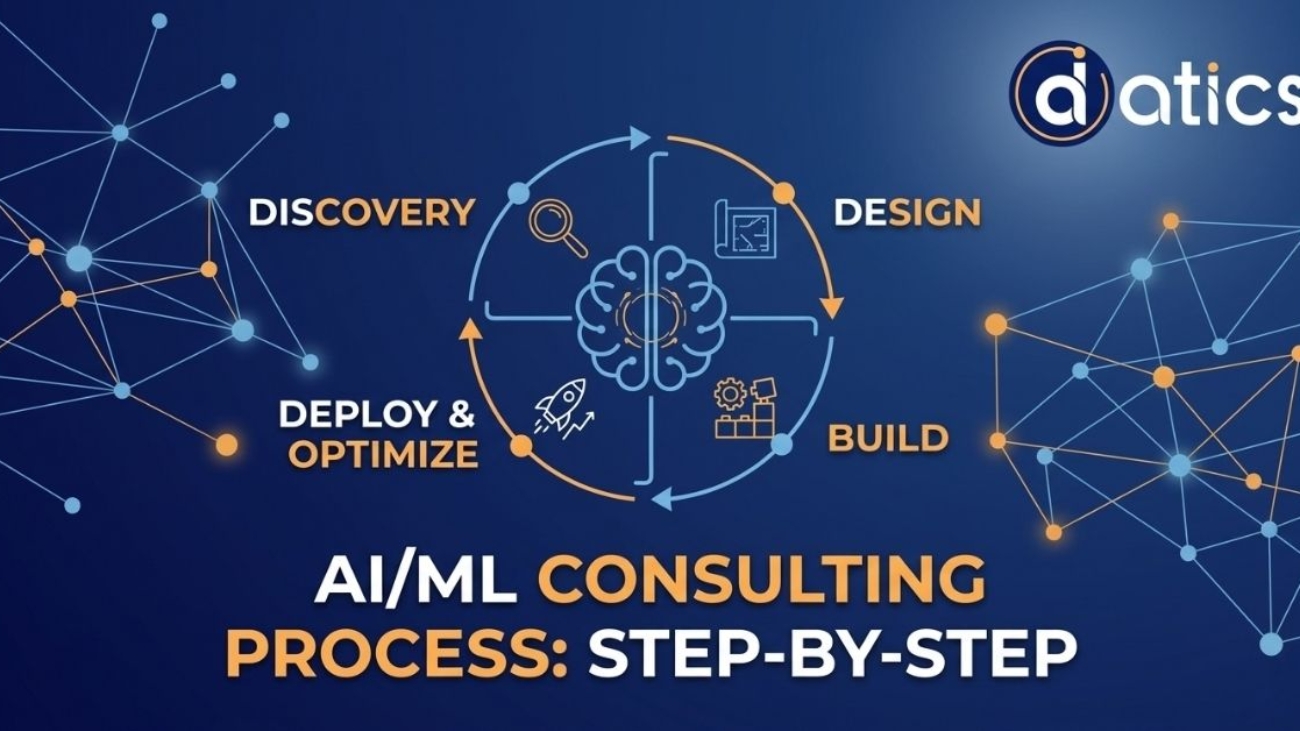
Phase 1: Discovery and the Strategic Audit

The process begins not with a computer, but with a conversation. During the initial discovery phase, the focus is on AI strategy consulting to determine exactly where intelligence can provide the most leverage. Consultants look for “high-friction” areas—tasks that are repetitive, prone to human error, or too data-heavy for traditional analysis.

This phase includes a deep audit of your current data infrastructure. It is impossible to build effective artificial intelligence solutions on a foundation of siloed or low-quality data. A consultant will evaluate your data’s cleanliness, accessibility, and volume to ensure that when the time comes for AI model development, the results are reliable and unbiased. This stage is about setting realistic expectations and defining the key performance indicators (KPIs) that will measure the project’s success.

Phase 2: Design and Machine Learning Consulting

Once the roadmap is clear, the focus shifts to the technical blueprint. This is the heart of machine learning consulting, where experts decide which algorithms and architectures best suit your needs. Are you looking for predictive analytics solutions to forecast market trends, or do you need a recommendation engine to boost e-commerce sales?

During this phase, the consulting team develops a Proof of Concept (PoC). This is a “small-scale” version of the final product that demonstrates the model’s feasibility. By focusing on a specific use case first, businesses can validate the ROI before committing to a full-scale deployment. This iterative approach is a hallmark of high-quality data science consulting, as it reduces risk and allows for tactical adjustments based on early performance data.

Phase 3: Development and Implementation

With a successful PoC in hand, the project moves into the development cycle. This is where AI ML development services take center stage. Developers and data scientists work in tandem to clean, preprocess, and “train” the models. This is a rigorous period of trial and error where the system learns to identify patterns and make decisions autonomously.

A major part of this phase is ensuring machine learning implementation fits seamlessly into your existing workflows. A brilliant model is useless if it doesn’t talk to your current CRM or ERP systems. Therefore, consultants focus on building robust APIs and integrations. If you are working with a specialized AI ML development company in USA, they will prioritize creating a system that is not only smart but also highly usable for your internal teams.

Phase 4: Deployment and Continuous Optimization

The final stage is moving the model from a testing environment to the “live” world. However, the consulting process doesn’t end the moment the system goes live. Real-world data is dynamic, and models can experience “drift”—a decline in accuracy as market conditions change.

Post-deployment, the focus shifts to business automation with AI and performance monitoring. Consultants provide ongoing support to retrain models and optimize infrastructure for speed and cost-efficiency. At Datics Solutions LLC, we view this as a partnership; we ensure the intelligence we build continues to scale alongside your business. Through continuous optimization, your AI becomes a living part of your organization that grows sharper and more valuable over time.

Frequently Asked Questions

1. How do consultants decide which machine learning model is right for my business? 

The choice of model depends entirely on the nature of your data and your specific goals. For instance, if you need to classify images or documents, a neural network might be best. If you are predicting numerical values like sales figures, regression-based algorithms are often more efficient. Consultants analyze your “problem space” and test several candidate models during the PoC phase to see which one delivers the highest accuracy with the lowest computational cost.

2. What is the role of the client’s internal team during the consulting process? 

The client’s internal team provides the “context” that the machines lack. While consultants bring the technical expertise, your team brings the industry knowledge. Subject matter experts (SMEs) help define what a “successful” outcome looks like and help the consultants understand the nuances of the data. This collaboration ensures that the resulting AI consulting services are tailored to your specific market reality rather than just being generic technical solutions.

3. Is my data secure during an AI ML consulting project? 

Data security is a top priority in any professional consulting engagement. High-level firms use non-disclosure agreements (NDAs) and strictly follow compliance standards such as GDPR, HIPAA, or SOC2. During the project, consultants often use data anonymization or synthetic data techniques to ensure that sensitive personal information is never exposed during the training of the machine learning models, maintaining both privacy and technical integrity.

4. How can I prepare my business for the start of an AI consulting process? 

Preparation starts with data organization. You don’t need “perfect” data, but you should have a clear understanding of where your data is stored and how it is collected. Additionally, having a clearly defined business problem—rather than a vague desire to “do AI”—will significantly speed up the discovery phase. Identifying a internal “champion” to lead the project on your end also ensures smooth communication between your team and the consultants.

5. What happens if the AI makes a wrong prediction or an error? 

Error management is built into the development process. During the validation phase, consultants establish “confidence scores” for the model. If a model is unsure about a specific prediction, it can be programmed to flag the case for human review. This “Human-in-the-Loop” (HITL) approach ensures that data-driven decision making is always supervised, providing a safety net that protects the business from automated mistakes while the model continues to learn.
AI ML Consulting

How AI ML Consulting Helps Businesses Turn Data into Profit

Most modern enterprises are sitting on a goldmine of information, but very few have the tools to extract its true value. Every customer interaction, supply chain movement, and sales transaction generates data, yet without a clear strategy, this information remains “dark”—stored away but never utilized. This is precisely why AI ML Consulting has become a vital necessity for companies looking to transition from reactive operations to proactive, data-driven growth.

The bridge between having data and making a profit is built on intelligence. Businesses often struggle not with a lack of data, but with a lack of clarity on how to apply that data to solve specific revenue-draining problems. Specialized consulting provides the roadmap needed to navigate the complexities of automation and predictive modeling.

Bridging the Gap with AI Strategy Consulting

Entering the world of artificial intelligence without a plan is a recipe for wasted investment. Many organizations rush to implement the “hottest” new tool without considering if it aligns with their actual business objectives. This is where AI strategy consulting provides immense value. Instead of chasing trends, consultants help you identify the highest-impact areas for implementation—whether that is reducing operational overhead, improving customer retention, or optimizing pricing strategies.

A successful strategy involves more than just selecting software; it requires an audit of your current data maturity. Experts look at how your data is collected, where it is stored, and who has access to it. By establishing a solid foundation early on, businesses can ensure that their artificial intelligence solutions are sustainable and capable of delivering a measurable return on investment (ROI).

From Theory to Action: Machine Learning Consulting

Once a strategy is in place, the focus shifts to technical execution. Machine learning consulting dives into the “how” of the process. This involves selecting the right algorithms and building models that can learn from your historical data to predict future outcomes. For example, a retail brand might use these insights to forecast inventory needs weeks in advance, preventing both overstock and stockouts.

The transition from a conceptual idea to a working model requires deep technical expertise. Consultants guide you through machine learning implementation, ensuring that the models are not just accurate in a test environment, but resilient in the real world. By leveraging data science consulting, businesses can avoid common pitfalls such as algorithmic bias or model drift, which can lead to poor decision-making if left unchecked.

Optimizing Growth through AI ML Development Services

The final stage of the journey is integrating intelligence into your existing business products. High-quality AI ML development services ensure that these advanced models are not isolated experiments. Instead, they are woven into your day-to-day software, providing real-time insights to your team and your customers.

When you work with a dedicated AI ML development company in USA, the focus is on creating a seamless user experience. Whether it is a recommendation engine for an e-commerce platform or a predictive maintenance alert for a manufacturing plant, the goal is to make the technology feel like a natural extension of the business. At Datics Solutions LLC, we emphasize that the most profitable AI is the one that simplifies complex tasks and empowers humans to make better choices faster.

Driving ROI with Predictive Analytics Solutions

The ultimate goal of any technical overhaul is to improve the bottom line. Predictive analytics solutions allow businesses to move away from “best guesses” and toward mathematical certainty. By analyzing patterns that are invisible to the human eye, AI can identify new market opportunities or warn of potential risks before they manifest.

Business automation with AI further scales this profit potential by handling repetitive, high-volume tasks that previously required hundreds of man-hours. When your workforce is freed from manual data entry or basic customer inquiries, they can focus on high-level innovation and relationship building—the things that truly drive long-term business value.

Frequently Asked Questions

1. How long does it typically take to see a return on investment from AI ML consulting? 

While the exact timeline varies based on the scope of the project, most businesses start seeing operational efficiencies within the first three to six months. Initial phases usually focus on “quick wins,” such as automating manual workflows or optimizing existing data streams. Long-term profitability, driven by complex predictive models and market-shifting insights, typically matures as the model gathers more data over the first year of deployment.

2. Does a company need a massive data set to benefit from AI consulting services? 

Not necessarily. While more data often leads to more robust models, the quality of the data is far more important than the volume. Many AI consulting services focus on “Small Data” approaches or data augmentation techniques that allow startups and mid-sized firms to gain significant insights from limited sets. The goal of consulting is often to help you start collecting the right data now so that you can scale your intelligence capabilities later.

3. What is the difference between data science consulting and AI strategy consulting? 

AI strategy consulting is focused on the “Why” and “What”—identifying business goals, evaluating ROI, and creating a roadmap for implementation. Data science consulting is more focused on the “How”—the technical side of cleaning data, selecting mathematical models, and validating the accuracy of the results. Both are necessary; one ensures the project makes business sense, while the other ensures the technology actually works as intended.

4. Can AI ML development services be integrated into my existing legacy software? 

Yes, modern AI ML development services are designed with integration in mind. Through the use of APIs and microservices, consultants can often “layer” intelligence on top of your current systems without needing to completely rebuild your infrastructure. This allows for a modular approach where you can add intelligent features to your existing software one step at a time, minimizing disruption to your daily operations.

5. How do consultants ensure that AI model development remains ethical and unbiased? 

Ethical AI model development involves a process called “bias auditing.” Consultants look at the training data to ensure it doesn’t contain historical prejudices that could skew the results. By using diverse data sets and implementing “explainable AI” (XAI) techniques, experts can ensure that the decisions made by the machine are transparent, fair, and aligned with both legal requirements and your company’s internal values.

Machine Learning

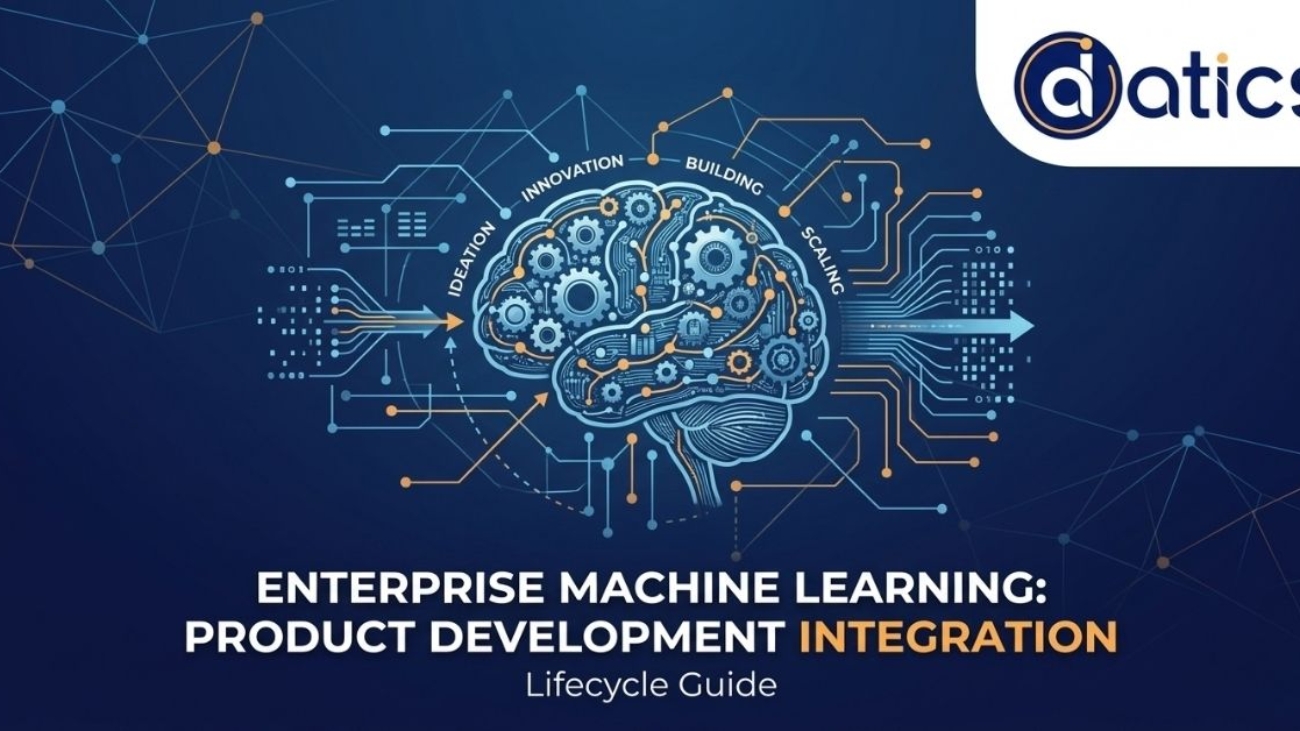
The Enterprise Guide to Machine Learning: Integrating Intelligence into Product Development

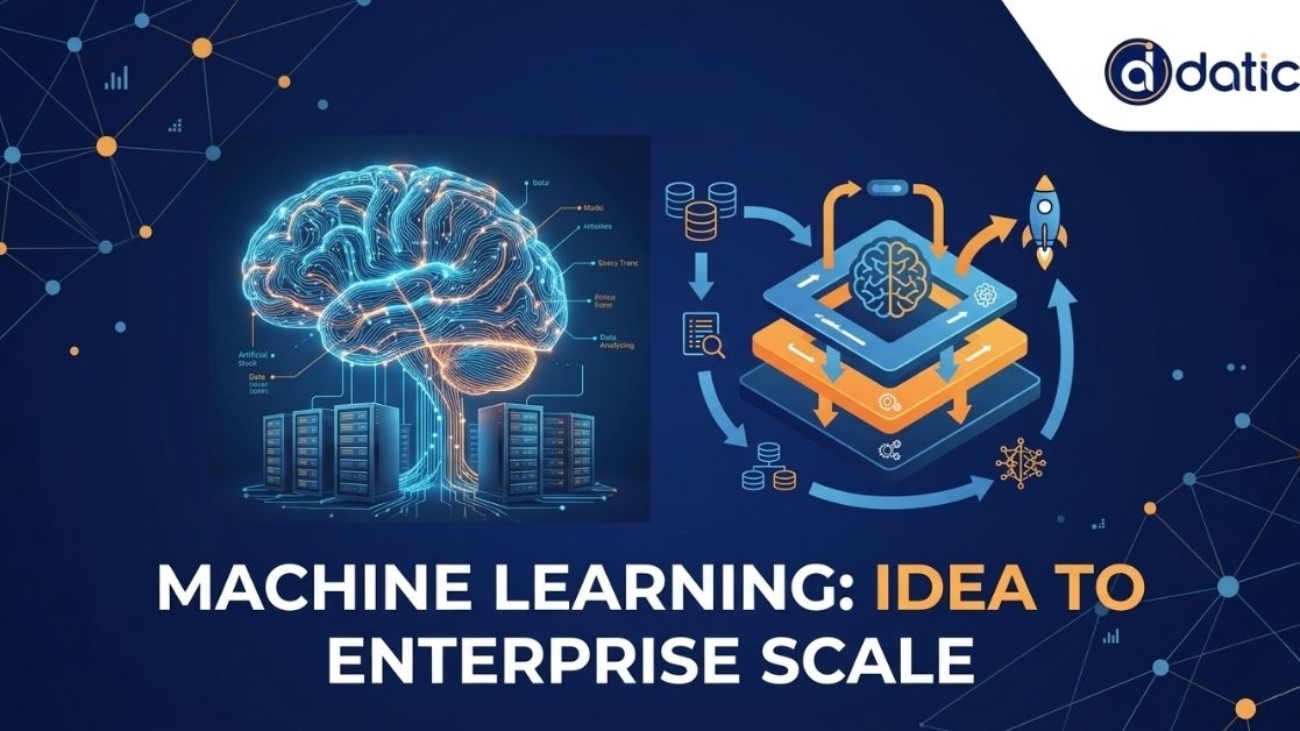
​In the modern enterprise, the conversation has moved past the theoretical potential of artificial intelligence toward the practicalities of implementation. Machine Learning is no longer a luxury feature; it is the fundamental infrastructure behind predictive analytics, autonomous systems, and hyper-personalized user experiences. For organizations aiming to maintain a competitive edge, understanding how to weave intelligence into the very fabric of their software is the new standard.

However, moving a model from a controlled data science environment to a high-traffic production ecosystem is complex. It requires a disciplined approach to Complete Software Product Development that treats algorithmic intelligence as a dynamic asset rather than a static piece of code. This guide outlines how to navigate the lifecycle of intelligent products, ensuring they deliver measurable business impact from the first day of deployment.

Ideation: Identifying High-Value Use Cases

The lifecycle of machine learning development begins long before the first line of code is written. It starts with identifying specific business problems where predictive power offers a clear advantage. Ideation is the process of auditing existing workflows—such as supply chain logistics, customer support, or financial risk assessment—to find “bottlenecks” that data can solve.

​At this stage, the focus is on data feasibility. A common trap is pursuing a sophisticated solution without the underlying data to support it. Successful product leaders work closely with engineers to determine if they have the necessary historical data to train machine learning models effectively. By validating the business case and the data quality early on, companies avoid the “innovation theater” of building technology that lacks a real-world application.

​Innovation: Designing for Intelligence and UX

True innovation in the AI space occurs at the intersection of technical capability and human-centric design. Once a problem is identified, the next step is determining the most efficient way to solve it. This often involves exploring advanced machine learning applications like computer vision or predictive maintenance.

​Innovation also requires a deep understanding of natural language processing if the goal is to improve human-machine communication, or leveraging neural networks and deep learning for high-dimensional data problems. The architectural goal is to create a system where the AI feels like a natural extension of the user experience. At Datics Solutions LLC, we believe that the best AI is often invisible; it simply makes the product smarter, faster, and more intuitive without overwhelming the end user with technical complexity.

​Building: The Rigor of Model Development and Engineering

The “Building” phase is where the blueprint becomes a functional system. This stage is highly technical and iterative, involving the selection of specific machine learning algorithms—such as gradient boosting or random forests—based on the desired outcome.

A critical component of this phase is the implementation of data preprocessing techniques. Real-world data is messy, inconsistent, and often biased; cleaning and normalizing this data is what determines the eventual accuracy of the system. Furthermore, developers must focus on model valuation and validation. This isn’t a one-time test but a continuous process of checking the model against “hold-out” data to ensure it generalizes well to new situations. This rigorous engineering ensures that the resulting AI and machine learning services are stable enough for enterprise-grade deployment.

​Scaling: From Prototype to Global Infrastructure

Scaling an intelligent product is vastly different from scaling traditional software. While a standard app might require more server capacity, an ML product requires the ability to process, analyze, and retrain on massive data streams in real-time. Scaling is the process of moving the system into a production environment where it can handle millions of requests without latency.

Effective scaling involves monitoring for “model drift,” which occurs when the real-world data starts to deviate from the data the model was originally trained on. By adopting a strategy focused on AI & ML Software Development, businesses can create automated pipelines that retrain models as new information becomes available. This ensures that as your company grows, the intelligence behind your software remains sharp and relevant, providing a consistent return on investment.

​Why Machine Learning is the Future of Product Strategy

The transition toward intelligent software is inevitable. By integrating Machine Learning into your product roadmap, you are moving from a reactive business model to a proactive one. Software that can anticipate user needs, identify fraud before it happens, or optimize energy consumption in real-time is the hallmark of the next generation of digital leaders.

The journey from ideation to scaling is demanding, but the rewards are transformative. When you view software development as a holistic lifecycle—one that prioritizes data integrity, architectural flexibility, and user value—you create products that don’t just solve today’s problems but are prepared for tomorrow’s opportunities.

​Frequently Asked Questions

​1. What is the difference between supervised and unsupervised machine learning algorithms?

Supervised learning involves training a model on a labeled dataset, meaning the “answer” is already known, and the model learns to map inputs to those answers (like identifying spam emails). Unsupervised learning, however, works with unlabeled data to find hidden patterns or structures on its own, such as grouping customers into segments based on purchasing behavior without being told what the groups should look like beforehand.

​2. How does natural language processing improve the user experience?

Natural language processing (NLP) allows software to understand, interpret, and generate human language. In a product context, this can mean more than just chatbots; it includes sentiment analysis to understand customer feedback, automated document summarization, and voice-controlled interfaces. By making technology “speak” our language, businesses can lower the barrier to entry for their tools and provide more accessible, human-like interactions.

​3. What role does data preprocessing play in machine learning development?

Data preprocessing is the process of transforming raw data into a format that a model can understand. This involves handling missing values, removing outliers, and scaling numerical data. Without this step, even the most advanced algorithms will produce “garbage in, garbage out” results. High-quality preprocessing ensures that the model focuses on the most relevant features of the data, significantly improving its predictive accuracy and overall reliability.

​4. Why is model valuation and validation necessary before a full launch?

Validation is the primary way engineers ensure a model isn’t just “memorizing” the training data, a problem known as overfitting. By testing the model on a separate validation set, developers can see how it will likely perform in the real world. This process identifies errors or biases in the model’s logic, allowing for adjustments to be made before the software is exposed to actual customers, thereby protecting the brand’s reputation and ensuring technical trust.

​5. How can neural networks and deep learning be used in business applications?

Neural networks and deep learning are sub-fields of AI modeled after the human brain, capable of processing highly complex data like images, video, and audio. In business, they are used for advanced tasks like facial recognition for security, medical image analysis for diagnostics, and even sophisticated algorithmic trading in finance. These models excel where traditional algorithms struggle, specifically in tasks involving unstructured data and high-level pattern recognition.

Machine Learning

Machine Learning for Enterprise: A Comprehensive Guide to Product Development

​In the current digital landscape, the conversation has shifted from whether a company should use artificial intelligence to how quickly they can integrate it. Machine Learning is no longer a futuristic concept reserved for research labs; it is the engine driving predictive analytics, personalized customer experiences, and operational efficiency across the globe. For decision-makers, understanding the lifecycle of an ML-driven product is essential to moving past the hype and delivering actual business value.

Successful implementation requires more than just raw data. It demands a structured approach to Complete Software Product Development that treats the model not as a standalone experiment, but as a core component of a scalable software ecosystem. This guide explores the journey of bringing intelligent systems to life, from the initial spark of an idea to the complexities of global scaling.

​The Ideation Phase: Defining the Problem Space

The most common mistake in machine learning development is starting with a solution rather than a problem. High-performing teams begin by identifying a specific business “pain point”—such as high customer churn, inefficient logistics, or manual data entry—and determining if an algorithmic approach is the right fit.

​Ideation involves assessing the availability and quality of data. Without clean, structured information, even the most sophisticated machine learning models will fail to produce accurate results. During this discovery phase, stakeholders must define what success looks like. Are we aiming for 95% accuracy, or is a reduction in processing time the primary goal? Setting these benchmarks early ensures that the technical team and the business units remain aligned throughout the project.

​Innovation through Intelligent Architecture

​Once the problem is defined, the focus shifts to innovation. This is where strategic design meets advanced technology. Innovating in the ML space requires a deep dive into data preprocessing techniques, as the performance of your system depends heavily on how data is cleaned, normalized, and engineered before it ever reaches a model.

​A truly innovative product leverages the right tools for the job. This might involve using natural language processing to automate customer support or implementing neural networks and deep learning for complex image recognition tasks. At this stage, the goal is to create a blueprint that allows for Machine Learning to be integrated seamlessly into the user interface. Innovation isn’t just about the complexity of the math; it’s about how elegantly that math solves a human problem.

​Building the Foundation: Development and Validation

​The building phase is where data scientists and software engineers collaborate to turn blueprints into functional software. This involves selecting the appropriate machine learning algorithms—whether supervised, unsupervised, or reinforcement learning—to match the project’s objectives.

​Building an ML product is an iterative process. Unlike traditional software, where the logic is hard-coded, an ML system “learns” from data. This necessitates rigorous model valuation and validation to ensure that the system performs reliably on new, unseen data. A robust build phase also prioritizes AI and machine learning services that include continuous monitoring. If the data “drifts” (changes over time), the model must be retrained to maintain its precision and trustworthiness.

​Scaling for Global Impact

​The final and often most difficult stage is scaling. A model that works on a laptop or a small testing server may struggle when faced with millions of real-time requests. Scaling requires a transition from a “data science experiment” to a production-ready system. This involves optimizing the infrastructure to handle high throughput and low latency.

​As you scale, the focus shifts to machine learning applications that can integrate with other enterprise tools. You must ensure that your deployment pipeline is automated and that your system can handle the “heavy lifting” of large-scale data processing without compromising speed. This is the stage where Datics Solutions LLC focuses on ensuring the architectural integrity of the product, allowing it to grow alongside your business without becoming a technical liability.

​The Strategic Advantage of Intelligent Systems

​Integrating intelligence into your workflow is a long-term investment. By following a structured path of AI & ML Software Development, businesses can move beyond simple automation to true predictive power. When software can anticipate needs, detect anomalies, and optimize its own performance, it becomes a strategic asset rather than just a tool.

​The key to longevity is recognizing that development is a cycle. As users interact with your product, they generate new data. This data feeds back into the ideation and innovation stages, allowing the product to evolve. In the world of modern software, the most successful products are those that never stop learning.

​Frequently Asked Questions

​1. What is the difference between traditional software and machine learning development?

Traditional software development relies on explicit instructions—developers write code that tells the computer exactly what to do in every scenario. In contrast, machine learning development involves creating systems that identify patterns in data to make decisions or predictions. While traditional software is predictable and static, ML systems are dynamic and improve over time as they are exposed to more information, requiring a different approach to testing and maintenance.

​2. How do I know if my business has enough data to start using machine learning?

The quantity of data needed depends on the complexity of the problem you are trying to solve. However, the quality of the data is often more important than the volume. For a model to be effective, you need data that is relevant, labeled, and free from significant bias. A professional audit of your current data architecture can determine if you are ready for model training or if you first need to implement better data collection and preprocessing strategies.

3. What are the most common machine learning applications in the corporate world?

Enterprises typically use these systems for predictive maintenance in manufacturing, fraud detection in finance, and recommendation engines in e-commerce. Other high-value applications include sentiment analysis for brand monitoring and demand forecasting for supply chain optimization. By automating these complex analytical tasks, companies can free up their human workforce to focus on high-level strategy and creative problem-solving.

​4. How does the model validation process work during development?

Validation involves splitting your data into sets: one for training the model and another for testing it. The “test” set acts as a simulation of the real world. By running the model against data it has never seen before, engineers can measure its accuracy and reliability. This process helps identify issues like “overfitting,” where a model becomes too focused on the training data and fails to generalize to new, real-world situations.

​5. Is scaling a machine learning product different from scaling regular software?

Yes, scaling ML products is more complex because it involves “MeldOps”—a combination of DevOps and data science. You aren’t just scaling the web traffic; you are scaling the computational power required to run the algorithms. This often requires specialized hardware, cloud-native architectures, and automated pipelines that can retrain and redeploy models as the data environment changes, ensuring the system remains fast and accurate under heavy loads.

Software Product Development

Complete Software Product Development: From Idea to Scale

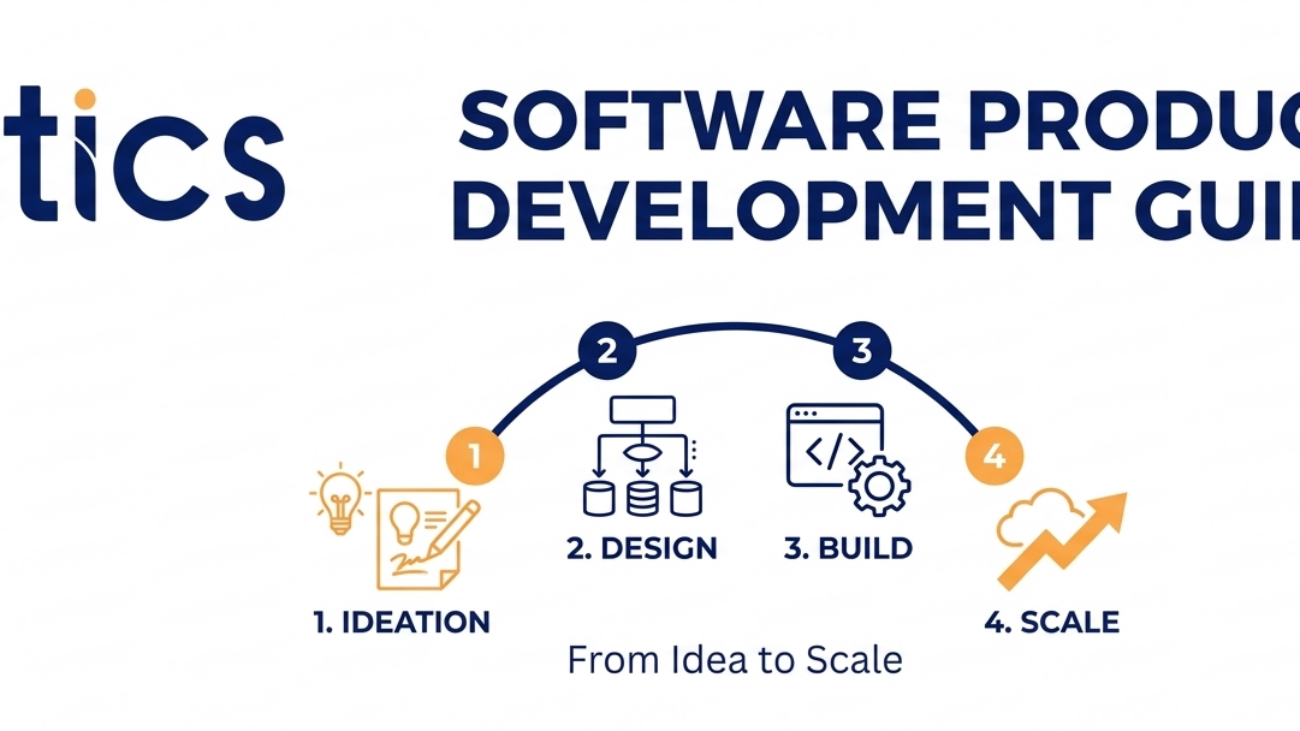
The journey of transforming a concept into a market-leading application is rarely a straight line. In an era where digital disruption is the norm, Complete Software Product Development requires more than just clean code; it demands a fusion of strategic vision, engineering excellence, and a relentless focus on the end-user. Whether you are a startup founder or an enterprise leader, understanding the mechanics of this lifecycle is the difference between a product that exists and a product that thrives.

The Foundation of Ideation and Strategic Innovation

Every successful product begins with a problem that needs solving. However, ideation is not just about having a “lightbulb moment.” It is a structured process of market validation and feasibility analysis. During this phase, teams must move beyond general concepts to identify specific pain points within their target market. This involves deep-dive research into competitor weaknesses and emerging technological trends that can be leveraged to create a unique value proposition.

Innovation in this context means finding a more efficient, scalable, or user-friendly way to deliver value. It’s about asking if the proposed solution truly requires custom software development or if it can be solved with existing tools. By the end of the ideation stage, you should have a clear product vision that outlines not just what you are building, but why the market needs it right now. This strategic clarity prevents the common pitfall of building features that no one actually uses.

Translating Vision into Software Design and Architecture

Once the idea is validated, the focus shifts to the technical blueprint. This is where software design and architecture play a pivotal role. A product’s architecture is its skeleton; if it is poorly constructed, the application will struggle to support growth, security, or updates later on. Architects must decide on the tech stack, data structures, and integration points that will define the system’s performance.

At this stage, professional product development solutions emphasize modularity. By building a system composed of independent but interconnected services, you ensure that future changes in one area of the app won’t cause a total system failure. This foresight is what separates high-quality engineering from quick-fix coding. It is also the point where user experience (UX) and user interface (UI) designers collaborate with engineers to ensure the technical constraints align with a seamless, intuitive journey for the user.

The Building Phase: Agile Engineering and Execution

The building phase is the engine room of the product development lifecycle. Here, the abstract plans become functional reality through iterative development. Using Agile methodologies allows teams to break down the massive project into manageable “sprints,” typically lasting two to four weeks. This approach ensures that the stakeholders can see progress in real-time and provide feedback before the project veers off course.

Quality assurance is not a final step in this process; it is woven into every sprint. By implementing automated testing and continuous integration, developers can identify and resolve bugs as they appear, rather than dealing with a mountain of technical debt at the end. For many businesses, partnering with Datics Solutions LLC provides the high-level engineering talent necessary to navigate these complexities, ensuring that the code is not only functional but also maintainable and secure for years to come.

Scaling for Growth and Market Dominance

Building a product that works for a hundred users is a different challenge than building one for a hundred thousand. Scaling is the ultimate test of a software product. It involves optimizing the backend to handle increased loads, refining the database queries, and perhaps migrating to a more robust cloud infrastructure. This phase often reveals the underlying hurdles that were invisible during the initial launch, such as latency issues or API bottlenecks.

Scaling also requires a shift in mindset from “feature building” to “system optimization.” As your user base grows, you must collect and analyze data to understand how the product is being used in the real world. This feedback loop informs the next generation of features, ensuring that the product evolves in lockstep with user needs. Successful scaling is a continuous process of monitoring, tweaking, and expanding the infrastructure to maintain a high-performance experience regardless of traffic spikes.

Software Deployment and Maintenance: The Long-Term Commitment

The launch of a software product is actually just the beginning of its life. Software deployment and maintenance involve the ongoing tasks of keeping the application healthy, secure, and relevant. Deployment strategies like “Blue-Green” or “Canary” releases allow teams to push updates without downtime, minimizing risk for the user.

Once live, the product requires constant vigilance. Security patches, OS updates, and library upgrades are essential to protect user data and maintain compatibility with new hardware. Furthermore, as market conditions change, the product must be updated to stay competitive. A dedicated approach to software development services ensures that the product doesn’t become a legacy liability, but remains a dynamic asset that continues to drive business value and satisfy users in a shifting digital landscape.

Frequently Asked Questions

1. How do I know if my software idea is actually ready for development? 

A software idea is ready for development only after it has undergone rigorous market validation. This means you have identified a specific audience, confirmed their pain points, and analyzed the competitive landscape. If you can clearly articulate the unique value your product provides and have a basic map of the core features (an MVP), you are ready to engage with professional development teams to begin the technical blueprinting and architecture phase.

2. What is the difference between a prototype and a Minimum Viable Product (MVP)? 

A prototype is a preliminary model used to test a concept or a specific flow, often without real functionality behind it. An MVP, however, is a functional version of your product that includes only the essential features needed to satisfy early adopters and gather validated learning. While a prototype helps you visualize the “what,” an MVP allows you to test the “how” in a real-market environment with actual users and live data.

3. Why is the architecture of a software product considered so critical for scaling? 

Architecture is the foundation upon which your software sits. If you choose a rigid or outdated architecture, adding new features or handling more users becomes exponentially more expensive and technically difficult. A modern, scalable architecture—such as microservices or serverless—allows different parts of the system to grow independently. This ensures that a surge in users on one feature doesn’t crash the entire platform, providing the stability needed for global growth.

4. How long does the complete software product development cycle typically take? 

The timeline varies significantly based on the complexity of the project, but a standard MVP usually takes between three to six months to develop. The full lifecycle, from deep ideation to a scaled, mature product, is an ongoing journey that can span years. The key is to focus on iterative releases; by launching early and updating often, you can start generating value and collecting user data much sooner than if you waited for a “perfect” final version.

5. What are the ongoing costs associated with software maintenance after launch? 

Maintenance typically accounts for 15% to 25% of the initial development cost annually. These costs cover essential security updates, bug fixes, hosting fees, and third-party API subscriptions. More importantly, maintenance includes “adaptive” work—updating the software to remain compatible with new versions of iOS, Android, or web browsers. Neglecting this phase leads to “technical debt,” which eventually makes the software unusable or insecure for the end-user.

Staff Augmentation

What Is Staff Augmentation and How Does It Support Product Teams?

In the current software development landscape, the pressure to deliver high-quality products at speed often outpaces a company’s internal capacity. Hiring full-time employees is a significant commitment that involves lengthy recruitment cycles, onboarding overhead, and long-term financial obligations. When a project hits a critical milestone or requires a niche skill set for a limited time, traditional hiring often fails to provide the necessary agility. This is where the Staff Augmentation model becomes a strategic lever for growth, allowing businesses to bridge talent gaps without the friction of permanent expansion.

Understanding the Concept of Staff Augmentation

At its core, staff augmentation is a flexible outsourcing strategy where a company hires external technical talent to work alongside their in-house team. Unlike project-based outsourcing, where an entire product is handed off to a third party, augmented staff function as an extension of your existing team. They participate in your daily stand-ups, report to your project managers, and utilize your internal communication tools.

This model is particularly effective because it maintains the integrity of your internal processes while injecting specialized expertise. Whether you are looking for staff augmentation services to scale a mobile app or need a specific DevOps engineer to secure your infrastructure, the focus remains on integration rather than isolation. By choosing this path, organizations like Datics Solutions LLC help businesses maintain control over their product roadmap while gaining the bandwidth needed to execute complex features.

How Staff Augmentation Supports Product Teams

Product teams often face “bottlenecks”—specific points in the development lifecycle where progress stalls due to a lack of specialized knowledge or sheer manpower. Staff augmentation addresses these hurdles by providing targeted support exactly where it is needed most.

Rapid Scaling and Flexibility

One of the most immediate benefits is the ability to scale up or down based on project demands. If a product enters a heavy QA phase or requires a complete UI overhaul, you can bring in specialists for that specific window. Once the objective is met, the engagement ends without the legal and emotional complexities of layoffs. This elasticity ensures that your burn rate remains optimized.

Closing the Skills Gap

Technology evolves faster than most internal training programs can keep up with. If your team is transitioning from a monolithic architecture to microservices, you might not have the in-house expertise to lead that migration. Utilizing offshore staff augmentation allows you to tap into a global talent pool, finding experts in specific frameworks or languages that may be scarce or overpriced in your local market.

Maintaining Internal Culture and Knowledge

Because augmented developers work within your existing workflows, your internal team doesn’t lose sight of the project. This “blended team” approach fosters knowledge transfer. Your permanent employees learn new best practices from the external experts, ensuring that once the contract ends, the internal team is better equipped to maintain the systems built during the collaboration.

Onshore vs. Offshore: Choosing the Right Geography

The effectiveness of your augmentation strategy often depends on the geographic location of your partners. Organizations must weigh the benefits of proximity against the advantages of cost and talent availability.

  • Onshore Staff Augmentation: This involves hiring talent within the same country. The primary benefits are cultural alignment, same time zones, and the possibility of occasional face-to-face meetings. While often more expensive, it minimizes communication lag.
  • Offshore Staff Augmentation: This model taps into talent in distant regions. It is highly cost-effective and provides access to massive talent hubs. For teams that have mastered asynchronous communication, the “follow-the-sun” model allows for 24/7 development cycles.
  • Remote Staff Augmentation: This is a broader category that focuses on the “work-from-anywhere” philosophy. It prioritizes the quality of the engineer over their physical coordinates, ensuring that you hire remote developers based on merit and technical fit.

Integrating External Talent into Your Workflow

Success in workforce augmentation services isn’t just about finding the right person; it’s about how you bring them into the fold. A common mistake is treating augmented staff as “temp workers” rather than team members. To maximize their impact, you must provide them with the same documentation, access, and context as your full-time staff.

Effective integration starts with clear documentation. When you understand how these services work, you realize that a well-defined onboarding process reduces the “time-to-productivity.” If an external developer can pull the code, set up their environment, and understand the sprint goals within the first 48 hours, the return on investment is immediate.

Strategic Advantages for Modern Enterprises

In a market defined by volatility, the resource augmentation model offers a safety net. It protects companies from the risks of “over-hiring” during peak periods only to face “under-utilization” during lulls. Furthermore, it shifts the burden of recruitment, background checks, and benefits administration to the service provider. This allows your leadership team to focus on product strategy and market fit rather than HR logistics.

By leveraging talent outsourcing solutions, companies can experiment with new technologies or product lines with lower risk. If a prototype fails, the team can be disbanded quickly. If it succeeds, the augmented team provides the foundation upon which a permanent department can be built.

Frequently Asked Questions

1. How does staff augmentation differ from traditional project outsourcing? 

In project outsourcing, the vendor manages the entire project from start to finish, often with their own management and processes, delivering a finished product. In contrast, staff augmentation involves hiring individuals to join your existing team. You maintain full management control, dictate the workflows, and integrate the external developers into your daily operations. It is a collaborative model rather than a hand-off model.

2. What are the primary cost benefits of using staff augmentation services? 

The most significant cost benefit is the reduction in overhead. When you augment your team, you avoid expenses related to full-time recruitment, employee benefits, office space, and specialized equipment. Additionally, it allows you to pay for specialized skills only for the duration you need them, preventing the long-term financial strain of a high permanent headcount during periods of lower productivity or project downtime.

3. Is staff augmentation a viable long-term solution for software companies? 

While often used for short-term needs, many companies use it as a long-term strategic pillar. It allows for a “core” team of permanent employees who hold the institutional knowledge, supported by a “flexible” layer of augmented talent that fluctuates based on the roadmap. This hybrid approach ensures the company remains lean and agile, able to pivot quickly without the friction of traditional organizational restructuring.

4. How do you handle security and IP protection with augmented staff? 

Trustworthy providers ensure that all augmented personnel sign comprehensive Non-Disclosure Agreements (NDAs) and Intellectual Property (IP) assignment contracts. Since the developers work within your internal infrastructure—using your GitHub repositories, VPNs, and project management tools—you maintain full ownership and oversight of the work being produced. It is essentially the same security protocol you would apply to a remote full-time hire.

5. What is the biggest challenge in the staff augmentation model? 

The most common challenge is communication and cultural integration. If there is a significant time zone difference or a language barrier, it can lead to misunderstandings in the development process. This is why choosing a partner that emphasizes soft skills and cultural fit is just as important as technical testing. Establishing strong documentation and regular sync-up meetings can effectively mitigate these potential friction points.