Learn the most common automation challenges growing businesses face and how understanding them early helps companies scale efficiently without added complexity.

Automation is often presented as a solution that simplifies operations instantly. For growing businesses, the reality is more nuanced. Automation can unlock efficiency, but only when it is applied with clarity, timing, and a realistic understanding of how businesses actually operate.

Many early-stage and scaling companies struggle not because automation fails, but because it is introduced without a clear foundation. Understanding common automation challenges early helps businesses avoid costly missteps and build systems that support growth instead of complicating it.

What Is Business Automation and How Does It Work?

Business automation refers to using technology to handle repetitive tasks, workflows, and operational processes with minimal manual effort. These processes can include data transfers, approvals, scheduling, reporting, or system coordination.

Automation works by defining how a task should behave under specific conditions. Once the logic is clear, software executes the process consistently and predictably. This consistency is what allows teams to scale without increasing workload pressure.

For beginners, understanding What Is Business Automation is essential before trying to automate anything. Without clarity on how automation functions, businesses risk automating inefficiencies instead of improving outcomes.

AI Automation vs Rule-Based Automation: What’s the Difference?

One of the first challenges businesses face is choosing the right type of automation. Rule-based automation follows predefined logic. When a condition is met, an action is triggered. This approach is reliable for structured, predictable tasks.

AI automation introduces learning and adaptability. It can analyze patterns, adjust responses, and improve over time. While powerful, it also requires clean data and clear objectives to work effectively.

Many growing businesses struggle because they attempt to adopt AI automation before mastering simpler rule-based systems. Understanding the difference helps businesses apply the right level of automation without unnecessary complexity.

Common Automation Challenges Growing Businesses Face

The most common automation challenge is unclear processes. When workflows are undocumented or inconsistent, automation magnifies confusion rather than eliminating it. Systems follow logic precisely, even when that logic is flawed.

Another challenge is automating too early. Businesses often rush into automation hoping it will fix operational problems. In practice, automation works best after teams understand their workflows, not while they are still evolving them.

Integration issues also surface frequently. Tools that do not communicate well with existing systems create data silos and manual workarounds, defeating the purpose of automation.

These challenges highlight why automation must be approached as a strategic decision rather than a technical shortcut.

How Automation Reduces Operational Costs Without Increasing Headcount

When implemented correctly, automation reduces operational costs by removing repetitive manual work. Teams spend less time on routine tasks and more time on decision-making, strategy, and problem-solving.

Automation also reduces error-related costs. Manual processes are vulnerable to mistakes, especially as volume increases. Automated workflows execute tasks consistently, improving accuracy and reliability.

Over time, this efficiency allows businesses to grow without hiring proportionally larger teams. The result is sustainable scaling rather than reactive expansion.

When Businesses Should Invest in Automation Services

Businesses should consider automation when repetitive tasks begin to slow productivity, when coordination becomes difficult, or when growth exposes operational strain. Automation is most effective when introduced proactively, not as an emergency response.

Clear goals, documented processes, and realistic expectations signal readiness for automation. This is where experienced Automation services help businesses align technology with actual operational needs instead of implementing disconnected tools.

Organizations like Datics Solutions LLC approach automation with this balance in mind, focusing on clarity and timing rather than speed alone.

Automation as a Capability, Not a One-Time Fix

Another common challenge is viewing automation as a one-time implementation. In reality, automation evolves alongside the business. As processes change, systems must adapt to remain effective.

Businesses that treat automation as a living capability rather than a fixed solution are better equipped to handle growth, change, and increasing complexity over time.

Conclusion

Automation can transform how businesses operate, but only when challenges are understood and addressed early. Unclear workflows, rushed decisions, and mismatched tools are common obstacles that growing companies face.

By understanding how automation works, choosing the right approach, and investing at the right time, businesses can build systems that support growth instead of complicating it. Automation becomes most valuable when it strengthens clarity, consistency, and long-term stability.

FAQs

What is the biggest automation challenge for growing businesses?

Lack of clear and documented processes before automation is the most common issue.

Is automation risky for small businesses?

Automation is safe when applied gradually and aligned with real operational needs.

Should businesses start with AI automation?

Most businesses benefit from rule-based automation before adopting AI-driven systems.

Can automation reduce hiring needs?

Yes, automation allows businesses to scale operations without increasing headcount proportionally.

How do businesses know when automation is needed?

When manual processes begin slowing growth or increasing errors, automation becomes valuable.
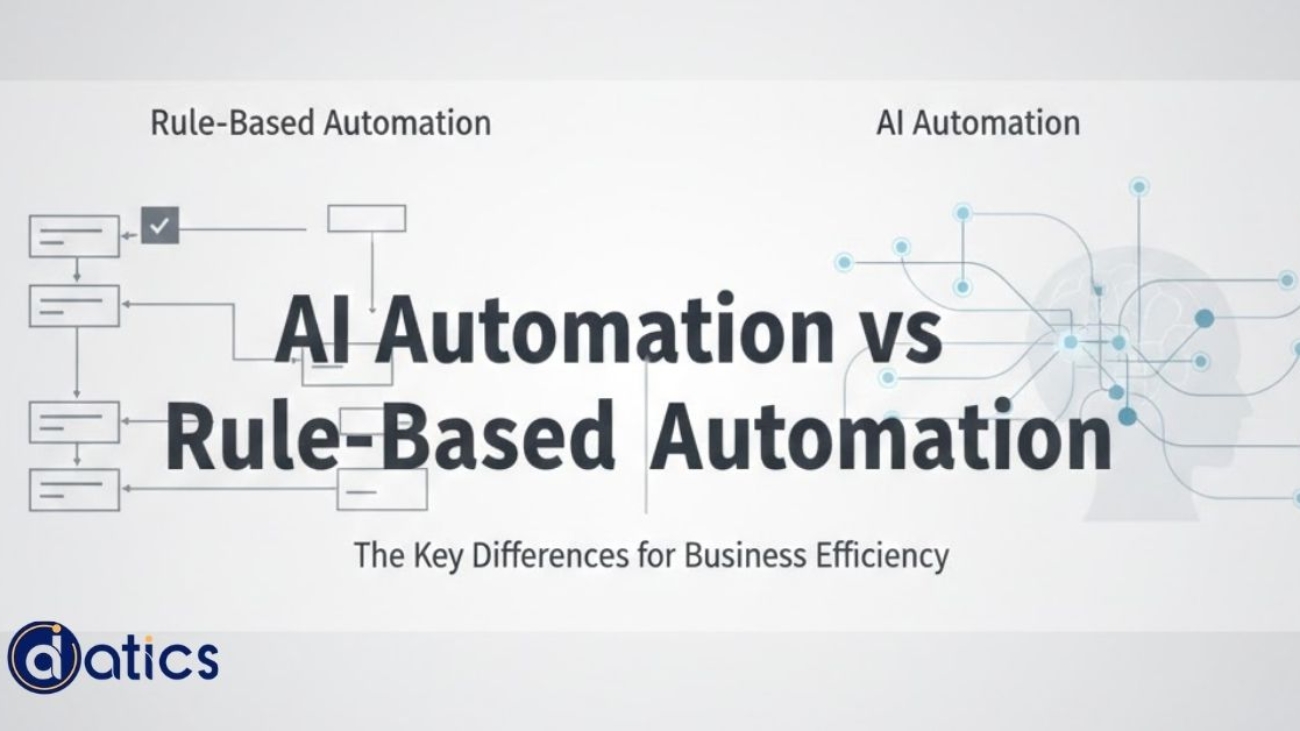
Learn the difference between AI automation and rule-based automation, when to use each, and how businesses can automate smarter without unnecessary complexity.

AI Automation vs Rule-Based Automation: What’s the Difference?

Automation is no longer a future concept reserved for large enterprises. Modern businesses encounter automation decisions early, often before they realize they are making them. Understanding the difference between AI automation and rule-based automation helps beginners make smarter choices before complexity grows.

Many automation failures happen not because technology is wrong, but because the wrong type of automation is applied at the wrong time. This guide explains how both approaches work, when each makes sense, and how businesses can avoid costly missteps.

What Is Business Automation and How Does It Work?

Business automation refers to using technology to perform repetitive or predictable tasks without continuous manual effort. These tasks can include data handling, system coordination, approvals, reporting, or process execution across teams.

Automation works by translating business logic into executable workflows. Once defined, those workflows operate consistently, reducing reliance on human memory and manual intervention. This foundation is explained in more depth in What Is Business Automation, which outlines how automation supports operational stability as companies grow.

Most businesses begin their automation journey with structured processes before exploring more advanced approaches.

AI Automation vs Rule-Based Automation: What’s the Difference?

Rule-based automation follows explicit instructions. When a defined condition is met, a specific action occurs. This type of automation is reliable, predictable, and easy to audit. It works best for stable processes where outcomes are known in advance.

AI automation operates differently. Instead of relying only on fixed rules, AI systems analyze data, recognize patterns, and adjust behavior over time. This allows automation to handle variability, ambiguity, and evolving inputs that rule-based systems struggle with.

For beginners, the key distinction is control versus adaptability. Rule-based automation prioritizes consistency. AI automation prioritizes learning. Understanding this difference prevents unrealistic expectations and reduces the risk of overengineering early systems.

Common Automation Challenges Growing Businesses Face

One of the most common challenges is attempting AI automation before processes are clearly defined. Without structure, AI systems lack meaningful data to learn from, leading to unreliable outcomes.

Another challenge is assuming automation must be intelligent to be valuable. In reality, many businesses gain immediate benefits from simple rule-based automation long before AI becomes necessary.

These challenges highlight why automation decisions should be guided by operational clarity rather than trends or pressure.

How Automation Reduces Operational Costs Without Increasing Headcount

Automation reduces costs by eliminating repetitive manual work that consumes time without creating proportional value. When systems handle routine execution, teams can focus on problem-solving, customer experience, and strategic planning.

Automation also minimizes errors that lead to rework, delays, and inefficiencies. Consistent execution improves reliability across operations, allowing businesses to scale output without scaling staff.

This efficiency is one of the primary reasons companies invest in Automation services as part of long-term operational planning rather than short-term fixes.

When Businesses Should Invest in Automation Services

Businesses should consider automation when workflows repeat, coordination becomes complex, or growth starts creating operational strain. Automation is most effective when introduced intentionally, not reactively.

Early automation investments help companies avoid bottlenecks that limit scalability later. Waiting until systems are overwhelmed often results in rushed implementations that are difficult to maintain.

Organizations like Datics Solutions LLC emphasize aligning automation with business readiness rather than forcing advanced solutions too early.

Choosing the Right Automation Approach for Long-Term Growth

There is no universal answer to whether AI automation or rule-based automation is better. The right choice depends on process maturity, data availability, and business goals.

Rule-based automation provides a strong foundation. AI automation builds on that foundation when adaptability becomes essential. Understanding this progression allows businesses to grow automation capabilities without sacrificing control or clarity.

Automation succeeds when it evolves alongside the business rather than attempting to replace structure with intelligence prematurely.

Conclusion

AI automation and rule-based automation serve different purposes, but both play important roles in modern business operations. Beginners benefit most from understanding how each approach works and when it should be applied.

Automation is not about choosing the most advanced technology. It is about choosing the most appropriate one. When businesses align automation strategy with operational clarity, automation becomes a stabilizing force instead of a source of complexity.

FAQs

What is the main difference between AI automation and rule-based automation?

Rule-based automation follows predefined rules, while AI automation adapts using data and patterns.

Is AI automation better than rule-based automation?

Not always. Rule-based automation is often more effective for stable, predictable processes.

Can small businesses use AI automation?

Yes, but only after processes are clearly defined and sufficient data is available.

Which automation should beginners start with?

Most beginners should start with rule-based automation before exploring AI-driven systems.

Does automation reduce the need for employees?

Automation reduces repetitive work, allowing employees to focus on higher-value tasks.

Learn what business automation is, how it works, and when modern companies should use automation to scale operations efficiently.

What Is Business Automation and How Does It Work?

As companies grow, everyday operations become more complex. Tasks that once felt manageable start taking more time, coordination increases, and manual effort becomes harder to sustain. Business automation exists to solve this challenge by helping companies operate efficiently without relying on constant human intervention.

For beginners, automation often sounds technical or advanced. In reality, business automation is about simplifying work, reducing friction, and creating consistency. Understanding how automation works early allows companies to scale with intention instead of reacting to inefficiencies later.

What Is Business Automation and How Does It Work?

Business automation refers to the use of technology to perform recurring tasks, workflows, or decisions with minimal manual effort. These tasks may include data transfers, approvals, reporting, notifications, or coordination between systems.

Automation works by defining clear logic. When a specific condition is met, a predefined action occurs. Once set up, automated workflows execute consistently, without delays or fatigue. This reliability allows teams to focus on higher-value work instead of repetitive execution.

A thoughtful approach to automation services helps businesses create stable operations that support growth rather than slow it down.

AI Automation vs Rule-Based Automation: What’s the Difference?

Not all automation works the same way. Rule-based automation follows fixed instructions. When a condition is met, a specific action is triggered. This approach is ideal for predictable, structured processes where outcomes are clearly defined.

AI automation introduces adaptability. Instead of relying only on predefined rules, AI-driven systems learn from data and adjust behavior over time. This makes them useful for scenarios where patterns change or decisions depend on context.

For beginners, understanding this distinction prevents unrealistic expectations. Most companies start with rule-based automation and gradually adopt AI automation as complexity increases. Both approaches are valuable when applied intentionally.

Common Automation Challenges Growing Businesses Face

Automation is powerful, but it is not a shortcut. One common challenge is attempting to automate unclear processes. When workflows are not well understood, automation often magnifies inefficiencies instead of fixing them.

Another challenge is automating too early or too aggressively. Over-automation can reduce flexibility and make systems harder to adapt as needs change. Automation should support growth, not lock businesses into rigid structures.

These challenges highlight why automation works best when guided by clarity rather than urgency.

How Automation Reduces Operational Costs Without Increasing Headcount

One of the most practical benefits of automation is cost efficiency. By reducing the time spent on repetitive tasks, automation allows businesses to handle more work without expanding teams.

Automation also reduces errors. Manual processes are prone to mistakes, especially under pressure. Automated workflows follow logic consistently, which improves accuracy and reduces rework. Over time, this leads to lower operational costs and more predictable outcomes.

Rather than replacing people, automation supports teams by removing unnecessary workload and improving reliability.

How Business Automation Fits Into Long-Term Growth

Automation is not an isolated initiative. It supports long-term growth by ensuring that innovation and execution remain aligned as complexity increases. When automation is implemented thoughtfully, it allows businesses to scale without sacrificing quality or clarity.

This role of automation as a growth enabler is explored further in What Is Business Automation, where automation is positioned as a foundational capability rather than a short-term fix.

Automation works best when it executes well-understood ideas consistently.

When Businesses Should Invest in Automation Services

Businesses should consider automation when tasks become repetitive, coordination increases, or growth begins to strain existing workflows. Automation is not a response to failure. It is a proactive investment in stability.

Early automation helps companies avoid operational bottlenecks before they limit growth. Waiting too long often leads to rushed implementations that create fragile systems.

This mindset reflects how Datics Solutions LLC approaches automation, where timing and understanding guide decisions rather than trend-driven pressure.

Automation as a Long-Term Capability

Automation is not a one-time setup. It is a capability that evolves as the business grows. Processes change, tools improve, and automation must adapt accordingly.

For beginners, viewing automation as a living system encourages flexibility. Automation should be reviewed, refined, and improved over time. When treated this way, it becomes a stabilizing force instead of a constraint.

Conclusion

Business automation helps modern companies operate efficiently as they grow. It reduces repetitive work, lowers operational costs, and improves consistency without increasing headcount.

For beginners, automation is not about advanced technology or replacing people. It is about understanding processes, defining clear logic, and building systems that scale responsibly. When implemented with clarity and intent, business automation becomes a foundation for sustainable growth.

FAQs

What is business automation in simple terms?

Business automation uses technology to handle repetitive tasks and workflows consistently.

Is automation only useful for large companies?

No. Small and growing businesses benefit from automation as soon as processes repeat.

Does automation replace employees?

Automation reduces manual workload but often allows teams to focus on higher-value work.

What processes should be automated first?

Tasks that are repetitive, time-consuming, and prone to error are ideal starting points.

How do businesses know they are ready for automation?

When manual processes begin to slow growth or reduce accuracy, automation becomes valuable.

Learn how business automation works, when to use it, and how automation helps modern companies scale efficiently without increasing headcount.

A Complete Guide to Business Automation for Modern Companies

As businesses grow, complexity grows with them. Tasks that were once manageable start consuming time, increasing costs, and slowing decision-making. Business automation exists to address this challenge, not by replacing people, but by enabling teams to focus on work that actually moves the business forward.

For beginners, automation is often misunderstood as a late-stage upgrade. In reality, automation becomes relevant as soon as processes repeat, coordination increases, and consistency matters. Understanding automation early helps companies scale responsibly instead of reacting to inefficiencies later.

\What Is Business Automation and How Does It Work?

Business automation refers to the use of technology to perform recurring tasks, workflows, or decisions with minimal manual involvement. These tasks may include data handling, process coordination, approvals, reporting, or system-to-system communication.

Automation works by defining clear rules or logic that guide how a task should be executed. Once those rules are in place, systems can perform the task consistently, without fatigue or delay. This does not eliminate human involvement. Instead, it reduces dependency on manual execution for predictable work.

A thoughtful approach to automation services allows businesses to build reliability into daily operations while freeing teams to focus on strategic decisions.

AI Automation vs Rule-Based Automation: What’s the Difference?

Not all automation works the same way. Rule-based automation follows predefined instructions. When a condition is met, a specific action occurs. This approach works well for structured, predictable processes where outcomes are known.

AI automation introduces adaptability. Instead of relying solely on fixed rules, AI-driven systems learn from data and adjust behavior over time. This makes them suitable for scenarios where patterns evolve or decisions depend on context rather than strict conditions.

For beginners, understanding this difference prevents unrealistic expectations. Most businesses begin with rule-based automation and introduce AI gradually as complexity increases. Both approaches play a role, but clarity about purpose determines which one fits best.

Common Automation Challenges Growing Businesses Face

Automation is powerful, but it is not an automatic success. Many growing businesses struggle because they attempt to automate before fully understanding their processes. When workflows are unclear, automation often amplifies inefficiencies instead of solving them.

Another challenge is over-automation. Automating too much, too early can reduce flexibility and create rigid systems that are difficult to adapt. Automation should support growth, not lock businesses into premature decisions.

These challenges highlight why automation must be guided by understanding, not urgency.

How Automation Reduces Operational Costs Without Increasing Headcount

One of the most practical benefits of automation is cost efficiency. Automation reduces the time spent on repetitive tasks, which lowers operational strain without requiring additional staff. Instead of hiring to manage volume, businesses rely on systems to maintain consistency.

Automation also reduces error-related costs. Manual processes are prone to mistakes, especially under pressure. Automated workflows follow logic precisely, improving accuracy and reducing rework.

Over time, these efficiencies compound. Automation supports growth without proportional increases in overhead, which is essential for sustainable scaling.

How Automation Builds on Innovation, Not Replaces It

Automation does not exist in isolation. It builds on the innovation that defines how products and services evolve. Innovation introduces new ways of delivering value, while automation ensures those ideas can operate reliably at scale.

Without innovation, automation risks reinforcing outdated processes. Without automation, innovation struggles to scale. The connection between the two is essential for long-term success and is explored further in how innovation shapes long term product success, where innovation is positioned as the foundation automation depends on.

Automation works best when it executes ideas that are already well understood.

When Businesses Should Invest in Automation Services

Businesses should consider automation when tasks become repetitive, coordination becomes complex, or growth begins to strain existing workflows. Automation is not a reaction to failure. It is a proactive investment in stability and scalability.

Early automation helps businesses avoid operational bottlenecks before they limit growth. Waiting too long often leads to rushed decisions that create fragile systems.

This mindset reflects how Datics Solutions LLC approaches automation strategy, where timing and clarity guide decisions rather than pressure or trend-following.

Automation as a Long-Term Capability, Not a Tool

Automation is not a single implementation. It is a capability that evolves with the business. As processes change, automation must adapt. Treating automation as a living system ensures it continues to support growth rather than restrict it.

For beginners, this perspective is critical. Automation should be designed with flexibility, allowing improvements without disruption. When automation is approached thoughtfully, it becomes a stabilizing force instead of a constraint.

Conclusion

Business automation helps modern companies scale operations without increasing complexity or cost. It reduces repetitive work, improves consistency, and supports sustainable growth when implemented with clarity.

For beginners, automation is not about replacing people or rushing into advanced systems. It is about understanding processes, defining intent, and building systems that grow alongside the business. When automation follows innovation and clear direction, it becomes a powerful enabler of long-term success.

FAQs

What is business automation in simple terms?

Business automation uses technology to handle repetitive tasks and workflows consistently.

Is automation only for large companies?

No. Small and growing businesses benefit from automation as soon as processes repeat.

Does automation eliminate jobs?

Automation reduces manual workload but often allows teams to focus on higher-value work.

What should be automated first?

Tasks that are repetitive, time-consuming, and prone to error are ideal starting points.

How do businesses know they are ready for automation?

When manual processes begin to slow growth or reduce accuracy, automation becomes valuable.

Learn how innovative ideas become scalable digital products through clear direction, structure, and intentional product decisions.

Turning Innovative Ideas Into Scalable Digital Products

Innovative ideas are often exciting at the beginning. They feel promising, creative, and full of potential. Yet many digital products fail not because the idea lacked value, but because the path from idea to scale was never clearly defined.

For beginners, innovation can feel like the hardest part of building a product. In reality, innovation is only the starting point. Turning an idea into a scalable digital product requires structure, discipline, and a clear understanding of how growth actually happens. Without this foundation, even strong ideas struggle to move beyond early adoption.

Why Innovative Ideas Alone Are Not Enough

An idea may solve a real problem, but scalability depends on more than problem–solution fit. Digital products must work reliably as usage grows, adapt to new demands, and remain clear in purpose as complexity increases.

Many beginners assume that once an idea works for a small group of users, scaling will happen naturally. In practice, growth often exposes gaps in structure, decision-making, and product direction. Innovation without preparation can create friction instead of momentum.

Scalability requires intention, not just inspiration.

What Scalability Really Means in Digital Products

Scalability in digital products refers to the ability to grow without losing stability, clarity, or user trust. It is not only about handling more users. It also involves maintaining performance, consistency, and decision-making quality as the product evolves.

A scalable product continues to deliver value even as new features are added, teams grow, and markets expand. This requires early attention to how ideas are translated into systems rather than one-off solutions.

Understanding scalability early helps beginners avoid building products that cannot support their own success.

How Innovation Becomes Actionable Through Structure

Innovation becomes actionable when ideas are shaped into repeatable processes. This includes defining how features are prioritized, how decisions are validated, and how learning feeds back into development.

A structured innovation Service approach helps teams move beyond experimentation into sustainable progress. It ensures that new ideas are evaluated based on impact, feasibility, and alignment with long-term goals rather than excitement alone.

For beginners, structure does not limit creativity. It protects it by preventing promising ideas from being diluted or abandoned prematurely.

The Role of Product Direction in Scaling Innovation

Scalable products are guided by clear product direction. Direction defines what the product is building toward and what it intentionally avoids. Without this clarity, innovation efforts often pull the product in conflicting directions.

When direction is clear, innovation strengthens the product’s identity instead of fragmenting it. Teams can expand features and capabilities without confusing users or losing focus.

This relationship between innovation and sustained growth is explored further in how innovation shapes long term product success, where innovation is shown to be most effective when guided by a clear sense of purpose.

Why Many Products Break During the Scaling Phase

Scaling exposes weaknesses that are invisible in early stages. Assumptions that worked for a small user base may fail at scale. Decisions made quickly early on can become constraints later.

Common issues include unclear ownership, inconsistent user experience, and features that do not scale conceptually even if they scale technically. These problems often trace back to how ideas were translated into product decisions.

For beginners, recognizing that scaling is a different phase than validation helps set realistic expectations and better preparation.

Turning Ideas Into Systems, Not Features

Scalable products are built as systems rather than collections of features. Systems allow products to adapt without constant reinvention. They support consistent decision-making as complexity grows.

When ideas are implemented as isolated features, scaling becomes fragile. Each addition increases maintenance and confusion. When ideas are embedded into systems, growth becomes more manageable and predictable.

This mindset shift is essential for beginners who want their products to grow beyond early success.

Learning and Iteration as Drivers of Scalable Growth

Scalable digital products evolve through learning. User behavior, feedback, and performance data inform future decisions. Innovation becomes a cycle of observation, adjustment, and improvement rather than a series of disconnected experiments.

Teams that scale successfully treat innovation as a learning process. They refine ideas based on real-world use instead of assumptions. This reduces risk and builds confidence over time.

This approach supports sustainable growth without sacrificing stability.

Balancing Speed and Stability While Scaling

Beginners often feel pressure to move fast. Speed matters, but uncontrolled speed can undermine scalability. Products that grow too quickly without structure often struggle to maintain quality.

Balancing speed with stability allows innovation to progress without creating long-term issues. Clear priorities, thoughtful decision-making, and intentional iteration help products grow at a pace they can support.

Scalability is not about slowing down. It is about growing responsibly.

How Early Decisions Shape Long-Term Outcomes

Early decisions have lasting impact. Choices about architecture, workflows, and priorities influence how easily products can scale later. Innovation at this stage should focus on flexibility and clarity rather than perfection.

Beginners benefit from understanding that early trade-offs are inevitable, but they should be intentional. Building with scale in mind does not mean overengineering. It means avoiding decisions that limit future growth unnecessarily.

This perspective reflects how Datics Solutions LLC approaches digital product thinking, where early clarity supports long-term adaptability rather than short-term fixes.

Conclusion

Turning innovative ideas into scalable digital products requires more than creativity. It requires structure, direction, and a clear understanding of how growth affects products over time.

For beginners, innovation is only the beginning. Scalability depends on how ideas are translated into systems, how learning guides iteration, and how direction keeps growth aligned. When innovation is approached with intention, products are better positioned to scale without losing what made them valuable in the first place.

FAQs

What does it mean to scale a digital product?

Scaling means growing usage and capabilities without losing performance, clarity, or stability.

Why do innovative products fail to scale?

Many fail because early decisions were not made with long-term growth in mind.

Is scalability only a technical concern?

No. Scalability also involves decision-making, product direction, and user experience.

When should beginners think about scalability?

As early as possible, ideally once the core idea shows real user value.

Can innovation slow down scalability?

Yes, if innovation is pursued without structure or alignment.

Learn why innovation fails without clear product direction and how early clarity helps teams build focused, stable, and successful products.

Why Innovation Fails Without Clear Product Direction

Innovation is often treated as a quick fix when products struggle to grow. Teams introduce new features, adopt new tools, or experiment with new ideas, expecting progress to follow. Yet many of these efforts fail to create meaningful impact.

The problem is rarely a lack of creativity. Innovation most often fails because it is pursued without clear product direction. When teams are unsure about what they are building and why, innovation becomes scattered rather than strategic. For beginners, understanding this early can prevent wasted effort and misaligned growth.

What Product Direction Really Means

Product direction is the clarity that guides every decision a team makes. It defines the problem being solved, the users being served, and the value the product is meant to deliver consistently over time. Direction is not a rigid plan. It is a shared understanding that helps teams evaluate ideas with confidence.

Without direction, teams struggle to prioritize. Every idea feels urgent, and innovation turns into reaction rather than intention. Clear direction provides a reference point that helps teams decide which changes move the product forward and which ones introduce noise.

Why Innovation Without Direction Breaks Down

When innovation is pursued without direction, it often looks productive on the surface. Features are shipped, updates are released, and experimentation is encouraged. However, these changes rarely compound into growth because they are not connected to a clear purpose.

Innovation without direction leads to inconsistency. One update pulls the product in one direction, while another contradicts it. Users feel this fragmentation, and trust begins to erode. Over time, innovation becomes associated with instability instead of progress.

A focused innovation Service approach works only when ideas are aligned with a clear understanding of what the product stands for.

How Lack of Direction Increases Product Risk

Many teams assume innovation reduces risk by keeping products competitive. In reality, innovation without direction often increases risk. Changes are introduced without a clear way to measure impact, and unintended consequences follow.

Without direction, teams cannot confidently assess whether an innovation strengthens or weakens the product. This leads to frequent reversals, rework, and internal doubt. Instead of learning from outcomes, teams spend time correcting missteps.

For beginners, this reinforces an important lesson: direction is not a limitation. It is a safeguard that allows innovation to evolve without destabilizing the product.

The Connection Between Direction and Long-Term Innovation

Direction and innovation are not opposing forces. Direction defines the destination, while innovation determines how the product adapts along the way. When the two work together, innovation strengthens consistency instead of undermining it.

Products that achieve sustained growth tend to innovate within a clear framework. They adapt to user needs while staying anchored to their core value. This relationship is explored in more detail in how innovation shapes long term product success, which explains how innovation supports relevance when it builds on clarity rather than replacing it.

Innovation becomes more effective when it extends direction instead of compensating for its absence.

Why Beginners Often Skip Product Direction

Beginners often prioritize execution. Building and shipping feel tangible, while defining direction feels abstract or slow. As a result, direction is assumed rather than articulated.

This leads to innovation driven by trends, competitor behavior, or internal pressure. While these signals can be useful, they should not replace a clear understanding of purpose. Innovation guided only by external signals often lacks coherence and sustainability.

Clarifying direction early saves time and effort later. It ensures that innovation contributes to progress instead of distraction.

How Clear Direction Strengthens Innovation Decisions

When direction is clear, innovation decisions become easier and more confident. Teams can evaluate ideas based on whether they strengthen the product’s purpose. This reduces debate, aligns effort, and improves learning from outcomes.

Clear direction also allows teams to innovate without fear. Changes are tested against known goals, making it easier to understand what worked and why. Innovation becomes a process of informed adjustment rather than trial and error.

This disciplined approach reflects how Datics Solutions LLC approaches product thinking, where clarity guides creativity instead of limiting it.

Building Direction Before Scaling Innovation

Innovation scales best when direction is already established. Early clarity allows teams to expand confidently, knowing that changes align with long-term intent. Without this foundation, scaling innovation amplifies confusion rather than value.

For beginners, this means investing time in understanding the product’s purpose before accelerating change. Direction does not need to be perfect, but it must be intentional.

Innovation succeeds when it is guided by understanding rather than urgency.

Conclusion

Innovation fails not because teams lack ideas, but because those ideas lack direction. Without clear product direction, innovation becomes fragmented, risky, and difficult to sustain.

For beginners, recognizing this relationship early changes how innovation is approached. Direction provides the structure that allows innovation to strengthen products instead of destabilizing them. When innovation and direction work together, growth becomes more focused, resilient, and meaningful.

FAQs

Why does innovation fail in many products?

Innovation often fails because it is pursued without clear product direction or alignment.

What is product direction in simple terms?

Product direction defines what problem the product solves and who it is built for.

Can innovation work without a clear direction?

Short-term changes may work, but long-term innovation requires direction to succeed.

Is product direction more important than innovation?

Direction guides innovation. Without it, innovation loses effectiveness.

When should beginners define product direction?

As early as possible, ideally before scaling innovation efforts.

Learn the difference between innovation and optimization and how each drives product growth at different stages of software development.

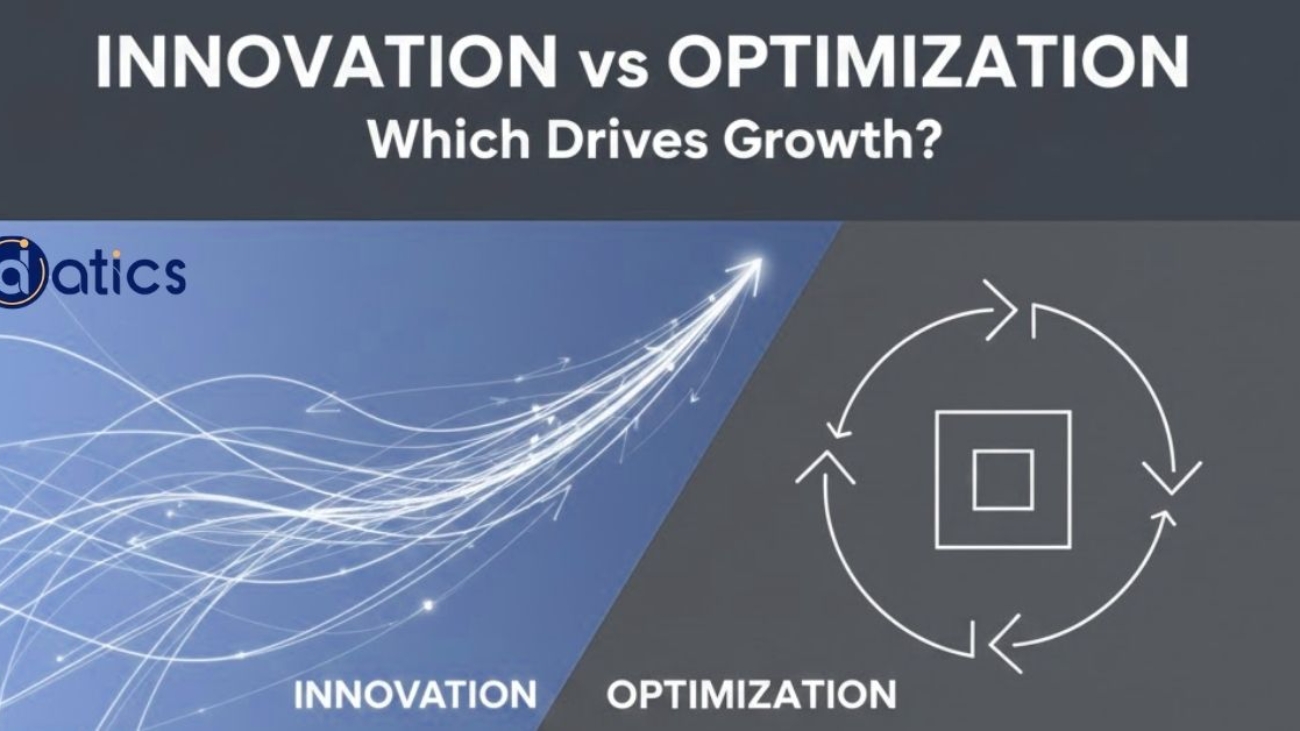
Innovation vs Optimization: Which One Drives Growth?

As products evolve, teams often face a strategic crossroads. Should they focus on innovation to introduce new ideas and capabilities, or should they optimize what already exists to improve performance and efficiency? For beginners, this distinction is not always clear, yet confusing the two can quietly slow growth.

Growth does not come from choosing innovation or optimization blindly. It comes from understanding how each approach contributes differently to progress and knowing when one matters more than the other. Products that grow sustainably tend to treat innovation and optimization as complementary forces rather than competing priorities.

Understanding Innovation in the Context of Product Growth

Innovation is about expanding what a product can offer. It involves introducing meaningful changes that improve how problems are solved or how value is delivered. In software development, innovation might appear as new workflows, smarter automation, or entirely new ways users interact with the product.

A structured innovation mindset helps teams think beyond incremental improvements. Innovation becomes most valuable when existing solutions no longer fully address user needs. Rather than reacting to trends, teams innovate to stay aligned with changing expectations.

For beginners, innovation should be understood as intentional evolution, not constant disruption.

What Optimization Means for Growing Products

Optimization focuses on refinement rather than expansion. It improves performance, usability, and reliability within an existing framework. Faster load times, clearer navigation, and smoother workflows are all examples of optimization.

Optimization often delivers visible results quickly. It strengthens what already works and removes friction that limits adoption or satisfaction. However, optimization does not change the underlying value proposition of a product. It assumes that the core idea is already correct.

For early-stage teams, optimization is most effective when the product direction is validated and user needs are well understood.

Why Innovation and Optimization Are Often Confused

The confusion between innovation and optimization usually comes from surface-level improvements. Teams may label small adjustments as innovation, even when those changes only refine existing features. This creates the illusion of progress without expanding impact.

Another reason for confusion is pressure. Beginners often feel the need to innovate continuously to appear competitive. As a result, they may overlook optimization opportunities that could deliver stronger short-term growth.

Understanding the difference helps teams avoid misaligned effort and focus on the type of change that truly supports growth.

When Innovation Becomes the Primary Growth Driver

Innovation drives growth when products reach a point where optimization no longer solves deeper problems. This often happens as markets mature or user expectations shift. At this stage, improving performance alone is not enough. The product needs new ways to deliver value.

Innovation opens new growth paths by addressing unmet needs or enabling new use cases. Without it, growth plateaus because the product remains confined to its original assumptions.

The long-term role of innovation in sustaining growth is discussed further How Innovation Shapes Long-Term Product Success

When Optimization Drives More Immediate Growth

Optimization drives growth when users already see value in the product but encounter friction. Improving speed, clarity, or reliability can significantly increase engagement and retention.

For beginners, optimization often feels safer because it builds on known strengths. It reduces risk and improves consistency. However, relying exclusively on optimization can delay necessary innovation if user needs are changing beneath the surface.

Optimization works best when it supports a product that is already aligned with its users.

Balancing Innovation and Optimization Over Time

Sustainable growth rarely comes from choosing one approach permanently. Successful products move intentionally between innovation and optimization as they mature. Innovation creates new opportunities, while optimization strengthens them.

Teams that grow consistently understand when to explore new ideas and when to refine execution. This balance prevents stagnation without overwhelming users with constant change.

For beginners, learning this rhythm early helps avoid extremes that slow progress or erode trust.

How Product Maturity Influences the Right Choice

The stage of a product plays a significant role in determining whether innovation or optimization should take priority. Early products often need innovation to clarify value, while growing products benefit from optimization to scale smoothly.

Ignoring product maturity can lead to misplaced effort. Innovating too early can create confusion, while optimizing too long can cause stagnation. Growth accelerates when teams align their approach with where the product truly stands.

This awareness allows teams to make informed decisions instead of reacting to pressure.

Making Growth Decisions as a Beginner Team

Beginners often assume that innovation is always the answer to growth challenges. In reality, growth depends on diagnosing the right problem. If users struggle with existing workflows, optimization may unlock growth faster. If the product no longer fits user needs, innovation becomes essential.

The key is clarity. Teams that understand whether they are refining value or redefining it make better growth decisions.

This balanced thinking reflects how Datics Solutions LLC approaches product strategy, where growth is driven by understanding rather than assumption.

Conclusion

Innovation and optimization both play essential roles in driving product growth. Innovation expands what a product can become, while optimization strengthens how it performs today. Growth slows when teams confuse the two or rely on one at the expense of the other.

For beginners, understanding this distinction early prevents wasted effort and misaligned decisions. Products that grow sustainably are those that innovate when necessary and optimize with intention, guided by clarity rather than pressure.

FAQs

What is the difference between innovation and optimization?

Innovation introduces new ways to deliver value, while optimization improves how existing value is delivered.

Which one drives growth faster?

It depends on the product stage. Optimization often delivers quick wins, while innovation enables long-term growth.

Can optimization replace innovation?

No. Optimization strengthens existing solutions but cannot address fundamental shifts in user needs.

Is innovation risky for beginner teams?

Innovation carries risk if done without clarity, but it becomes safer when grounded in real user insight.

How do teams know when to innovate or optimize?

By evaluating whether growth barriers come from execution issues or from outdated assumptions.

What Innovation Really Means in Software Development

What Innovation Really Means in Software Development

Innovation is one of the most commonly used terms in software development, yet one of the most misunderstood. For beginners, innovation often sounds like breakthrough technology, disruptive features, or entirely new products. In reality, innovation in software development is rarely about sudden transformation. It is about continuous improvement guided by understanding, purpose, and long-term thinking.

Many software products fail not because they lack innovation, but because innovation is misunderstood or applied inconsistently. To build products that last, teams need a clearer understanding of what innovation truly means and how it fits into the software development lifecycle.

How Innovation Is Commonly Misunderstood in Software Teams

In early-stage software teams, innovation is often equated with speed or novelty. Shipping new features quickly is seen as progress, even when those features are not grounded in real user needs. This creates the illusion of innovation without delivering meaningful value.

Another common misconception is that innovation requires constant change. Teams feel pressure to reinvent parts of the product frequently, which can lead to instability and confusion. For beginners, this approach often results in scattered direction rather than sustainable growth.

True innovation in software development is not about doing more. It is about doing the right things at the right time.

What Innovation Actually Means in Software Development

Innovation in software development refers to the deliberate improvement of how a product solves problems. It involves understanding how users interact with the software, identifying friction, and making thoughtful changes that enhance value over time.

A structured innovation approach helps teams focus on relevance rather than novelty. Innovation can appear as better workflows, improved usability, performance optimizations, or clearer user experiences. These changes may not look dramatic, but they often have the greatest impact.

For beginners, this definition reframes innovation as a mindset rather than a single event. It encourages teams to observe, learn, and evolve intentionally.

Why Innovation Is a Process, Not a One-Time Event

Software products live in changing environments. User expectations shift, technologies evolve, and business goals adapt. Innovation must therefore be continuous. Treating innovation as a one-time effort often leads to stagnation once the initial excitement fades.

When innovation is viewed as an ongoing process, teams become more responsive and resilient. They learn from usage patterns, feedback, and performance data. Each iteration strengthens the product instead of destabilizing it.

This process-oriented view helps beginners avoid the trap of overhauling products unnecessarily while still allowing meaningful progress.

How Innovation Supports Long-Term Product Direction

Innovation is most effective when it aligns with a clear product direction. Without direction, innovation efforts often pull products in multiple directions, weakening focus. With direction, innovation reinforces the product’s purpose.

Strong ideation provides the clarity that innovation builds upon. When teams understand the core problem they are solving, innovation becomes a tool for refinement rather than reinvention. This connection between innovation and long-term success is explored further in how innovation shapes long term product success, where innovation is positioned as a driver of sustained relevance rather than short-term gains.

Innovation strengthens products when it extends a clear vision instead of replacing it.

Innovation as a Response to Real User Behavior

One of the most reliable sources of innovation is real user behavior. How users navigate software, where they hesitate, and what they avoid often reveals opportunities for improvement. Innovation driven by these insights tends to be more impactful than ideas generated in isolation.

For beginners, this highlights the importance of observation. Innovation does not always come from new ideas, but from better understanding of existing ones. Small, user-centered improvements often compound into significant long-term gains.

This approach reduces risk and increases confidence in innovation decisions.

Balancing Innovation With Product Stability

A key challenge in software development is balancing innovation with stability. Users rely on consistency, while teams seek improvement. Innovation helps navigate this balance by prioritizing changes that enhance value without disrupting trust.

Thoughtful innovation avoids unnecessary complexity. It focuses on changes that align with user expectations and product goals. Over time, this balance creates products that feel dependable yet responsive.

For beginners, learning this balance early prevents the cycle of constant change followed by user frustration.

Why Understanding Innovation Early Matters for Beginners

Many beginners assume that innovation becomes relevant only after a product gains traction. In practice, innovation starts the moment a product enters real use. Early understanding helps teams recognize that growth is not driven by sudden changes later, but by how thoughtfully decisions are made from the beginning.

When teams understand innovation early, they develop stronger habits. They question assumptions instead of rushing execution, reflect on outcomes instead of chasing features, and evolve with intention rather than reacting to pressure. This way of thinking reduces unnecessary risk and builds confidence in long-term decisions.

This perspective aligns with how Datics Solutions LLC approaches product thinking, where innovation is treated as a guiding mindset from the start, not a correction applied after problems appear. When innovation is understood correctly, it supports stability and clarity instead of disruption, helping products adapt naturally as they grow.

Conclusion

Innovation in software development is not about constant reinvention or chasing trends. It is about thoughtful progress guided by understanding and purpose. For beginners, recognizing innovation as a continuous, learning-driven process changes how products are built and improved.

When innovation is aligned with clear direction and real user behavior, it supports long-term success rather than short-term noise. Software products that innovate with intention are better positioned to remain relevant, trusted, and valuable over time.

FAQs

What does innovation mean in software development?

Innovation means improving how software delivers value by adapting to user needs, technology changes, and business goals.

Is innovation only about adding new features?

No. Innovation often involves improving usability, performance, or workflows rather than adding features.

Why do software teams struggle with innovation?

Many teams confuse innovation with speed or novelty instead of focusing on relevance and purpose.

Can innovation harm product stability?

Yes, if applied without direction. Thoughtful innovation balances improvement with consistency.

When should beginners focus on innovation?

Innovation should begin early and continue throughout the product lifecycle.