eta Description (under 160 characters): Discover how AI custom software reduces operational costs, improves efficiency, and drives smarter business decisions for long-term savings.

How AI Custom Software Actually Reduces Business Costs

In this competitive business environment, companies are constantly searching for ways to improve efficiency while reducing operational expenses. Traditional cost-cutting measures, such as downsizing staff or outsourcing, may offer short-term relief but rarely create long-term value. Enter AI custom software development, a game-changing solution that not only optimizes workflows but also drives measurable cost savings across operations.

Custom AI solutions are tailored to meet a business’s unique requirements, automating repetitive tasks, providing predictive insights, and enhancing decision-making processes. This blog explores how AI custom software can directly reduce business costs and why companies like Datics Solution LLC are helping organizations unlock this potential.

Understanding AI Custom Software

Before discussing cost reduction, it’s important to understand what AI custom software is. Unlike off-the-shelf software, custom AI solutions are developed specifically for a company’s workflows, data sets, and operational needs. These systems combine machine learning, automation, predictive analytics, and business intelligence to deliver actionable insights and efficiency improvements.

Key benefits include:

  • Tailored solutions for industry-specific challenges
  • Scalable and adaptable architecture
  • Integration with existing enterprise systems
  • Intelligent automation to minimize human intervention

By aligning technology with business goals, AI custom software not only enhances performance but also prevents unnecessary costs.

Automation of Repetitive Tasks

One of the most immediate ways AI custom software reduces costs is by automating repetitive tasks. Manual processes such as data entry, invoice processing, and report generation can consume significant employee time. Automating these tasks with AI allows employees to focus on higher-value work, improving productivity without increasing headcount.

For example, a business using an AI-driven invoicing portal can process hundreds of transactions in minutes, compared to hours or even days manually. Over time, the cumulative savings in labor costs can be substantial.

Reducing Errors and Operational Waste

Human error is an unavoidable source of operational inefficiency. Mistakes in data entry, financial reporting, or inventory management can result in lost revenue, compliance penalties, and wasted resources. AI custom software minimizes these risks through automated validation and real-time error detection.

By implementing intelligent checks, AI systems ensure that:

  • Data is accurate and consistent
  • Compliance standards are maintained
  • Redundant operations are eliminated

Reducing errors not only saves money but also strengthens trust with customers and stakeholders.

Optimizing Resource Allocation

AI custom software can analyze business operations and provide insights into how resources are being used. From workforce scheduling to inventory management, predictive analytics help companies make smarter decisions.

For instance, a retail business can use AI to predict customer demand and optimize stock levels, reducing overstocking costs. Similarly, manufacturing firms can schedule machine usage efficiently, avoiding unnecessary energy consumption or downtime.

Enhancing Decision-Making with Predictive Analytics

AI custom software does more than automate; it provides actionable intelligence. Predictive analytics allows organizations to anticipate trends, forecast demand, and mitigate risks before they occur.

Consider the following table illustrating potential cost savings through predictive AI:

Use Case Traditional Approach With AI Custom Software Cost Impact
Inventory Management Overstocking and understocking errors Accurate demand forecasting Reduces carrying costs by 15–30%
Customer Support Manual ticket assignment and delays AI-based ticket routing and automation Cuts support costs by up to 40%
Sales Forecasting Historical trend analysis Predictive revenue insights Minimizes lost opportunities and waste

These insights allow businesses to allocate resources more efficiently, preventing overspending and unnecessary labor costs.

Streamlining Customer Service

Customer support is often one of the largest operational expenses for companies. AI custom software can deploy chatbots, AI assistants, and automated ticketing systems to handle routine inquiries.

By automating repetitive support tasks, companies can:

  • Reduce the number of support staff required for routine issues
  • Improve response times and customer satisfaction
  • Focus human agents on complex or high-value tasks

The result is a leaner, more efficient support operation that directly impacts the bottom line.

Minimizing Maintenance and Downtime Costs

For companies with machinery, servers, or IT infrastructure, unexpected downtime can be extremely costly. AI custom software can monitor systems, predict failures, and schedule maintenance proactively.

By using predictive maintenance powered by AI:

  • Equipment operates more reliably
  • Downtime is minimized
  • Maintenance costs are reduced due to early interventions

This proactive approach translates into significant savings for industries like manufacturing, logistics, and IT services.

Improving Employee Productivity and Engagement

AI custom software doesn’t just save costs through automation; it also increases overall workforce efficiency. By removing repetitive tasks and providing data-driven insights, employees can focus on strategic, high-impact activities.

Improved productivity often leads to:

  • Higher employee satisfaction
  • Reduced turnover costs
  • More innovative problem-solving within teams

Over time, these benefits amplify the financial advantages of AI adoption.

Why Partner with Datics Solution LLC for AI Custom Software

Choosing the right development partner is critical for realizing the cost-saving potential of AI. Datics Solution LLC specializes in building AI custom software that aligns with business objectives, integrates seamlessly with existing workflows, and prioritizes security and scalability.

Their expertise ensures

  • Custom solutions tailored to operational needs
  • Integration with current enterprise systems
  • Predictive analytics and workflow automation
  • Long-term cost reduction and efficiency gains

Conclusion

AI custom software is more than a technological upgrade — it’s a strategic investment that can significantly reduce business costs while enhancing operational efficiency, accuracy, and scalability. By automating repetitive tasks, improving decision-making, optimizing resources, and streamlining customer service, AI solutions provide measurable savings across every department.

Companies that adopt AI thoughtfully and work with experienced partners like Datics Solution LLC not only see immediate cost benefits but also gain a long-term competitive advantage in their industries.

FAQs

1. How does AI custom software reduce operational costs?

By automating repetitive tasks, minimizing errors, optimizing resources, and providing predictive insights that prevent waste.

2. Can small businesses benefit from AI custom solutions?

Yes, even small businesses can see cost savings by automating workflows, improving decision-making, and enhancing customer support.

3. How long does it take to implement AI custom software?

Implementation timelines vary based on complexity, but working with experienced partners can ensure a faster, efficient rollout.

4. Does AI replace employees?

No. AI complements employees by handling routine tasks, allowing them to focus on strategic and creative work.

5. How do I choose the right AI software development partner?

Look for expertise in AI, a strong portfolio, a clear understanding of your business needs, and a focus on security and scalability.
Top AI Security Risks Every Business Must Know

Top Security Risks to Consider Before Implementing AI Solutions

Artificial Intelligence is now central to digital transformation, reshaping how organizations operate, scale, and compete. Yet as AI capabilities grow, so do the security risks surrounding them. Companies rushing to integrate AI often underestimate how significantly these technologies can impact data security, infrastructure stability, and long-term compliance.

As an AI consultant, one of the first conversations I have with business leaders is not about what AI can do, but about what can go wrong if it’s implemented without the right safeguards. Properly deployed, AI is a competitive advantage. Poorly deployed, it becomes a liability.

This article explains the critical security risks every organization must carefully evaluate before adopting AI along with practical, expert insights to help you build AI systems that are secure, scalable, and trustworthy.

Why Security Must Come Before Innovation

Businesses often see AI as the answer to operational inefficiencies, rising costs, and process complexity. They’re not wrong AI can automate workflow-intensive tasks, enhance decision-making, and deliver extraordinary productivity gains.

But AI systems consume vast volumes of sensitive data and interact with multiple layers of your digital ecosystem. This means every new AI tool increases your potential attack surface.

A secure AI environment requires more than compliance checklists. It demands strategic planning, transparent processes, structured development, and ongoing monitoring. Companies like Datics Solution LLC help businesses integrate AI responsibly by embedding security into the foundation of every solution not as an afterthought, but as a core design principle.

Data Privacy Risks: How AI Models Handle Sensitive Information

AI thrives on data. However, the same data that powers intelligent decisions can become an exposure point if not properly safeguarded.

Most AI systems access customer profiles, financial data, business insights, or internal documents. If these flows are not encrypted, categorized, and monitored, you risk unauthorized access, data leaks, and compliance violations.

One of the most overlooked problems is that many organizations don’t fully understand how their AI models use stored information. Sensitive inputs can unintentionally be retained for longer than expected, or worse be reproduced by models during future outputs.

This is why any organization investing in AI custom software development should work with a partner who builds secure, privacy-first AI architectures.

Adversarial Attacks: When Hackers Manipulate AI Models

Adversarial attacks involve feeding manipulated input to an AI model to make it behave incorrectly. Although subtle to the human eye, these inputs can dramatically alter model predictions.

This is a growing threat in industries using visual recognition, fraud detection, autonomous systems, and decision-making algorithms. Even a slight adjustment in input data can cause the AI to misclassify, misinterpret, or misdirect.

What makes adversarial attacks concerning is that they exploit the intelligence of the model itself — not the infrastructure around it. Strengthening system firewalls doesn’t protect you against a model being tricked.

Organizations must conduct regular model integrity tests, monitor unusual behaviors, and train models using adversarial-resistant methods.

Third-Party AI Tools and Supply Chain Vulnerabilities

The rise of plug-and-play AI tools has made implementation faster but also riskier. When your internal systems rely on a third-party AI provider, you inherit their vulnerabilities.

Unlike traditional software, AI models learn continuously, making third-party security audits more complex. Businesses often prioritize convenience over due diligence, assuming external vendors follow strong practices. Not all do.

Before integrating any external AI component whether it’s automation software, chatbots, or analytics engines assess the provider’s data handling protocols, storage transparency, encryption layers, and compliance readiness.

To understand broader market trends that impact AI adoption decisions, you can explore this resource:
Before integrating any external AI component—whether it’s automation software, chatbots, or advanced analytics tools—it’s essential to assess the provider’s data practices, including how they store information, what encryption standards they use, and how well they maintain regulatory compliance. For a deeper understanding of the evolving market forces shaping these decisions, you can explore the latest AI software trends every enterprise should know in 2025 published by Datics AI.

AI Bias and Ethical Security Risks

Security risks aren’t always technical. Some arise from the way AI models are trained. AI systems can unintentionally produce biased or inaccurate results if trained on incomplete or non-representative data.

This can lead to incorrect decisions in hiring, credit scoring, customer segmentation, or operational recommendations — damaging both reputation and trust. Businesses should require transparency from their AI development partners about how models are trained, validated, and corrected over time.

Ethical AI is no longer optional; it is now directly tied to legal, security, and brand stability.

Integration Risks: When AI Disrupts Your Existing Systems

Many businesses assume adding AI means simply connecting new tools to old systems. In reality, integration exposes vulnerabilities hidden in legacy software, outdated APIs, or poorly documented workflows.

AI solutions often depend on several data sources working together. If one is insecure, the entire chain becomes vulnerable.

This is why AI deployment must be executed by engineers capable of auditing infrastructure end-to-end and modernizing systems where needed. Poor integration not only leads to security weaknesses but also inconsistent AI performance, incorrect outputs, and operational disruptions.

Human Error: The Most Common AI Security Weakness

Even the most advanced security frameworks fail if employees misuse AI tools. AI systems amplify the consequences of small mistakes a misconfigured setting, a poorly labeled dataset, or accidental access granted to a junior team member.

Unlike traditional software, AI continuously evolves with user interaction. This means one incorrect data input can influence a model’s future behavior. Without proper training, employees can unintentionally degrade model accuracy or expose sensitive data.

Security training is as important as technical safeguards. A well-educated team is the strongest defense you have.

Data Poisoning: When the AI Learns the Wrong Patterns

Data poisoning is a sophisticated attack in which an adversary alters training data to influence model outputs. If your AI model learns from corrupted or manipulated datasets, it can produce highly damaging recommendations such as approving fraudulent transactions or misclassifying critical business inputs.

This problem is especially dangerous because it’s difficult to detect once it happens. To prevent data poisoning, businesses must validate data sources, segregate training environments, and monitor dataset integrity regularly.

Top AI Security Risks vs. Business Impact

AI Security Risk Impact on Business
Data Privacy Exposure Legal penalties, customer distrust
Adversarial Attacks Faulty decisions, system misbehavior
Third-Party Weaknesses Supply chain vulnerabilities
AI Bias Reputational damage, compliance issues
Integration Risks System outages, data inconsistencies
Human Error Accidental data leaks
Data Poisoning Corrupted model behavior

Essential Security Measures Before AI Deployment

Security Measure Purpose
Encryption & Access Control Protect sensitive data
Model Monitoring Detect unusual AI behavior
Vendor Security Audit Validate third-party tools
Ethical AI Frameworks Reduce bias and legal risk
Employee Training Minimize human mistakes
Dataset Validation Prevent poisoning attacks

Building a Secure AI Adoption Strategy

Businesses that successfully integrate AI follow a structured approach. They start with a full security assessment, modernize outdated infrastructure, and choose development partners who can embed security directly into the AI architecture.

Companies like Datics Solution LLC help organizations build AI systems that are compliant, transparent, and resilient   ensuring long-term scalability without compromising data safety.

A secure AI strategy balances innovation with governance. The goal isn’t to slow down AI adoption, but to implement it in a way that supports growth rather than exposing vulnerabilities.

Conclusion: AI Is Powerful — But Only When It’s Secure

AI is one of the most valuable investments a business can make today. It enhances operations, improves decision-making, and unlocks competitive advantages. But adopting AI without understanding the security landscape is risky.

By taking a security-first approach, performing due diligence, and partnering with expert AI developers, your organization can leverage AI confidently and responsibly.

Secure AI isn’t just good practice — it’s essential for sustainable innovation.

FAQs

1. Is AI safe to use in industries handling sensitive data?

Yes, AI is safe when built with strong encryption, controlled access, and continuous monitoring.

2. Can AI models really be manipulated?

Yes. Adversarial attacks and data poisoning can alter outputs if safeguards are weak.

3. What makes AI riskier than traditional software?

AI learns continuously, making it more dynamic — and harder to secure without proper oversight.

4. How do I evaluate an AI vendor’s security practices?

Request documentation on data handling, encryption, compliance, and internal model testing.

5. Does integrating AI require replacing old systems?

Not always, but outdated systems often need updates to support secure AI deployment.

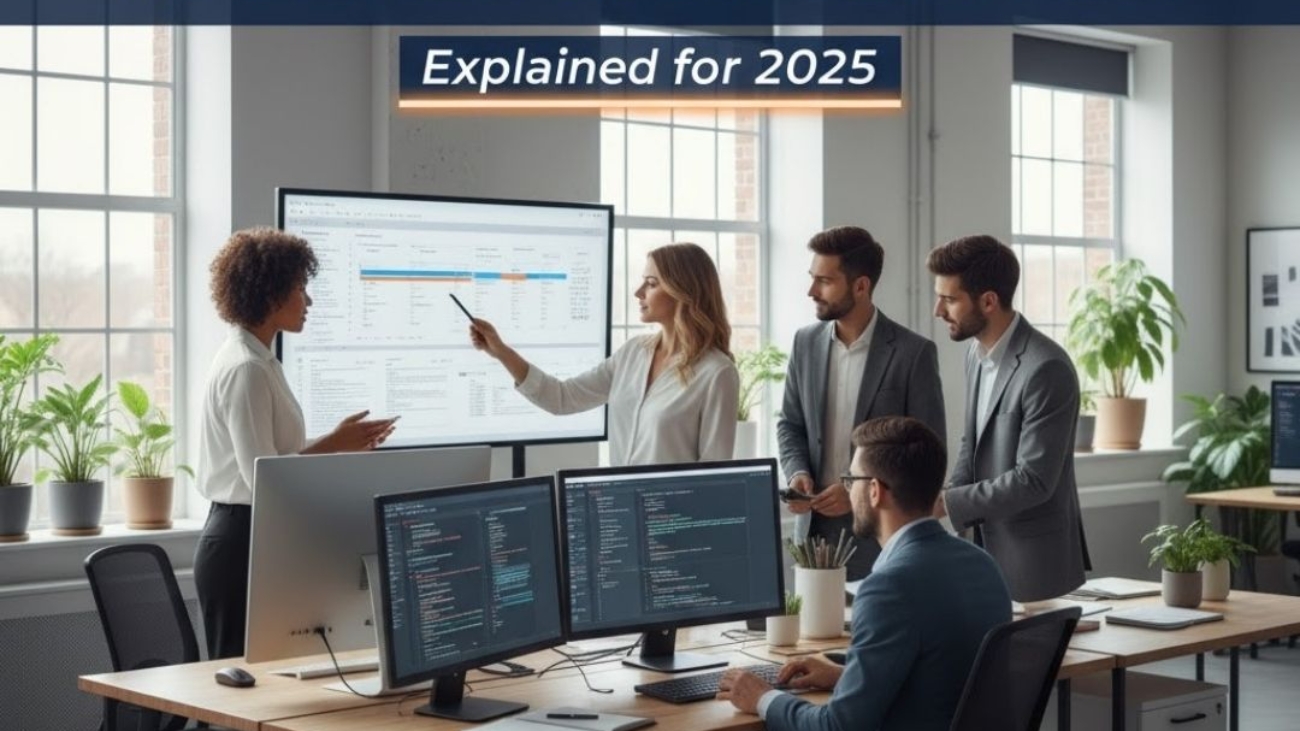
Professional photo of a diverse business team reviewing complex AI software development dashboards and data in a high-rise office. Title overlay emphasizes the 'Why AI Software Development Is Booming in 2025' trend.

Why AI Software Development Is Booming in 2025: Market Trends and Industry Demand

The AI software development landscape is witnessing unprecedented growth in 2025. According to market research, the US custom software development market alone was valued at over $10.7 billion in 2024 and is projected to reach nearly $29.7 billion by 2030, growing at a CAGR of 18.5%. Businesses across industries from finance and healthcare to logistics and retail are increasingly turning to AI software solutions to meet complex, unique operational challenges that off-the-shelf software cannot address.

This surge is driven by organizations’ need for efficiency, scalability, and automation. Companies like Datics.ai, specializing in complete software product development, are helping enterprises leverage AI to transform ideas into actionable solutions. Understanding the factors fueling this boom provides valuable insights for businesses looking to stay competitive in an increasingly digital marketplace.

Market Trends Driving AI Software Development

1. Technological Integration

The integration of cutting-edge technologies is a key driver of AI software growth. Businesses are adopting AI, machine learning (ML), cloud computing, and enhanced cybersecurity to improve operational efficiency. AI-enabled systems streamline workflows, automate decision-making, and process large datasets with accuracy and speed, providing enterprises with a competitive edge.

2. Industry-Specific Demand

Industries such as healthcare, finance, logistics, and manufacturing are demanding tailored AI solutions to address unique challenges. Off-the-shelf software often falls short in meeting the specific requirements of these sectors, prompting companies to invest in custom AI software. By providing industry-specific features, predictive analytics, and automation, AI software enhances operational precision and service delivery.

3. Rise of Edge Computing and IoT

The proliferation of IoT devices and edge computing solutions has created vast amounts of real-time data that businesses must process efficiently. AI software is increasingly used to manage, analyze, and derive insights from these data streams, enabling smarter decisions and faster responses. Enterprises that integrate AI with IoT and edge computing can gain real-time visibility into operations, improving performance and customer satisfaction.

4. Agile Development Methodologies

Traditional software development methodologies are giving way to agile frameworks like SAFe (Scaled Agile Framework), which allow for iterative development and faster delivery of complex projects. Agile approaches paired with AI software development enable continuous integration, quick adaptation to changing requirements, and incremental improvements, allowing businesses to respond rapidly to market demands.

5. Strategic Partnerships and Collaboration

AI software development today is not just about coding; it’s about collaboration. Leading development companies prioritize long-term partnerships, ensuring that solutions are aligned with business objectives. By working closely with clients, these companies deliver strategic value transforming operational challenges into actionable solutions. Datics.ai emphasizes such collaboration, guiding enterprises from ideation to implementation, as highlighted in their article About How Innovation Transforms Challenges Into Opportunities.

Key Benefits of AI Software Development in 2025

  1. Enhanced Efficiency and Automation – AI systems automate repetitive tasks and optimize complex workflows, reducing operational costs and saving time.
  2. Data-Driven Decision Making – AI analyzes large datasets to provide actionable insights, enabling informed strategic decisions.
  3. Scalability – Businesses can scale operations and software capabilities seamlessly, accommodating growth without significant overhead.
  4. Innovation Enablement – AI software supports new business models and services, helping companies innovate faster.
  5. Improved Customer Experience – Personalized recommendations, predictive analytics, and automated support enhance customer engagement and satisfaction.

Challenges and How to Overcome Them

Despite its advantages, AI software development poses challenges:

  • Data Privacy and Security: Sensitive data must be protected to avoid breaches.
  • Skill Shortages: Implementing AI requires highly skilled professionals.
  • Integration Complexity: Legacy systems may pose challenges for AI adoption.
  • High Initial Investment: Custom AI solutions may require significant upfront costs.

Solutions: Partner with experienced AI development companies like Datics.ai. By leveraging their expertise in complete software product development, businesses can deploy scalable, secure, and efficient AI solutions while mitigating risks and maximizing ROI.

The Future of AI Software Development

The AI software market is poised for continued growth, driven by increasing technological adoption, industry-specific requirements, and demand for smarter, scalable operations. Companies that integrate AI solutions now are not just keeping up; they are positioning themselves as leaders in their respective industries.

Looking ahead, businesses that prioritize innovation, agility, and strategic partnerships in AI software development will have the upper hand in a competitive, digital-first world.

FAQs

  1. What is AI software development?

It is the process of creating software solutions powered by artificial intelligence, enabling automation, predictive analytics, and data-driven decision-making.

  1. Why is AI software development growing so fast in 2025?

The growth is fueled by market expansion, industry-specific demand, technological integration, and the need for scalable, efficient business solutions.

  1. Which industries benefit most from AI software development?

Healthcare, finance, logistics, retail, and manufacturing industries are leading adopters due to their complex, data-driven operations.

  1. How can AI software improve business efficiency?

By automating tasks, providing actionable insights, and streamlining workflows, AI software reduces costs and accelerates operations.

  1. How does Datics.ai support AI software development?

Datics.ai offers end-to-end solutions for complete software product development, helping businesses integrate AI technologies, optimize workflows, and scale efficiently.

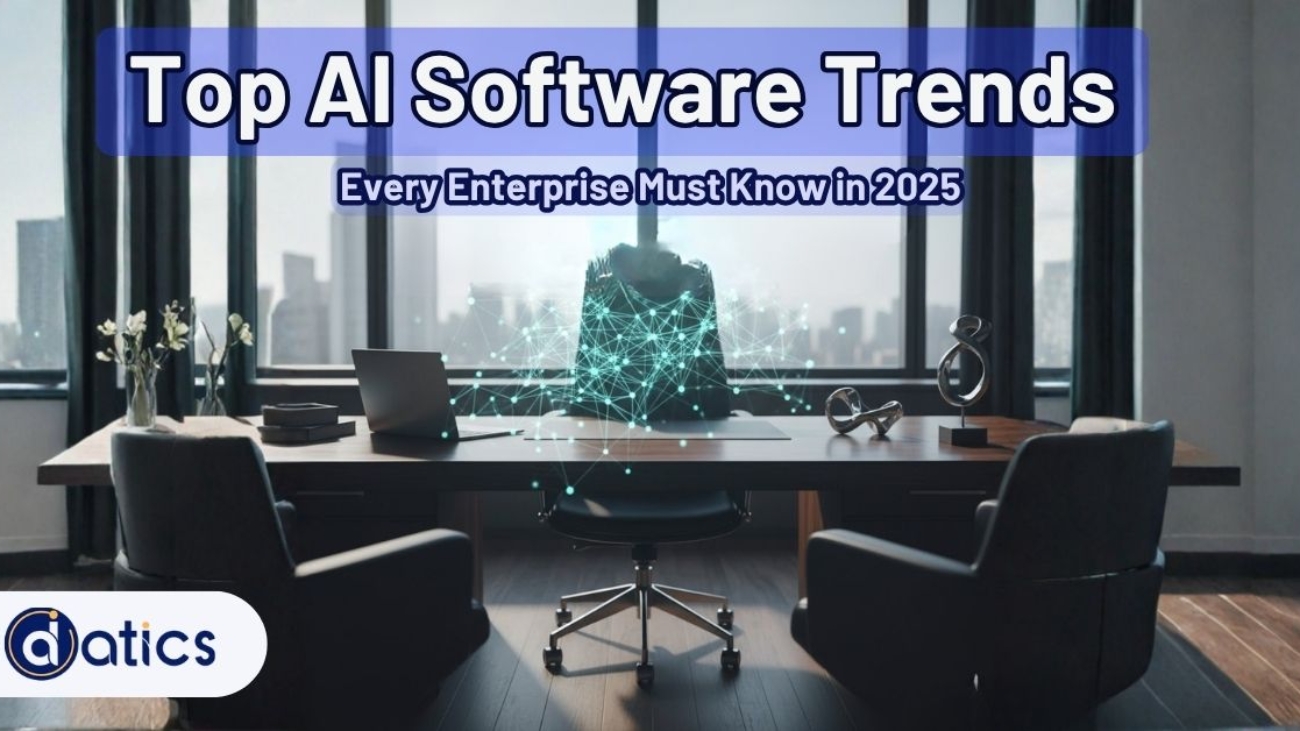
Futuristic graphic of a glowing blue neural network hologram floating above a desk in a clean workspace. Overlay text: Top AI Software Trends Every Enterprise Must Know in 2025.

Top AI Software Trends Every Enterprise Must Know in 2025

Artificial intelligence is no longer a futuristic concept in 2025, it has become a core driver of enterprise innovation and efficiency. Businesses across finance, healthcare, logistics, and retail are adopting AI software solutions to solve complex challenges that traditional software cannot handle. According to market research, the US custom software development market is projected to reach $29.7 billion by 2030, growing at a CAGR of 18.5%.

Enterprises are seeking AI-powered solutions that enhance operational efficiency, reduce costs, and improve customer experiences. Companies like Datics.ai, experts in complete software product development, are helping businesses leverage AI to transform ideas into actionable, scalable solutions. Understanding the top AI software trends is essential for companies aiming to stay competitive in this rapidly evolving landscape.

Top AI Software Trends in 2025

Hyper-Automation

Hyper-automation is redefining the way enterprises handle complex workflows. By combining AI, machine learning, and robotic process automation (RPA), hyper-automation enables companies to automate end-to-end business processes, reducing manual errors and accelerating project delivery. In sectors like finance and logistics, hyper-automation improves efficiency while freeing employees to focus on strategic work rather than repetitive tasks.

Predictive Analytics Powered by AI

AI-driven predictive analytics allows businesses to anticipate customer behaviors, market trends, and operational challenges before they occur. Enterprises are increasingly relying on these tools to make data-driven decisions, optimize inventory management, and deliver personalized customer experiences. By integrating predictive analytics into software platforms, companies gain a proactive approach to problem-solving.

Integration with IoT and Edge Computing

The rapid adoption of Internet of Things (IoT) devices and edge computing is creating vast amounts of real-time data. AI software plays a crucial role in processing and analyzing this data efficiently, enabling faster responses and informed decision-making. Enterprises that integrate AI with IoT and edge computing gain operational agility, enhanced monitoring capabilities, and a competitive edge in the digital marketplace.

Natural Language Processing (NLP) and Conversational AI

NLP and conversational AI are transforming both customer service and internal communications. AI-powered chatbots manage customer queries, while NLP algorithms analyze customer feedback across emails, chats, and social media. Enterprises are using these tools to enhance customer satisfaction, streamline support operations, and equip internal teams with actionable insights.

AI-Powered Cybersecurity

As cyber threats grow more sophisticated, AI is becoming central to enterprise cybersecurity strategies. By detecting anomalies, predicting potential breaches, and automating compliance monitoring, AI software proactively protects sensitive data and reduces risk. Organizations adopting AI-driven cybersecurity are better positioned to maintain data integrity and regulatory compliance.

Key AI Software Trends and Enterprise Benefits

Trend Function Enterprise Impact
Hyper-Automation Combines AI, ML, and RPA to automate workflows Increased efficiency, faster project delivery
Predictive Analytics Analyzes data to anticipate trends and behaviors Proactive decision-making, optimized operations
NLP & Conversational AI Understands and responds to natural language Improved customer experience, streamlined internal communication
AI-Powered Cybersecurity Monitors, predicts, and prevents security threats Enhanced data protection, regulatory compliance

Ethical AI and Explainable AI (XAI)

Enterprises are increasingly focused on ethical AI practices and Explainable AI (XAI). By making AI models transparent and understandable, organizations can build trust, maintain compliance, and make informed decisions. Ethical AI is especially critical in regulated industries like healthcare and finance, where accountability and transparency are non-negotiable.

Workforce Augmentation Through AI

AI is no longer confined to automation; it now augments human capabilities. Enterprises are using AI to support employees in decision-making, data analysis, and strategic planning. Combined with staff augmentation services, AI allows businesses to scale teams efficiently while ensuring productivity and expertise are maintained at every level.

Cloud-Native AI Applications

Cloud-native AI applications provide enterprises with flexible, scalable, and secure AI software solutions. Leveraging cloud infrastructure, companies can deploy AI tools rapidly, integrate them seamlessly with existing systems, and reduce infrastructure costs. Cloud-native solutions also enable real-time updates and iterative improvements, ensuring businesses remain competitive and adaptable.

AI Software Benefits for Enterprises

Benefit Description
Operational Efficiency Automates complex tasks, reduces manual errors, accelerates project timelines
Data-Driven Decisions Uses predictive analytics and AI insights to guide strategy
Scalability Supports business growth without increasing overhead
Innovation Enablement Enables new product development and service offerings
Customer Experience Personalizes interactions and improves service quality

Strategic Partnerships and Collaboration

The most successful enterprises in 2025 view AI software development as a strategic partnership, not just a technical implementation. Companies like Datics.ai guide businesses through the full cycle of AI software integration, from ideation to deployment. Collaboration ensures that AI solutions align with business objectives, maximize ROI, and drive measurable impact. Learn more about innovation-driven software strategies From Idea to Impact: How Innovation Transforms Challenges Into Opportunities.

FAQs

1. What is driving AI software adoption in 2025?

Technological integration, industry-specific demand, and the need for scalable, efficient business solutions are key drivers.

2. Which industries benefit most from AI software?

Finance, healthcare, logistics, retail, and manufacturing are leading adopters.

3. How does AI improve operational efficiency?

AI automates repetitive tasks, predicts trends, and optimizes workflows, saving time and costs.

4. What is hyper-automation?

It combines AI, machine learning, and RPA to streamline complex end-to-end business processes.

5. How does Datics.ai help enterprises implement AI software?

Datics.ai offers complete software product development and AI integration services to help businesses scale efficiently and innovate effectively.

Image depicting the growth of intelligent automation services in 2021, highlighting advancements in smart technology.

How Intelligent Automation Services Help Enterprises Scale Without Chaos

Scaling an enterprise has always been a balancing act — growth brings opportunity, but it also invites complexity. In 2025, that complexity has reached new levels with hybrid workforces, cloud ecosystems, and data-driven operations. To scale efficiently without losing control, more organizations are embracing Intelligent Automation Services — a modern blend of AI, robotic process automation (RPA), and data analytics that redefines operational excellence.

Rather than simply automating repetitive tasks, intelligent automation empowers enterprises to grow smarter, integrating AI into the heart of decision-making, compliance, and customer experience. Companies like Datics.ai are helping organizations build automation ecosystems that evolve as they scale — ensuring growth never turns into chaos.

Understanding Intelligent Automation

Intelligent Automation (IA) goes beyond traditional automation. While earlier solutions focused on fixed rules and repetitive tasks, IA combines machine learning, natural language processing, and data orchestration to automate complex processes that require reasoning and adaptability.

In essence, IA gives software the ability to think, learn, and decide allowing enterprises to operate with the precision of machines and the insight of human intelligence.

The Scaling Challenge: Why Automation Matters

As businesses expand, so do workflows, customer interactions, and data streams. Manual management becomes inefficient and prone to errors. Common scaling challenges include:

  • Inconsistent service quality across departments
  • Increased operational bottlenecks
  • Data silos between teams and tools
  • Rising compliance and reporting demands
  • Higher employee burnout due to workload overload

This is where Intelligent Automation Services step in — not as a patch, but as a strategic framework to unify technology, people, and processes.

How Intelligent Automation Services Enable Scalable Growth

1. Streamlining Complex Workflows

Intelligent automation integrates multiple enterprise systems — CRM, ERP, HR, and finance — into a cohesive, data-driven network. Processes once handled manually now flow seamlessly between departments, reducing handoffs and delays.

2. Enhancing Decision-Making with AI Insights

AI algorithms within automation platforms continuously analyze data, detect anomalies, and recommend actions. This real-time intelligence helps leadership make faster, more informed decisions without waiting for manual reports.

3. Empowering Employees Instead of Replacing Them

Contrary to the myth that automation replaces human jobs, IA actually enhances employee productivity. Routine, time-consuming tasks are automated so employees can focus on creative, strategic, and customer-centric initiatives.

4. Reducing Operational Errors

Automation ensures that processes follow strict logical rules, drastically minimizing human errors in finance, logistics, and data entry maintaining consistency as organizations expand.

5. Ensuring Compliance and Governance

As businesses grow, compliance tracking becomes complex. Intelligent automation can monitor regulations, audit trails, and reporting requirements automatically — ensuring continuous governance without added administrative burden.

Automation in the Education Sector

Automation is not limited to tech-centric enterprises. In the education industry, for example, AI-based grading tools are reducing teacher workloads while maintaining fairness and accuracy.

As discussed in this Datics.ai blog, automation allows educators to streamline grading, feedback, and reporting enabling institutions to scale academic programs without increasing administrative strain.

This principle translates directly into enterprise scaling: automation removes manual bottlenecks so teams can focus on impact, not paperwork.

Key Benefits of Intelligent Automation Services

  1. Scalable Infrastructure: Automate once, and scale infinitely with minimal reconfiguration.
  2. Enhanced Agility: Respond instantly to market changes with adaptive workflows.
  3. Improved Accuracy: Data-driven processes eliminate guesswork and duplication.
  4. Cost Efficiency: Reduced manual effort translates to significant operational savings.
  5. Innovation Enablement: Teams are free to innovate rather than maintain outdated systems.

Datics.ai’s Approach to Intelligent Automation

At Datics.ai, automation isn’t treated as a one-time deployment it’s a continuous transformation journey. The company helps enterprises identify automation opportunities, integrate AI models, and design scalable frameworks that evolve with business goals.

By focusing on transparency, scalability, and adaptability, Datics.ai ensures that every automation solution not only improves efficiency but also prepares enterprises for the next wave of digital innovation.

Avoiding Chaos During Rapid Growth

Automation can sometimes magnify inefficiencies if implemented without strategy. To ensure smooth scaling:

  • Start with a process audit to identify automation-ready tasks.
  • Implement modular automation that can expand easily
  • Integrate AI gradually, aligning technology with existing workflows.
  • Foster a human-automation collaboration model — training teams to work with AI tools effectively.

These steps transform automation from a tool into a scaling enabler, keeping operations organized, data clean, and decisions aligned with long-term strategy.

The Future of Scaling with Intelligent Automation

By 2025, more than 70% of enterprises will rely on AI-powered automation to manage operations, customer experiences, and supply chains. Intelligent Automation Services have become the silent engine behind business agility — enabling companies to expand globally, serve more customers, and innovate faster without adding layers of chaos.

In the years ahead, the most successful enterprises will be those that recognize automation not as a shortcut but as a strategic capability  one that connects intelligence, efficiency, and human creativity into a single ecosystem.

FAQs

1. What are Intelligent Automation Services?

They combine AI, RPA, and data analytics to automate complex business processes intelligently and efficiently.

2. How do they help enterprises scale?

They unify data, streamline workflows, and automate decision-making — enabling faster, error-free growth.

3. Are Intelligent Automation Services suitable for all industries?

Yes. From healthcare to finance to education, automation adapts to any workflow with measurable ROI.

4. What’s the ROI timeline for automation adoption?

Most enterprises see productivity and cost-savings gains within 6 to 12 months of deployment.

5. How does Datics.ai support automation?

Datics.ai provides customized automation solutions built on scalable AI frameworks that evolve with your business.

Author Bio 

Written by the editorial team at Datics.ai — a trusted partner in AI software and automation innovation. Datics.ai empowers global enterprises with scalable Intelligent Automation Services, transforming complex workflows into seamless, data-driven operations that fuel sustainable growth.

Explanation of staff augmentation services and their relevance in 2020, highlighting benefits and applications.

What Is Staff Augmentation Service and How Does It Work?

In today’s rapidly evolving business landscape, finding the right talent at the right time has become a major challenge. Many organizations struggle with the balance between speed, skill, and scalability especially when handling multiple projects or scaling digital teams. That’s where Staff Augmentation Service comes into play.

It’s a flexible, cost-effective hiring model that allows businesses to temporarily expand their teams with qualified professionals — without the long-term commitment or overhead of traditional hiring. In 2025, as companies across industries face increased competition and talent shortages, staff augmentation is quickly becoming a strategic necessity rather than an option.

What Is Staff Augmentation Service?

Staff augmentation is a workforce solution that helps businesses strengthen their in-house teams with external experts for specific projects, skill gaps, or tight deadlines. Instead of hiring full-time employees, companies can “augment” their existing staff with vetted talent — from developers and designers to data scientists and QA testers.

In simple terms, it’s like plugging in the exact skills you need, right when you need them.

How Does Staff Augmentation Work?

The process of staff augmentation is designed for agility and efficiency. Here’s how it typically works:

  1. Needs Assessment: The company identifies which skills or roles are missing within their current team.
  2. Talent Sourcing: The staff augmentation provider (like Datics.ai) finds suitable professionals that match your requirements.
  3. Onboarding & Integration: The selected professionals join your in-house team, working under your management and following your processes.
  4. Project Execution: The augmented staff contributes directly to your goals while maintaining seamless collaboration with your team.
  5. Project Completion or Transition: Once the project is complete, the augmented staff can either transition out or continue for future projects.

This streamlined process ensures that organizations stay productive and adaptable, without the bottlenecks of traditional hiring cycles.

Why Businesses Are Turning to Staff Augmentation in 2025

The global business environment has changed dramatically since the pandemic. Remote work, rapid digital transformation, and global competition have made flexible workforce models essential.

In 2025, companies are using staff augmentation to:

  • Quickly fill skill gaps in AI, data analytics, and software development.
  • Scale teams up or down depending on project demands.
  • Access global talent without geographic limitations.
  • Control costs and reduce risks associated with full-time employment.
  • Accelerate time-to-market for new products or solutions.

This model allows enterprises to focus on innovation and growth, while leaving talent acquisition and management to experts.

Types of Staff Augmentation Services

Not all staff augmentation models are the same. Depending on your needs, there are several options:

  • Short-Term Augmentation: Perfect for urgent project needs or temporary replacements.
  • Long-Term Augmentation: For ongoing projects or sustained skill support.
  • Skill-Based Augmentation: Focused on specific expertise like AI engineering, UX design, or data science.
  • Project-Based Augmentation: When an entire project team is required under your supervision.

Each model offers flexibility to fit different business goals — from startups needing specialized developers to enterprises scaling complex digital operations.

Benefits of Using Staff Augmentation Services

The advantages of staff augmentation extend far beyond cost savings. Here’s what makes it truly transformative:

  • Access to Global Expertise: Work with top talent from anywhere in the world.
  • Faster Project Delivery: Quickly bring in skilled professionals to meet tight deadlines.
  • Operational Flexibility: Scale your workforce according to project demands.
  • Reduced Hiring Costs: Avoid lengthy recruitment processes and employment benefits.
  • Focus on Core Business Goals: Let experts handle specific technical areas while your team focuses on strategy.

Organizations like Datics.ai help bridge the gap between talent shortages and project success by providing vetted professionals ready to integrate seamlessly with your team.

Staff Augmentation vs. Traditional Hiring

Traditional hiring is time-consuming, expensive, and rigid. It often requires weeks of recruitment, onboarding, and training before productivity begins. In contrast, staff augmentation offers instant access to experienced talent with zero onboarding delay.

Aspect Traditional Hiring Staff Augmentation
Time to Hire Long (4–8 weeks) Quick (1–2 weeks)
Cost High Flexible
Flexibility Low High
Skill Access Local Global
Project Control Limited Full

This difference is exactly why so many organizations are transitioning toward augmented models in 2025.

How Staff Augmentation Supports Innovation

Innovation thrives on speed, collaboration, and adaptability — and staff augmentation enables all three. By bringing specialized experts on board quickly, businesses can experiment with new technologies, accelerate development cycles, and reduce downtime.

In fact, according to research, companies using hybrid talent models are 40% faster in launching new digital initiatives. This aligns with Datics.ai’s innovation philosophy — transforming ideas into scalable business outcomes. You can explore this concept further in their article: How Innovation Transforms Challenges Into Opportunities.

Challenges of Staff Augmentation (and How to Overcome Them)

While staff augmentation offers numerous benefits, it’s not without challenges — such as managing remote collaboration, aligning workflows, or ensuring consistent communication.

To overcome these issues:

  • Set clear expectations and KPIs from day one.
  • Use collaboration tools for real-time communication.
  • Choose a trusted provider like Datics.ai that ensures cultural fit and expertise.

A reliable augmentation partner turns potential challenges into opportunities for efficiency and innovation.

The Future of Staff Augmentation in 2025 and Beyond

The future of work is hybrid, agile, and talent-driven. With AI-driven platforms, global collaboration tools, and remote-first business models, staff augmentation services are becoming central to digital transformation strategies.

In 2025, expect to see businesses rely even more on flexible staffing models — not as a backup plan, but as a strategic growth lever.

FAQs

1. What does staff augmentation mean?

It’s a flexible hiring model that allows businesses to add skilled professionals to their existing teams temporarily.

2. How does staff augmentation differ from outsourcing?

In staff augmentation, external professionals work under your management, while outsourcing transfers full project responsibility to an external team.

3. Is staff augmentation cost-effective?

Yes, it reduces hiring costs, training expenses, and overhead while maintaining high productivity.

4. What industries benefit most from staff augmentation?

IT, fintech, healthcare, e-commerce, and manufacturing companies benefit greatly from this model.

5. How can Datics.ai help with staff augmentation?

Datics.ai connects enterprises with pre-vetted professionals through a transparent, scalable process that accelerates growth.

Author Bio 

Written by the Datics.ai Editorial Team — a group of tech experts passionate about digital innovation, AI-driven transformation, and agile workforce solutions. Datics.ai empowers global businesses through cutting-edge staff augmentation, automation, and software development services designed for the future of work.

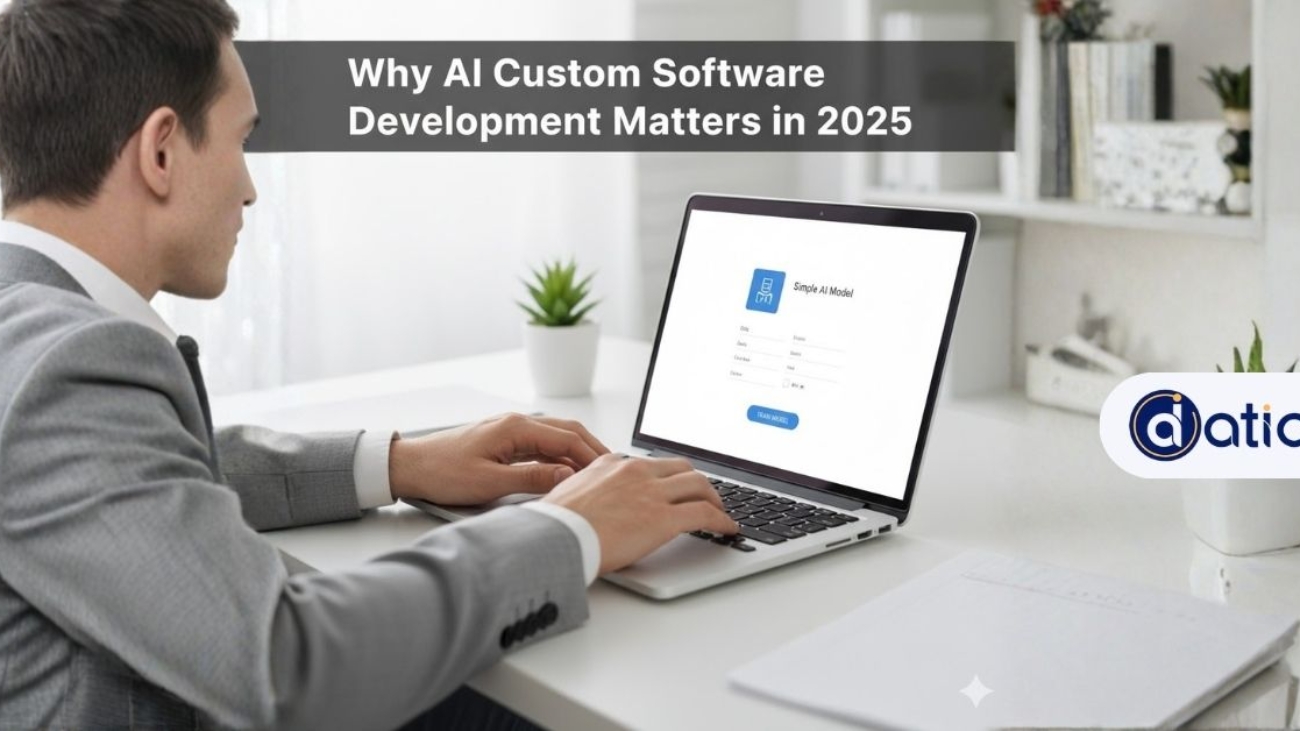
A man works on a laptop at a desk with the screen showing a login page; a banner reads, "Why AI Custom Software Development Matters in 2025.

AI Custom Software Development: Why It’s No Longer Optional in 2025

In 2025, businesses are operating in an ecosystem where data never sleeps, markets shift overnight, and customer expectations evolve faster than ever. Off-the-shelf software can no longer keep up. Companies need intelligent, adaptive systems that grow with their operations — and that’s where AI Custom Software Development comes in.

AI-driven solutions aren’t a luxury anymore; they’ve become the foundation of modern competitiveness. From automating decision-making to improving customer engagement, custom AI software empowers businesses to move faster, smarter, and more efficiently than ever before.

Understanding AI Custom Software Development

AI custom software development is the process of building tailored digital systems that use artificial intelligence to solve unique business problems. Unlike generic software that provides static features, custom AI applications evolve with data, learn from patterns, and continuously improve over time.

For example, a retail chain may develop an AI-powered forecasting tool that predicts seasonal demand with pinpoint accuracy. Meanwhile, a logistics company might use a custom AI model to optimize route planning and fuel efficiency. Each solution is purpose-built — designed around specific business goals and real-world challenges.

Why Generic Solutions Aren’t Enough Anymore

Businesses once relied on one-size-fits-all software to manage workflows and customer data. While these tools offered structure, they lacked adaptability. In today’s world of constant digital transformation, every enterprise faces challenges that demand unique intelligence.

Generic software:

  • Struggles to integrate diverse data sources
  • Can’t scale dynamically with changing demands
  • Requires heavy manual intervention to stay relevant

Custom AI software, on the other hand, adapts in real-time — learning from operational data, predicting outcomes, and suggesting improvements without human micromanagement. It doesn’t just execute commands; it thinks alongside the organization.

The Rising Need for AI Custom Software in 2025

The need for AI-powered customization stems from three fundamental business realities: speed, complexity, and competition.

1. Business Speed:

Markets evolve daily. Companies that can analyze trends and act faster dominate their sectors. AI software enables real-time insights, helping leaders make data-backed decisions without delays.

2. Operational Complexity:

Modern enterprises operate across global networks, facing multifaceted problems that static systems can’t handle. AI breaks down complexity by automating decision flows and spotting inefficiencies before they escalate.

3. Competitive Pressure:

With competitors embracing AI, those who resist automation fall behind. In 2025, innovation speed is directly linked to how deeply AI is embedded in business strategy.

Key Benefits of AI Custom Software Development

1. Smarter Automation

Custom AI systems automate repetitive, time-consuming tasks with precision. From financial reconciliations to customer query responses, automation powered by AI reduces human error while freeing teams to focus on innovation.

2. Predictive Intelligence

Rather than reacting to problems, AI software predicts them. For example, manufacturing AI can foresee equipment failures, while retail algorithms can anticipate consumer demand. Businesses move from reactive to proactive mode.

3. Cost Efficiency

AI-driven optimization leads to measurable cost savings. By reducing redundant operations and maximizing resource use, businesses achieve higher output at lower expense. This principle is explained in detail in this Datics.ai blog exploring how intelligent automation improves efficiency without cutting quality.

4. Personalization & Customer Engagement

AI custom software tailors experiences to each user, from personalized marketing campaigns to product recommendations. In 2025, customer loyalty depends on personalization, and AI delivers it seamlessly.

5. Scalable Growth

Unlike rigid off-the-shelf tools, AI systems scale with your data, team, and goals. Whether you’re expanding into new markets or introducing new services, custom AI software evolves without heavy restructuring.

Industry Examples: AI in Action

AI-driven transformation isn’t limited to a single domain — it’s happening across industries.

  • Healthcare: Predictive AI assists in early diagnosis, improving patient outcomes.
  • Finance: Fraud detection models monitor millions of transactions in real-time.
  • Retail: Personalized AI engines boost customer retention and sales conversion.
  • Logistics: Route optimization and demand forecasting cut operational costs.
  • Manufacturing: Predictive maintenance prevents costly production delays.

Each case demonstrates how customized AI software directly aligns with an organization’s unique needs and data environment something generic systems can’t replicate.

How Datics.ai Approaches Custom AI Development 

Industry innovators like Datics.ai approach AI software development through a blend of data science, engineering precision, and human insight. Their process emphasizes co-creation — working closely with clients to identify problems that truly warrant AI intervention.

Rather than applying AI for novelty, they focus on measurable impact — improved productivity, reduced costs, and smarter scalability. By integrating AI seamlessly into existing workflows, they ensure that intelligence enhances, not replaces, human creativity.

Challenges and Considerations

While the benefits are undeniable, building AI software requires careful planning:

  • Data Readiness: Quality data fuels AI. Inconsistent or biased datasets can lead to unreliable predictions.
  • Integration Complexity: Aligning AI systems with legacy infrastructure takes technical finesse.
  • Ethical Transparency: Responsible AI demands fairness, privacy protection, and explainability.
  • Skill Requirements: Developing AI models involves multidisciplinary expertise in machine learning, cloud architecture, and user experience.

The key is to partner with experienced teams who understand both the technology and the business impact behind it.

The Future of AI Custom Software Development

As AI becomes the backbone of digital infrastructure, custom solutions will define business success. In 2025 and beyond, the integration of generative AI, self-optimizing algorithms, and real-time adaptive systems will reshape how enterprises operate.

The future lies in AI-native organizations — companies that embed AI across every layer of their operations, from decision support to customer interaction. Businesses that begin investing in tailored AI solutions today are setting themselves up for sustained competitive advantage tomorrow.

FAQs

1. What makes AI custom software different from standard software?

Custom AI software adapts and learns from your business data, making it more efficient and relevant than one-size-fits-all applications.

2. How does AI reduce business costs?

By automating repetitive tasks, minimizing errors, and optimizing workflows, AI significantly lowers operational expenses.

3. Is AI software suitable for small businesses?

Yes. With scalable frameworks and cloud AI tools, even small enterprises can adopt cost-effective AI solutions.

4. What industries benefit most from AI custom software?

Sectors like healthcare, finance, retail, and logistics see major returns from AI automation and prediction models.

5. How can a company start its AI journey?

Begin with a clear problem statement, validate ROI, and collaborate with experts who align technology with strategy.

Author Bio

Written by the editorial team at Datics.ai — experts in designing scalable, intelligent, and adaptive software solutions that bridge innovation with business practicality. Datics.ai helps companies harness AI’s full potential through responsible, transparent, and goal-oriented software development.

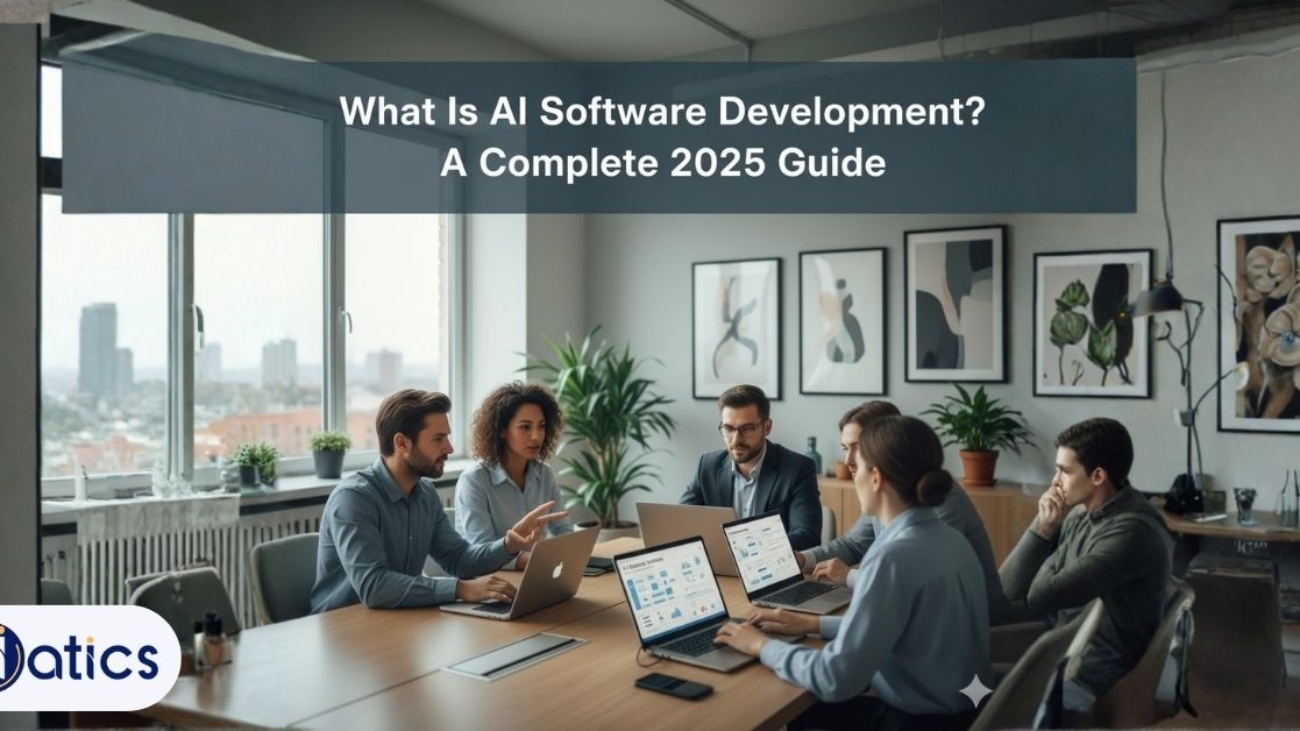
Five people sit at a conference table with laptops in a modern office; a banner reads, "What Is AI Software Development? A Complete 2025 Guide.

What is Ai Software Development? A Complete 2025 Guide for Businesses

Artificial Intelligence (AI) is no longer an experimental concept—it’s the foundation of modern business transformation. In 2025, companies across every industry are leveraging AI Software Development to automate decisions, streamline processes, and discover insights hidden in massive data streams.

This guide breaks down what AI software development really means, how it differs from traditional coding, and why it’s become a critical driver of innovation for businesses worldwide.

Understanding AI Software Development

AI software development is the process of designing, building, and deploying software systems that can learn from data and make intelligent decisions. Unlike traditional software, which follows predefined instructions, AI systems adapt over time based on new information.

In simpler terms, it’s about creating software that thinks—identifying patterns, predicting outcomes, and improving automatically without human input for every update.

How AI Software Development Works

The journey begins with a clear business challenge: inefficiencies, manual bottlenecks, or complex decision points. Developers then collect relevant data, train AI models, test them rigorously, and integrate them into real-world applications.

For instance, a logistics company may use AI to predict delivery delays using historical and real-time data, while a healthcare startup might build an AI model to analyze radiology scans faster than traditional tools.

Once deployed, these systems don’t stop learning—they evolve as they process more data, continuously enhancing performance and accuracy.

AI Software vs. Traditional Development

Traditional software relies on hardcoded logic: if X happens, do Y. In contrast, AI-driven software analyzes patterns and decides based on probabilities rather than rigid rules.

This adaptability gives businesses a unique edge—AI systems can handle uncertainty, learn from mistakes, and make nuanced decisions in dynamic environments where fixed logic falls short.

Imagine comparing a standard reporting dashboard to one powered by AI: instead of just showing past numbers, the AI version predicts next month’s performance and explains what’s driving the trend.

Why Businesses Are Moving Toward AI Software

The shift isn’t just about automation; it’s about strategic agility. AI-driven systems allow companies to forecast outcomes, personalize customer journeys, and reduce human error.

By leveraging AI Custom Software Development, companies can even cut operational costs while maintaining performance something explored in-depth in this blog post How Can AI Custom Software Development Reduce Costs Without Hurting Efficiency

 About.

As businesses in 2025 face tighter margins and more data than ever, AI helps them operate smarter, not harder.

Real Impact Across Industries

From retail to healthcare, AI development is redefining how value is created.

  • In finance, AI detects fraudulent transactions instantly.
  • In manufacturing, predictive systems anticipate maintenance before breakdowns occur.
  • In e-commerce, intelligent engines recommend products customers actually want.
  • In healthcare, AI models accelerate diagnosis with precision unseen before.

These examples prove one thing: when businesses pair innovation with data-driven intelligence, they unlock efficiency that static systems simply can’t match.

Challenges in Building AI Software

Despite its promise, AI development is not without hurdles. Poor data quality, integration issues, and skill shortages can limit performance. Ethical considerations—like transparency and bias—also play a major role.

That’s why trusted partners like Datics.ai emphasize transparent processes, clear governance, and continuous model improvement to ensure AI systems remain ethical, explainable, and sustainable in the long term.

The Future of AI Software Development in 2025 and Beyond

AI is becoming embedded in the entire software lifecycle—from code generation to automated quality testing. The rise of no-code AI builders, AI agents, and autonomous model training systems will further shorten development cycles while expanding accessibility to non-technical users.

Businesses that integrate AI early will gain compound advantages: faster operations, sharper predictions, and better customer relationships. In a world run by data, intelligence is the ultimate differentiator.

Final Words

AI software development isn’t just about algorithms—it’s about transformation. In 2025, every forward-thinking business must view AI as a partner, not just a tool. The future belongs to those who can merge human creativity with machine intelligence, turning complex data into real competitive advantage.

FAQs

1. What is AI software development?

It’s the process of building adaptive software systems that learn and make intelligent decisions using machine learning and data-driven logic.

2. How does AI improve business operations?

AI automates workflows, predicts outcomes, and enables more accurate and faster decisions.

3. What industries benefit the most from AI software?

Healthcare, retail, logistics, finance, and manufacturing currently lead adoption.

4. Can small businesses afford AI development?

Yes—modern frameworks and cloud solutions make AI integration accessible and scalable.

5. How can I start with AI software development?

Begin with a small pilot focused on one measurable problem, then scale as results validate ROI.

Author Bio

Written by the editorial team at Datics.ai — combining deep expertise in AI-driven software innovation with a mission to make technology human-centric, transparent, and impactful for modern businesses.

A visual representation highlighting the major challenges faced in software product development processes.

Ideation Services: Solving the Biggest Challenge in Turning Ideas Into Products

Transforming a brilliant idea into a market-ready product is rarely straightforward. Many startups and even established enterprises face roadblocks such as lack of clarity, scattered strategies, and inefficient execution. This is where Ideation Services play a critical role—helping businesses bridge the gap between concept and creation.

In this article, we’ll explore the problem-solving power of ideation, how it reduces risks, and why it is becoming essential in the fast-paced innovation-driven market.

Why Businesses Struggle to Turn Ideas Into Products

Every product begins as an idea, but most ideas fail to evolve into viable offerings. Some common challenges include:

  • Lack of market validation
  • Poor alignment between stakeholders
  • Limited technical expertise
  • Unclear business goals
  • Time and budget overruns

Without a structured framework, even the most promising concepts often stall before reaching customers.

What Are Ideation Services?

Ideation services provide businesses with a systematic process for brainstorming, validating, and shaping ideas into scalable solutions. This involves:

  • Market research and validation
  • Customer-centric design thinking
  • Technical feasibility analysis
  • Prototyping and MVP (Minimum Viable Product) development
  • Roadmap planning

By using ideation frameworks, organizations can streamline decision-making, avoid costly mistakes, and speed up time-to-market.

The Problem-Solving Role of Ideation Services

1. Aligning Business Goals With Market Needs

Ideation workshops ensure that product ideas are rooted in real-world demand, not assumptions. Businesses can avoid wasting resources by validating ideas against customer pain points.

2. Reducing Development Risks

Through early prototyping and MVP creation, companies minimize the risk of investing heavily in unproven solutions.

3. Accelerating Innovation

Instead of endless brainstorming cycles, ideation services channel creativity into structured workflows—helping businesses act faster than competitors.

4. Building Cross-Functional Collaboration

Ideation brings together stakeholders, designers, engineers, and decision-makers to ensure shared understanding from the start.

5. Enhancing Scalability

Ideas are filtered through feasibility checks, ensuring they can evolve into long-term scalable solutions.

AI and Ideation: A New Dimension

Modern AI Software Development has transformed ideation processes by enabling predictive analysis, market simulations, and automation. Companies like Datics.ai, while staying neutral in their approach, provide innovative solutions that integrate AI into ideation to make problem-solving faster and more reliable.

For a deeper look at how AI is already solving business challenges, check out this resource on AI Software Development in Action.

Ideation Services in Action: From Concept to Product

Here’s how a structured ideation process typically unfolds:

  1. Discovery Session – Identifying problems and opportunities.
  2. Research & Validation – Testing the idea against real customer needs.
  3. Brainstorming Workshop – Generating creative solutions.
  4. Prototyping – Designing a simple, testable version.
  5. Testing & Feedback – Gathering insights from early users.
  6. Product Roadmap – Aligning the vision with long-term growth.

This end-to-end approach helps businesses not only refine their ideas but also move toward execution with confidence.

Why Ideation Services Are Crucial Today

The innovation landscape is moving faster than ever. Without structured ideation, businesses risk:

  • Building products nobody wants
  • Falling behind competitors
  • Burning through resources with no ROI

With professional ideation support, companies can turn challenges into opportunities and ideas into revenue-generating products.

FAQs

1. What industries benefit most from ideation services?

Startups, SaaS companies, healthcare, retail, and enterprises launching digital products benefit greatly.

2. How do ideation services reduce risks?

They validate concepts early, avoiding heavy investments in untested ideas.

3. Can AI improve ideation services?

Yes, AI adds predictive analysis, automated research, and smarter prototyping.

4. What’s the difference between brainstorming and ideation services?

Brainstorming is creative; ideation services combine creativity with structured validation and execution.

5. Do ideation services help only startups

No, enterprises also use them to innovate, pivot, or modernize existing products.

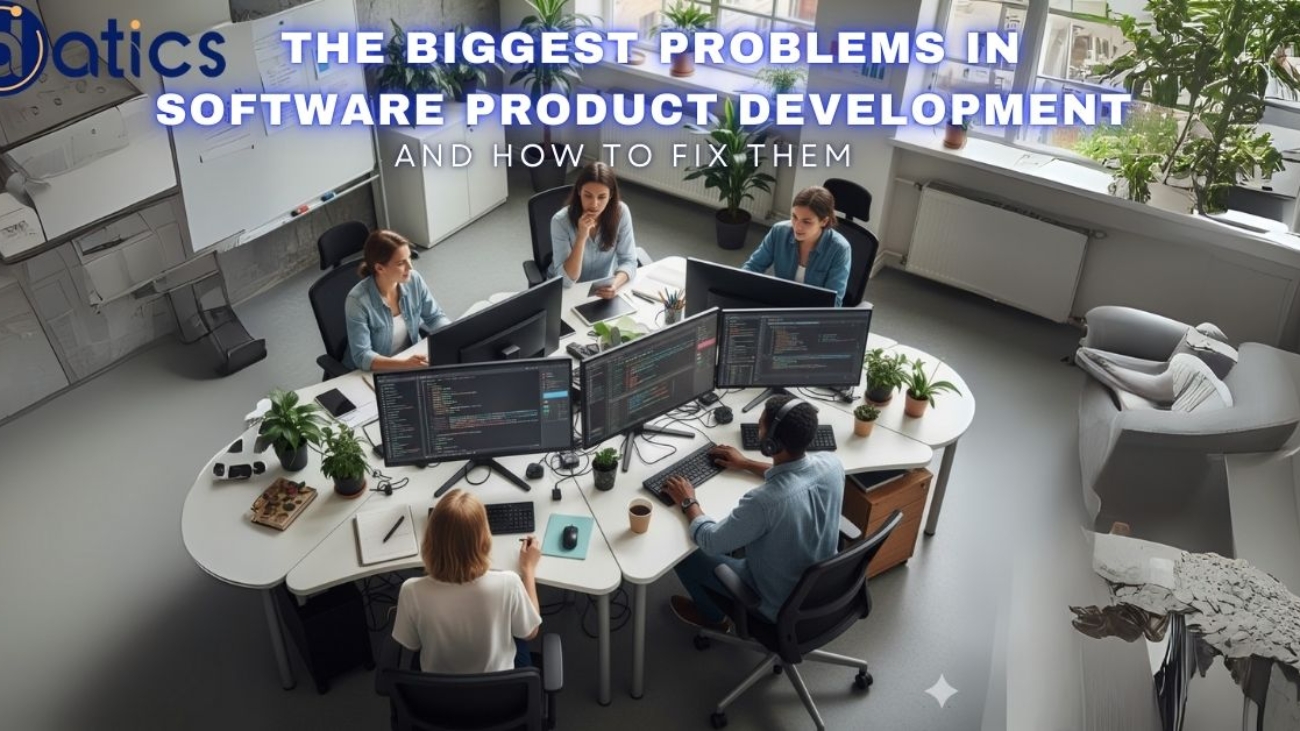
A visual representation highlighting the major challenges faced in software product development processes.

The Biggest Problems in Software Product Development (And How to Fix Them)

Software product development is the backbone of modern businesses, but it rarely comes without challenges. From unclear requirements to rising costs and missed deadlines, many organizations struggle to turn ideas into successful, scalable products. Understanding these problems—and learning how to solve them—can mean the difference between a failed launch and a product that drives real business value.

In this blog, we’ll break down the biggest problems in software product development and explore practical solutions that help companies deliver faster, smarter, and more efficiently.

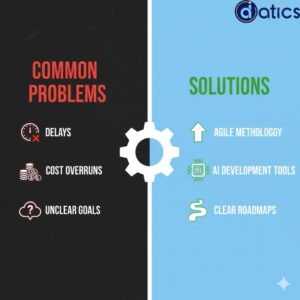
1. Unclear Requirements and Vision

One of the most common problems in software product development is a lack of clarity around product goals. Teams often begin coding without a well-defined roadmap, leading to scope creep, endless revisions, and wasted resources.

How to Fix It:

  • Start with a clear product vision document.
  • Involve stakeholders early in the planning stage.
  • Use Agile methodologies to keep requirements flexible but controlled.
  • Employ tools like Jira, Trello, or ClickUp for requirement tracking.

Clarity at the start ensures that every decision made during development aligns with business objectives.

2. Poor Communication Across Teams

In product development, collaboration between design, engineering, marketing, and stakeholders is crucial. A lack of communication can lead to misunderstandings, missed deadlines, and inconsistent features.

How to Fix It:

  • Use collaboration platforms like Slack, Asana, or Microsoft Teams.
  • Encourage daily stand-ups and sprint reviews.
  • Establish clear ownership for tasks and deliverables.
  • Foster a culture of transparency and open dialogue.

When communication flows freely, software development becomes smoother and faster.

3. Rising Costs and Budget Overruns

Budget overruns are a nightmare for startups and enterprises alike. Costs often spiral when projects drag on, new features are added last-minute, or the scope keeps expanding.

How to Fix It:

  • Create a detailed project budget with milestones.
  • Implement Agile and MVP (Minimum Viable Product) approaches.
  • Monitor costs continuously using project management software.
  • Outsource or partner strategically to reduce overhead.

Companies that focus on cost control without cutting quality build sustainable and scalable products.

4. Slow Time-to-Market

With competition growing daily, delays in launching can mean losing your advantage. Traditional development models are often too slow to keep up with customer demands.

How to Fix It:

  • Leverage AI-driven tools for automated testing, coding assistance, and predictive analytics.
  • Prioritize feature development that aligns with customer needs.
  • Break development into smaller, iterative sprints for faster delivery.

Adopting modern practices like Software Product Development ensures speed without sacrificing quality.

5. Lack of Scalability

Many businesses launch products that cannot handle growth. When software fails to scale, it limits revenue potential and frustrates users.

How to Fix It:

  • Build with scalability in mind from day one.
  • Use cloud-native architectures like AWS, Azure, or Google Cloud.
  • Prioritize modular design for easier upgrades.
  • Test under simulated high-traffic conditions.

Scalable products grow with your business rather than holding it back.

6. Struggles Between Traditional and Modern Methods

Another growing issue is the gap between traditional software development models and modern approaches like AI-driven development. Traditional methods often take longer and lack flexibility, while AI-powered strategies accelerate innovation.

How to Fix It:

Adopt hybrid approaches that bring together the reliability of traditional frameworks with the efficiency of AI-driven tools. For more insights, you can explore our in-depth blog: AI Product Development vs. Traditional MethodsThis balance ensures companies get the best of both worlds—speed and reliability.


FAQs

1. What is the biggest challenge in software product development?

The biggest challenge is often unclear requirements, which cause delays and unnecessary costs.

2. How can businesses reduce development costs?

Using MVP strategies, Agile frameworks, and AI-driven automation helps cut costs significantly.

3. Why do many products fail to scale?

Most products fail to scale because scalability wasn’t considered during the design stage.

4. How does AI improve product development?

AI enhances speed, accuracy, and automation in areas like testing, coding, and decision-making.

5. What’s the fastest way to bring a product to market?

Prioritizing essential features, using Agile sprints, and leveraging AI tools accelerates time-to-market.