
Visual representation of software demonstrating its capabilities in addressing complex problems.

The Problem-Solving Power of AI Software: What You Need to Know

Artificial Intelligence is no longer just a futuristic concept—it has become a practical tool reshaping industries across the globe. From healthcare and finance to retail and logistics, AI software is solving problems that once took months or even years to address. But what exactly makes AI so powerful in problem-solving, and how does it compare to traditional methods?

This article explores the problem-solving power of AI software, why it matters, and how organizations are leveraging it today. Whether you’re a startup founder, enterprise leader, or technology enthusiast, understanding the impact of AI is essential for staying ahead in today’s digital-first economy.

What Is AI Software?

AI software refers to applications that use machine learning, natural language processing, computer vision, and automation to perform tasks that typically require human intelligence. Instead of just following programmed rules, AI adapts, learns, and improves continuously.

Examples include:

  • Chatbots that provide customer support 24/7

  • Predictive analytics for forecasting demand

  • Fraud detection systems in banking

  • AI-driven recommendation engines in e-commerce

Unlike traditional software, AI evolves with data, making it a unique tool for solving complex, ever-changing problems.

Why Problem-Solving with AI Software Matters

Businesses face challenges that are often too vast or dynamic for manual solutions. Data grows at exponential rates, customer expectations shift quickly, and competition demands rapid innovation. AI solves these problems faster by:

  • Automating repetitive processes

  • Delivering real-time insights from large datasets

  • Predicting future trends with high accuracy

  • Enabling personalization at scale

  • Reducing human errors in critical tasks

For organizations, the question is no longer if AI can solve problems but rather how to use it effectively.

Key Areas Where AI Software Solves Problems Faster

1. Healthcare and Diagnostics

AI tools analyze medical images, predict diseases, and even recommend treatment plans. They reduce diagnostic errors and accelerate patient care.

2. Finance and Fraud Detection

Banks rely on AI systems to monitor transactions in real-time, detecting fraudulent activity within seconds.

3. Supply Chain and Logistics

AI-powered demand forecasting helps companies optimize inventory and prevent costly overstocking or shortages.

4. Customer Experience

AI-driven chatbots and recommendation engines enhance customer satisfaction by providing instant, personalized solutions.

5. Software Development

In fields like AI Software Development, companies leverage automation and machine learning to speed up coding, testing, and deployment—helping businesses scale faster while maintaining quality.

AI Software vs. Traditional Approaches

Traditional Problem-Solving

  • Relies heavily on human intervention

  • Slower due to manual processes

  • Limited ability to scale quickly

  • Effective for compliance-heavy industries

AI-Powered Problem-Solving

  • Uses automation and predictive analytics

  • Faster, data-driven decisions

  • Highly scalable with minimal overhead

  • Continuously improves with data

The difference is not about replacing humans but empowering them with smarter tools.

Real-World Applications of AI Problem-Solving

AI is not theory—it’s in action today. For example, retail companies use AI to optimize pricing strategies in real-time, while logistics firms rely on AI to reroute deliveries during disruptions.

As highlighted in this article on AI software development in action, AI doesn’t just automate—it provides practical, scalable solutions to the biggest challenges businesses face. Companies like Datics.ai are leading the way by helping organizations integrate AI seamlessly into their processes.

Benefits of AI Software in Problem-Solving

  • Faster time-to-market for products and services

  • Smarter decision-making with predictive insights

  • Lower operational costs through automation

  • Improved accuracy by reducing human error

  • Enhanced scalability for growing organizations

Challenges in Adopting AI Software

While powerful, AI is not without challenges. Businesses often face:

  • Lack of in-house expertise

  • High initial implementation costs

  • Data privacy and compliance concerns

  • Integration with legacy systems

The solution is to partner with technology experts who understand both the technical and business aspects of AI implementation.

The Future of AI Software in Problem-Solving

Looking ahead, AI will become more accessible, transparent, and aligned with ethical standards. Instead of being limited to large enterprises, small and mid-sized businesses will also harness AI to solve real-world problems at scale.

AI won’t replace traditional problem-solving entirely—it will enhance human creativity and decision-making, ensuring problems are solved with speed, accuracy, and innovation.

FAQs

1. What makes AI software different from traditional software?

AI software adapts and learns from data, while traditional software follows fixed rules.

2. Can AI software reduce costs for businesses?

Yes, by automating repetitive tasks and improving efficiency, AI lowers operational expenses.

3. What industries benefit most from AI software?

Healthcare, finance, retail, logistics, and technology see the biggest impact.

4. Is AI software safe to use in business operations?

Yes, when implemented with proper compliance and data protection measures.

5. How does AI improve customer experience?

AI enables personalization, faster responses, and predictive service improvements.
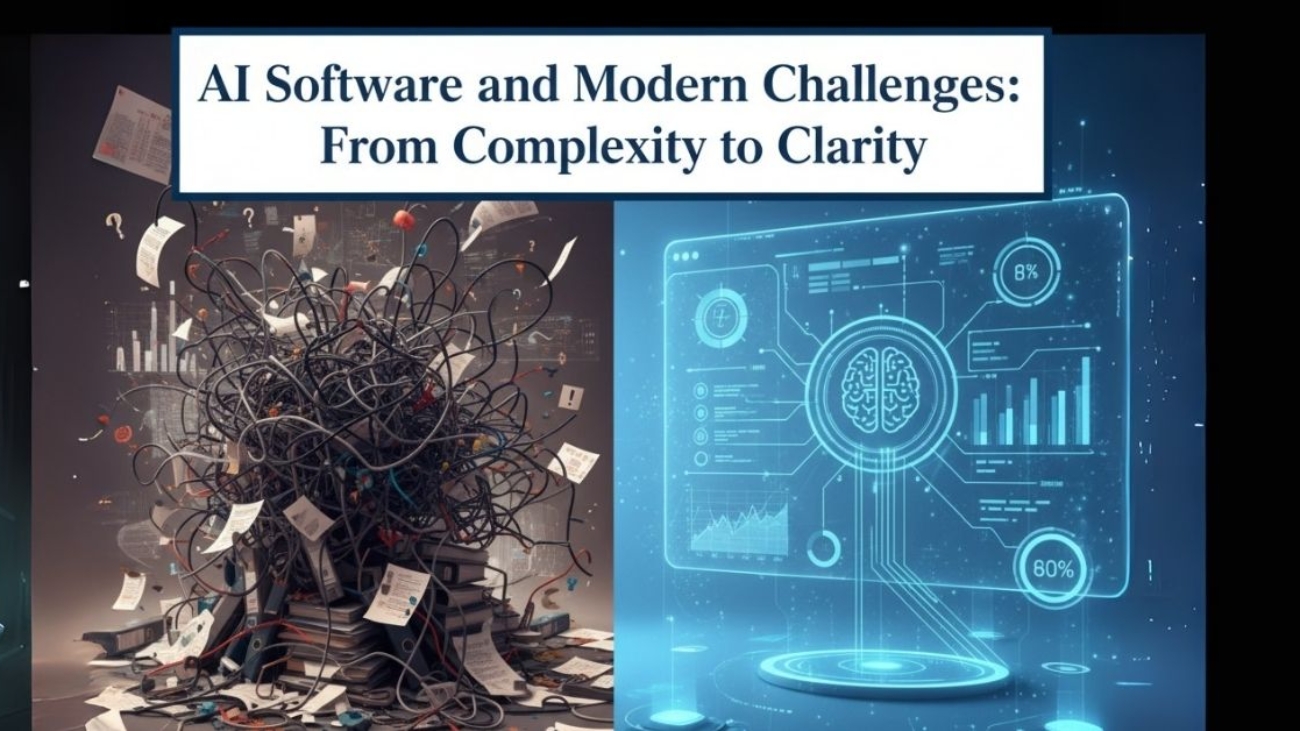
AI software addressing modern challenges, transforming complexity into clarity for enhanced understanding and decision-making.

AI Software and Modern Challenges: From Complexity to Clarity

Modern businesses face challenges that are bigger, faster, and more complex than ever before. From handling massive datasets to delivering seamless customer experiences, companies are under pressure to move quickly without sacrificing quality. This is where AI software Development  emerges as a problem-solver, helping organizations cut through complexity and find clarity in decision-making, operations, and growth strategies.

But what does this really mean for businesses today? Can AI software truly make things simpler, or is it just another layer of complexity? This article explores the role of AI in solving modern challenges and how businesses can harness it to create clarity and impact.

Understanding the Complexity of Modern Business Challenges

Today’s organizations are navigating:

  • Data Overload: Millions of interactions, transactions, and records that need real-time analysis.
  • Market Uncertainty: Rapid shifts in customer behavior and unpredictable global trends.
  • Operational Inefficiency: Manual processes that slow down innovation and scalability.
  • Customer Expectations: Consumers demand faster, smarter, and more personalized services.

Traditional approaches are struggling to keep up. That’s why companies are now turning to AI software development to not only manage but also simplify these challenges.

How AI Software Brings Clarity

AI-driven tools transform complex problems into actionable insights. Here’s how:

1. Data Simplification

AI organizes raw, unstructured data into clear patterns and predictions, helping leaders make smarter decisions without drowning in spreadsheets.

2. Automation of Repetitive Tasks

Instead of teams spending hours on routine tasks, AI automates them—freeing human talent for creative and strategic work.

3. Predictive Analytics for Strategy

By learning from past data, AI forecasts trends, reduces uncertainty, and guides companies toward better growth opportunities.

4. Enhanced Customer Experience

From chatbots to personalization engines, AI enables businesses to engage customers with speed and precision.

5. Scalability Made Simple

AI allows businesses to grow operations without proportionally increasing resources, reducing both costs and complexity.

AI Software vs. Traditional Problem-Solving Approaches

Traditional methods often rely on human analysis, lengthy development cycles, and manual troubleshooting. While reliable in structured environments, they are too slow for today’s fast-paced market.

By contrast, AI software uses real-time analysis, machine learning, and intelligent automation to anticipate problems before they escalate. For example, predictive AI can alert a logistics company about potential supply chain delays before they even occur.

This ability to move from reactive to proactive problem-solving is what makes AI a game-changer.

Real-World Applications of AI Software in Overcoming Challenges

1. Healthcare

AI algorithms detect patterns in medical images, helping doctors diagnose diseases faster and more accurately.

2. Finance

AI-powered fraud detection systems identify suspicious activities in real-time, reducing financial risks.

3. Retail

AI software personalizes shopping experiences, increasing sales while reducing decision fatigue for customers.

4. Manufacturing

Predictive maintenance powered by AI ensures machines run smoothly, minimizing downtime and costs.

5. Startups and SaaS

AI helps startups validate product-market fit quickly by analyzing data-driven customer insights—turning risky assumptions into informed strategies.

How AI Software Helps Businesses Move from Complexity to Clarity

One of the greatest advantages of AI is its ability to turn messy, complex challenges into structured solutions. A prime example is the way AI accelerates product development. Instead of relying entirely on traditional methods, companies like Datics.ai integrate AI-driven development processes that cut timelines, reduce manual effort, and enhance accuracy.

For businesses unsure where to begin, adopting AI may feel overwhelming. But as highlighted in this article on innovation transforming challenges into opportunities, the key is to view AI not as a disruption but as a bridge—transforming difficulties into scalable opportunities.

Overcoming Resistance to AI Adoption

Despite its potential, businesses sometimes hesitate to adopt AI software. Common concerns include:

  • Fear of high costs
  • Lack of technical expertise
  • Uncertainty about data security
  • Skepticism around automation replacing human jobs

However, most of these challenges can be addressed with the right strategy. For instance, starting with small AI-driven projects, partnering with AI software development experts, and ensuring transparency in implementation can build trust and clarity across the organization.

Future Outlook: AI Software as a Clarity Engine

As industries grow more complex, AI software will not just be an option—it will be a necessity. The companies that succeed in the future will be those that learn to use AI as a tool to cut through noise, make faster decisions, and keep customers at the center of innovation.

AI isn’t about replacing humans. It’s about empowering businesses to solve problems in ways that were previously impossible, moving from uncertainty to confidence, from confusion to clarity.

FAQs

1. What is the role of AI software in problem-solving?

AI software simplifies data, automates processes, and predicts outcomes, making it easier for businesses to solve problems faster.

2. Can AI replace traditional problem-solving methods?

Not entirely. AI complements traditional methods by enhancing speed and efficiency while humans provide oversight and creativity.

3. Is AI software development expensive?

Initial investments may be high, but long-term savings from automation and scalability often outweigh costs.

4. Which industries benefit most from AI software?

Healthcare, finance, retail, manufacturing, and SaaS companies see significant gains from AI adoption.

5. How does AI bring clarity to business operations?

By organizing complex data, automating routine tasks, and providing predictive insights that guide decision-making.

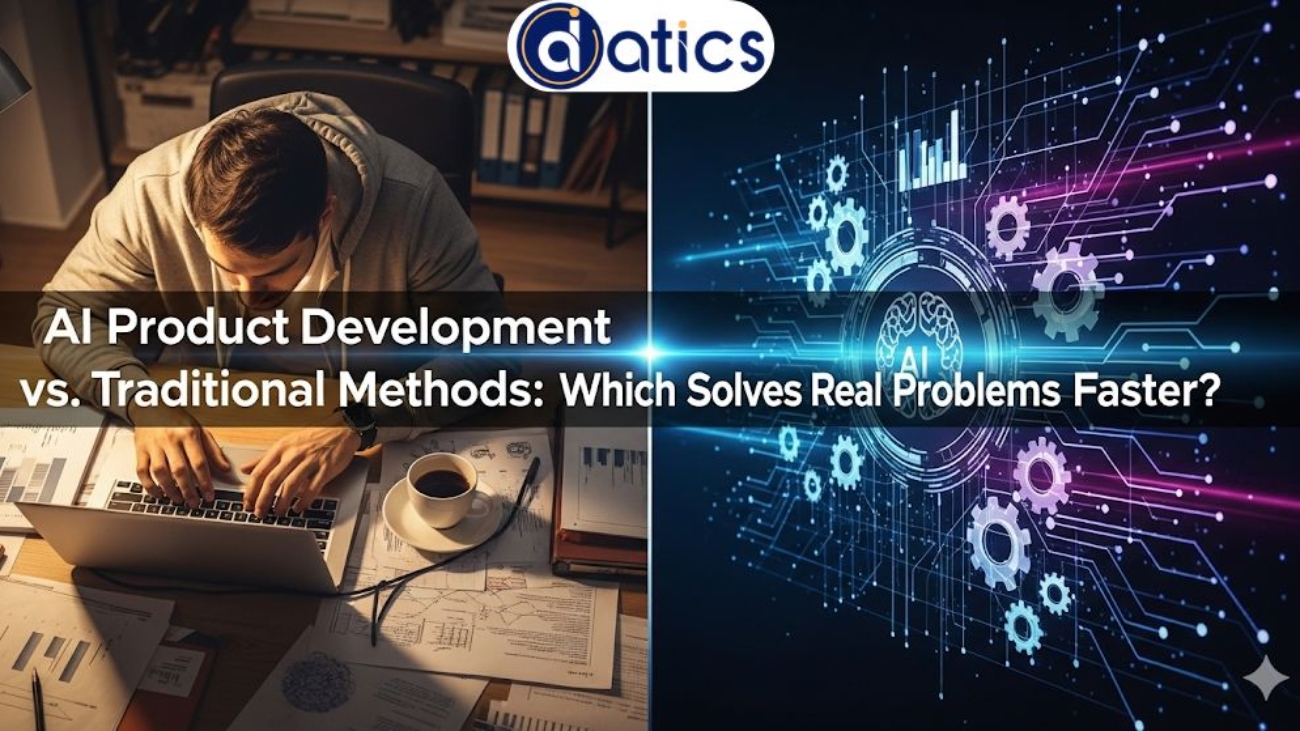
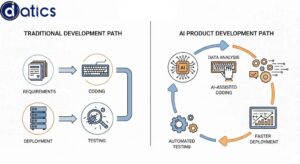
Comparison of all product development methods versus traditional methods for faster problem-solving.

AI Product Development vs. Traditional Methods: Which Solves Real Problems Faster?

In today’s competitive digital landscape, businesses face increasing pressure to deliver software solutions that solve real-world problems faster and more efficiently. While traditional product development methods have long served as the foundation of software creation, AI product development is rapidly reshaping the way organizations innovate, test, and scale. The question many decision-makers ask is simple: which approach actually solves problems faster—AI-driven or traditional?

This article dives deep into the differences, strengths, and limitations of both methods while highlighting how companies can make the right choice depending on their goals.


Understanding Traditional Product Development

Traditional software development methods rely on a structured, step-by-step process:

  • Requirements gathering
  • Planning and design
  • Coding and implementation
  • Testing and quality assurance
  • Deployment and maintenance

These methods—such as the Waterfall model or even Agile frameworks—are tried and tested. They emphasize stability, documentation, and human decision-making. For industries where precision and compliance matter most (like healthcare or finance), traditional approaches are still highly relevant.

Limitations of Traditional Methods

  • Longer development cycles
  • Higher costs due to extensive manual work
  • Risk of errors discovered late in the process
  • Slower adaptability to changing market needs


What Is AI Product Development?

AI product development integrates machine learning, automation, and advanced analytics into the software lifecycle. Instead of relying solely on human effort, it leverages AI models to accelerate tasks such as:

  • Automated code generation
  • Predictive analytics for product-market fit
  • AI-driven testing and bug detection
  • Intelligent automation in deployment

For businesses looking to innovate quickly, AI Software Development allows faster prototyping, smarter decision-making, and reduced operational overhead.

AI Product Development vs. Traditional Methods: Key Differences

1. Speed of Problem-Solving

  • Traditional: Relies on manual coding, reviews, and iterative testing. Problems are often identified later in the development cycle.
  • AI-Driven: Uses predictive analytics and automation to anticipate and solve issues early. This drastically reduces time-to-market.

2. Adaptability to Market Needs

  • Traditional: Agile frameworks improve flexibility, but constant changes can still increase costs and slow progress.
  • AI-Driven: AI continuously learns from data and user behavior, adapting solutions in real-time.

3. Quality Assurance

  • Traditional: Manual QA processes are time-intensive.
  • AI-Driven: Automated testing uncovers bugs and inefficiencies faster, reducing human error.

4. Scalability

  • Traditional: Scaling requires more developers, infrastructure, and costs.
  • AI-Driven: AI systems can scale without linear increases in human effort, making it more efficient for growing businesses. 

Which Solves Real Problems Faster?

The answer lies in the type of problem being solved.

  • Complex, data-driven challenges: AI product development clearly has the edge. It can process massive datasets, identify patterns, and recommend solutions at a speed humans cannot match.
  • Regulated, compliance-heavy industries: Traditional methods remain vital due to their focus on documentation, control, and structured oversight.

That said, many modern businesses adopt hybrid models, blending AI tools with traditional frameworks to maximize speed, efficiency, and compliance.

Real-World Example of AI Problem-Solving

For instance, businesses struggling with slow product scaling often turn to AI-powered solutions. Instead of manually analyzing customer data, AI predicts usage patterns, identifies bottlenecks, and automates fixes. As outlined in this article on transforming complex problems into scalable solutions, AI development enables companies to move from reactive problem-solving to proactive innovation.

Benefits of Choosing AI Product Development

  • Faster time-to-market with automated code generation
  • Reduced development costs by minimizing manual labor
  • Smarter decision-making powered by real-time insights
  • Improved scalability without exponentially increasing resources
  • Stronger customer experiences through data-driven personalization

When Traditional Methods Still Work Best

  • Projects requiring strict compliance (e.g., legal, healthcare, or government applications
  • Systems with low data dependency where AI may not add significant value
  • Organizations lacking AI infrastructure or expertise

Real-World Example of AI Problem-Solving

For instance, businesses struggling with slow product scaling often turn to AI-powered solutions. Instead of manually analyzing customer data, AI predicts usage patterns, identifies bottlenecks, and automates fixes. AI development enables companies to move from reactive problem-solving to proactive innovation. Companies like Datics.ai, which specialize in AI software development, play a key role in helping organizations adopt these modern practices and address challenges with efficiency.

.

FAQs

1. What is AI product development?

 It’s the integration of artificial intelligence tools and automation into the software lifecycle to accelerate coding, testing, and scaling.

2. Is AI faster than traditional software development?

Yes, AI development is faster for data-heavy, complex problems, but traditional methods still excel in compliance-driven industries.

3. Can AI completely replace traditional development?

Not entirely. The best results often come from combining both approaches.

4. What industries benefit most from AI development?

Tech startups, SaaS, e-commerce, and data-driven industries benefit the most from AI-driven solutions.

5. Is AI product development cost-effective?

Yes, by reducing manual work and automating testing, AI can significantly cut long-term development costs.

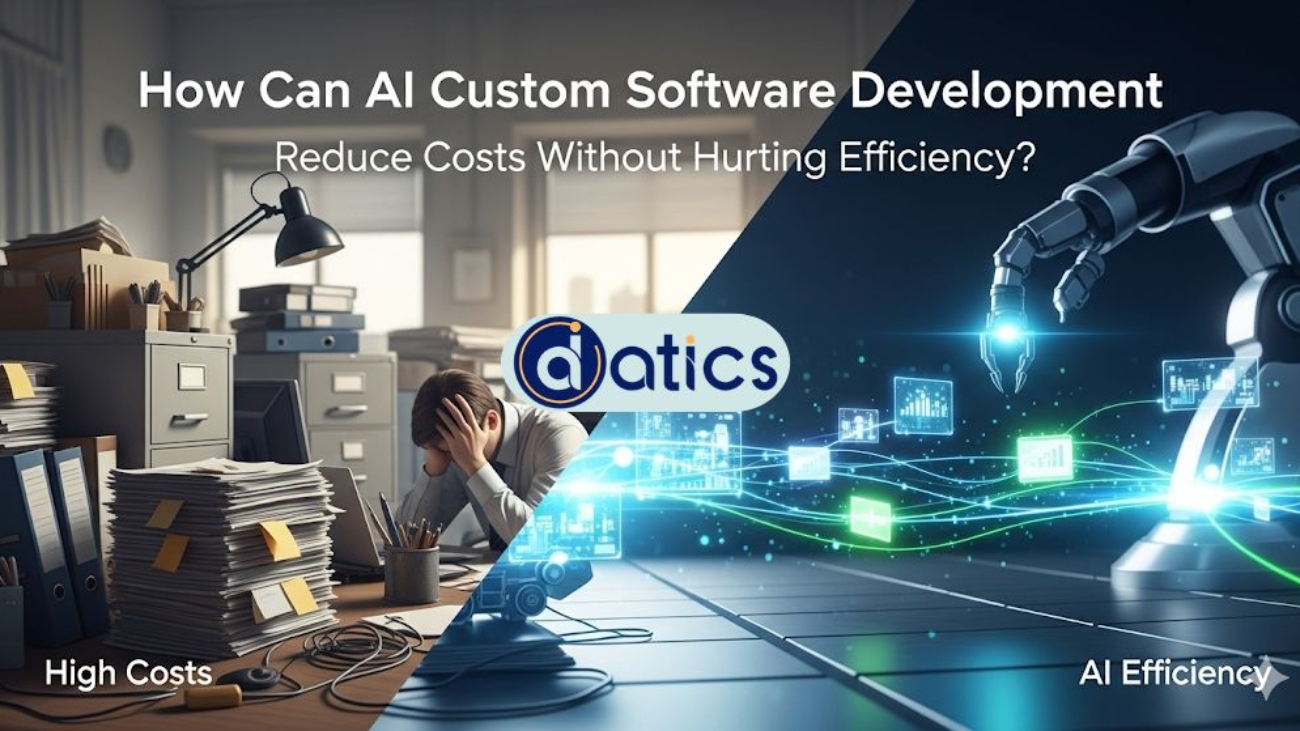
Custom software development strategies to enhance hunting efficiency and reduce costs effectively illustrated.

How Can AI Custom Software Development Reduce Costs Without Hurting Efficiency?

Every business today is searching for smarter ways to cut expenses without sacrificing productivity. That’s where AI custom software development steps in. Instead of forcing companies into one-size-fits-all solutions, AI-powered custom systems are designed to fit specific workflows, reduce waste, and deliver automation that improves performance. The result? Lower operational costs without compromising efficiency.

In this article, we’ll explore how businesses can leverage AI software development to solve cost-related challenges, improve decision-making, and stay competitive in today’s fast-paced digital economy.

Why Businesses Struggle With Cost vs. Efficiency

Balancing cost and efficiency is one of the biggest challenges for startups, enterprises, and SaaS providers. Traditional software often leads to:

  • Overhead from unused features 
  • High maintenance costs for generic solutions 
  • Manual inefficiencies that automation could fix 
  • Scaling challenges as the company grows 

The question becomes: How do you cut unnecessary spending while still moving faster than the competition?

This is where AI custom software development plays a transformative role.

How AI Custom Software Development Cuts Costs Without Hurting Efficiency

1. Eliminating Redundant Processes

AI-powered systems identify repetitive workflows and automate them. Tasks like manual data entry, scheduling, and reporting are streamlined—saving both time and salaries spent on non-core activities.

2. Smarter Resource Allocation

AI software ensures resources are used only where needed. By analyzing real-time data, it helps avoid wasted inventory, unnecessary hiring, or under-utilization of assets.

3. Reducing Human Error Costs

Mistakes cost money. AI’s predictive analytics and automation minimize errors in areas like billing, customer data handling, and forecasting, which saves thousands annually.

4. Lower Maintenance and Licensing Fees

Unlike off-the-shelf software with recurring licensing charges, custom-built AI solutions focus only on essential features. This cuts subscription bloat and long-term support costs.

5. Faster Scaling Without Hiring More Staff

AI solutions scale with your business. Instead of hiring large teams, AI can handle repetitive tasks, freeing employees to focus on growth and innovation.

Real-World Example: AI Efficiency in Action

For instance, a U.S.-based SaaS startup struggling with high support costs implemented AI-driven chatbots as part of its custom software. The result? Customer support tickets were reduced by 40%, response times improved, and the company saved thousands in annual staffing.

For more practical insights, you can explore AI software development in action: practical ways it solves today’s biggest issues — a detailed resource on how AI is actively solving modern business challenges.

The Efficiency Advantage: Beyond Cost Cutting

While reducing costs is critical, AI custom software development goes further by:

  • Improving decision-making through predictive analytics
  • Personalizing customer experiences for higher retention
  • Enhancing collaboration with intelligent tools
  • Enabling innovation by freeing resources for R&D 

This dual benefit—cutting costs while boosting performance—is what makes AI software development the most strategic investment for modern businesses.

Common Misconceptions About AI Custom Software

Even though the benefits are clear, some businesses hesitate due to myths:

  • “It’s too expensive to build.” → In reality, long-term savings far outweigh initial investment.
  • “AI will replace employees.” → Instead, it enhances human work by handling repetitive tasks.
  • “Custom software takes too long.” → Agile AI development frameworks allow faster rollouts.

By understanding these misconceptions, companies can make smarter choices about implementing AI solutions.

Best Practices for Implementing AI Custom Software Development

To ensure cost savings and efficiency, businesses should follow these practices:

1. Start With a Clear Problem

Identify specific cost-related issues AI can solve (e.g., manual operations, scaling bottlenecks).

2. Build Scalable Solutions

Develop AI software that grows with the business rather than needing constant redesign.

3. Focus on Integration

AI must integrate seamlessly with existing tools and workflows. Poor integration creates inefficiency.

4. Measure ROI Continuously

Track how much time and money AI saves compared to manual processes.

5. Partner With Experts

Choosing the right AI software development partner ensures better implementation and faster results.

Why AI Custom Software Development is the Future

Businesses that embrace AI today are not just investing in technology—they’re investing in resilience, agility, and long-term sustainability. In an economy where competition is fierce and customer expectations evolve rapidly, relying on outdated, off-the-shelf solutions can hold companies back.

Organizations that fail to adopt AI custom software development often face three major risks:

  • Higher costs from inefficiencies – Manual processes, repetitive tasks, and generic software bloat lead to wasted resources.
  • Falling behind competitors – Businesses leveraging AI automation, predictive analytics, and smart integrations are moving faster and serving customers better.
  • Poor scalability and customer experience – Without flexible, AI-driven systems, companies struggle to grow smoothly and provide seamless digital experiences.

Simply put, AI isn’t just about cost-cutting—it’s about building a future-proof business model.

At Datics AI, we believe the future belongs to companies that integrate AI into the core of their operations. Since 2018, our mission has been to help startups, enterprises, and SaaS providers harness the power of AI software development to cut unnecessary costs while driving innovation and efficiency.

Our team specializes in:

  • Building custom AI solutions that align with your exact business goals
  • Integrating automation to eliminate redundancy and accelerate workflows
  • Designing scalable systems that grow as your business expands
  • Ensuring efficiency without compromising on quality or customer satisfaction

By choosing Datics AI, you’re not just implementing a piece of software—you’re adopting a partner dedicated to shaping your business into a lean, innovative, and future-ready organization.

The future of software isn’t generic. It’s AI-driven, custom-built, and strategically aligned with each business’s unique challenges. Companies that take this step today will be the leaders of tomorrow.

FAQs

1. How does AI custom software reduce operational costs?

By automating repetitive tasks, minimizing errors, and cutting licensing fees.

2. Is AI software development only for large enterprises?

No, startups and SMEs benefit equally by saving resources and scaling faster.

3. Does AI software replace employees?

No—it enhances human efficiency by handling repetitive or data-heavy tasks.

4. What industries benefit most from AI software development?

Healthcare, SaaS, retail, finance, and logistics are leading adopters.

5. How quickly can businesses see ROI from AI software?

Most companies start noticing measurable savings within 6–12 months.

Author Bio

Written by the Datics AI editorial team, experts in AI software development and digital transformation. With years of experience helping businesses cut costs and scale efficiently, our mission is to share trusted insights that empower smarter decisions.