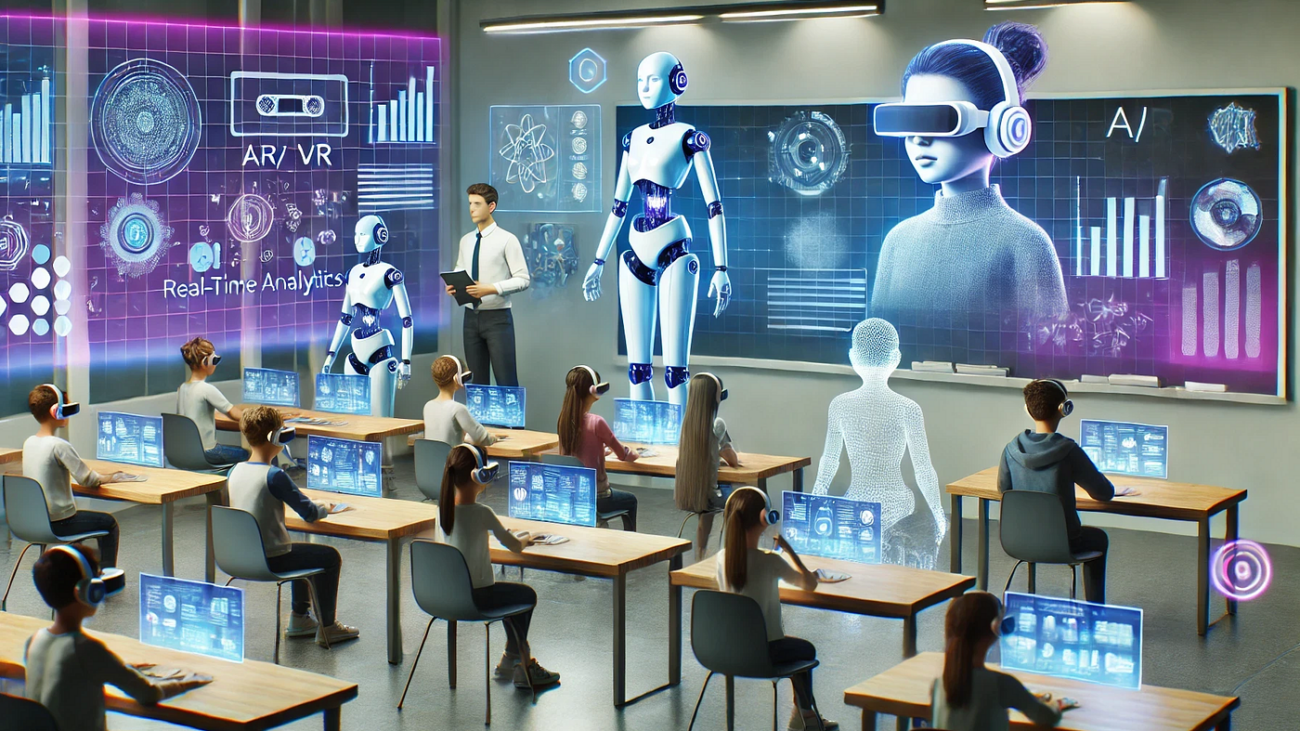
What Are the Benefits of AI Language Translation in Schools?

Empowering Every Student Through AI Language Translation

In today’s increasingly multicultural and multilingual educational landscape, schools face the challenge of ensuring every student can access lessons and resources in a language they understand. AI language translation technology is rapidly becoming an essential tool for educational institutions, bridging language barriers and creating more inclusive, efficient, and engaging learning environments.

At Datics.ai, located at 1353, 701 Tillery Street Unit 12, Austin, TX, Travis, US 78702, we specialize in developing advanced AI solutions tailored to the needs of modern schools. By implementing AI language translation tools, schools can provide equitable access to education for every student while streamlining administrative processes.
1. Breaking Down Language Barriers

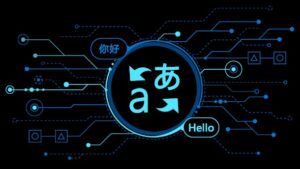
One of the most immediate and visible benefits of AI language translation in schools is its ability to break down language barriers. In classrooms with students from diverse linguistic backgrounds, teachers often struggle to ensure that every student fully understands lesson content. AI translation tools allow real-time translation of lesson materials, assignments, and instructions into multiple languages.

For example, a Spanish-speaking student in an English-dominant classroom can receive translated study materials instantly. This ensures that no student falls behind due to language limitations. By integrating AI translation into everyday learning, schools can create an inclusive environment where all students can thrive.

2. Enhancing Teacher Efficiency

Teachers often spend hours translating materials or explaining lessons individually to students who struggle with the primary language of instruction. AI language translation can significantly reduce this workload.

With AI translation software, educators can:

  • Automatically translate lesson plans, worksheets, and presentations.
  • Communicate effectively with non-English-speaking students or parents.
  • Focus more on interactive teaching rather than repetitive translation tasks.

By freeing up valuable time, teachers can dedicate more energy to improving student engagement, designing creative lesson plans, and providing personalized support.

3. Supporting Multilingual Parent Communication

Effective communication between schools and parents is crucial for student success. AI language translation tools enable school administrators and teachers to communicate effortlessly with parents in their native languages.

Important notices, progress reports, event invitations, and newsletters can all be automatically translated. This improves parent engagement, strengthens the home-school connection, and ensures that families remain informed and involved in their children’s education.

4. Improving Academic Performance and Learning Outcomes

AI language translation can directly impact student performance. When students can access learning materials in a language they understand, they are more likely to grasp complex concepts, complete assignments accurately, and participate in class discussions.

Schools that adopt AI translation tools often see improvements in:

  • Student comprehension and retention.
  • Participation in collaborative projects.
  • Overall academic performance.

By enabling all students to fully engage with educational content, AI translation tools contribute to a higher standard of education for the entire school community.

5. Scalability for Growing School Districts

School districts often serve students from a wide variety of linguistic backgrounds. As districts expand, maintaining consistent quality education for multilingual students can become challenging. AI language translation solutions are scalable, allowing schools to:

  • Add support for additional languages quickly.
  • Provide uniform educational materials across multiple campuses.
  • Maintain consistent teaching quality regardless of student demographics.

This scalability ensures that as the student population becomes more diverse, schools can continue delivering high-quality education for everyone.

6. Promoting Digital Literacy and Technological Integration

Incorporating AI language translation tools encourages students and educators to adopt modern educational technology. Students become comfortable using AI-powered platforms, enhancing their digital literacy skills, which are essential in today’s technology-driven world.

Teachers also gain expertise in managing AI tools, preparing them to integrate additional AI-driven solutions in areas such as grading, attendance, and administrative management. This fosters a technologically advanced learning environment that benefits everyone in the school ecosystem.

7. Cost-Effective Solution for Schools

Hiring additional bilingual staff or investing in manual translation services can be costly and time-consuming. AI language translation provides a cost-effective alternative, offering real-time translation at scale with minimal ongoing expense.

By reducing reliance on external translation services and streamlining teacher workflow, schools can save both time and resources while maintaining high educational standards.

Why Choose Datics.ai for AI Language Translation in Schools?

At Datics.ai, we understand the unique challenges faced by modern educational institutions. Our AI language translation solutions are designed to:

  • Support multilingual learning environments.
  • Enhance communication between teachers, students, and parents.
  • Improve overall efficiency and learning outcomes.

We provide personalized consultations to assess your school’s needs, implement AI solutions, and provide ongoing support. Our expertise ensures that schools in North America and beyond can confidently adopt AI to create smarter, more inclusive learning environments.

📍 Address: 1353, 701 Tillery Street Unit 12, Austin, TX, Travis, US 78702
📞 Call: 1 (945) 297-6257
✉️ Email: business@datics.ai to schedule a consultation and see how AI language translation can transform your school.

FAQs

1. Can AI language translation work in real-time during classroom lessons?
Yes. Modern AI translation tools can provide instant translations of spoken or written content, enabling seamless communication in multilingual classrooms.

2. Are AI language translation tools suitable for all grade levels?
Absolutely. AI translation software can be customized to suit the reading and comprehension levels of students across all grades, from elementary to high school and even higher education.

3. How secure is AI translation software for school data?
Datics.ai ensures that all AI solutions are  maintaining strict security standards for sensitive student and school data.



A split-image illustration: one side showing modern challenges (fraud, healthcare, traffic), the other side showing AI “networks” untangling and solving them in real time.

AI Software Development in Action: Practical Ways It Solves Today’s Biggest Issues

The biggest challenges businesses face today—whether it’s handling data overload, customer demands, fraud risks, or global disruptions—cannot be solved by traditional software alone. Systems built on static rules fail when problems scale, evolve, or take new shapes.

This is where AI Software Development proves its value. By combining automation, machine learning, and predictive intelligence, AI-powered software doesn’t just fix problems temporarily—it builds solutions that are scalable, adaptive, and long-lasting.

Why Today’s Issues Need AI at the Core

We’re living in a time where every sector faces problems that feel too big, too fast, and too complex:

  • Healthcare struggling with patient data and early diagnosis.
  • Finance fighting fraud and compliance risks in real time.
  • Retail balancing unpredictable demand shifts.
  • Education needing personalized learning for millions of students.

Traditional systems can’t keep up. AI software development works differently—it learns from data, adapts to change, and scales automatically, turning what seems impossible into manageable solutions.

Practical Ways AI Software Development Solves Today’s Biggest Issues

1. Fraud and Security Threats

Cybercrime costs businesses trillions globally. Static security tools are no match for evolving fraud tactics. AI steps in with anomaly detection algorithms that monitor millions of transactions simultaneously, flagging suspicious behavior instantly.
👉 Banks, e-commerce platforms, and fintech companies now rely on AI-driven fraud detection to stay one step ahead of attackers.

2. Healthcare Diagnosis and Patient Care

Doctors face overwhelming amounts of patient data, medical histories, and imaging scans. AI software cuts through the complexity by:

  • Scanning X-rays and MRIs for hidden anomalies.
  • Predicting patient risks based on historical patterns.
  • Supporting doctors in making quicker, data-backed decisions.

This makes diagnosis faster, more accurate, and scalable across entire hospital systems.

3. Personalized Education at Scale

Students learn at different paces, yet traditional education delivers the same curriculum for all. AI solves this by creating adaptive learning platforms that respond to each learner’s progress.

For example, here’s a detailed breakdown: How AI Education Software Integrates with Existing LMS Effectively. This shows how AI can seamlessly blend with LMS platforms, ensuring students get personalized, scalable, and engaging education experiences.

4. Customer Experience and Engagement

Customers expect instant responses, tailored recommendations, and consistent service across platforms. AI-powered chatbots, recommendation engines, and predictive analytics deliver this at scale—whether it’s helping millions of users simultaneously or personalizing a single experience.

5. Supply Chain and Logistics Optimization

Unpredictable weather, traffic, and market fluctuations can break even the best supply chain models. AI solves this by:

  • Predicting demand surges before they happen.
  • Optimizing delivery routes in real time.
  • Reducing costs while maintaining reliability.

This turns global supply chains from fragile systems into resilient, scalable networks.

The Human Side of AI: Empowering People, Not Replacing Them

One of the biggest misconceptions is that AI replaces humans. In reality, AI software development empowers teams:

  • Doctors spend less time on admin tasks, more time with patients.
  • Teachers focus on mentorship, while AI handles adaptive grading.
  • Customer service agents solve complex queries, while AI resolves routine ones.

It’s not about replacing jobs—it’s about reshaping them for greater impact.

Looking Ahead: The Future of AI in Problem-Solving

We’re moving toward a future where AI isn’t just a tool—it’s the foundation of problem-solving. Tomorrow’s AI solutions will:

  • Model climate change at regional and city-wide levels.
  • Deliver fully personalized medicine tailored to each person’s DNA.
  • Manage smart cities with adaptive traffic and energy systems.

Companies like Datics.ai are at the forefront of this shift, helping businesses embrace AI-driven software development to tackle issues that once felt unsolvable. AI will continue to be about solving human problems with scalable, intelligent solutions.

Conclusion: From Issues to Opportunities

AI software development has moved from concept to action. Whether it’s stopping fraud, improving healthcare, personalizing education, or optimizing supply chains, AI is proving its power to solve today’s biggest issues at scale.

For businesses navigating complex challenges, the answer is no longer to patch problems with outdated tools. It’s to embrace AI as a partner in problem-solving—turning issues into opportunities for growth, resilience, and innovation.

FAQs

  1. What problems does AI software development solve best?
    Fraud detection, healthcare diagnostics, supply chain optimization, and personalized customer experiences.
  2. How does AI scale solutions for businesses?
    AI adapts to workload increases automatically, ensuring reliability from 100 users to millions.
  3. Is AI software only for large enterprises?
    No. Cloud-based AI tools make it accessible for startups and SMEs at affordable levels.
  4. How does AI integrate with old systems?
    Through APIs and middleware that allow AI to connect without rebuilding everything from scratch.
  5. Does AI replace human jobs?
    Not directly—it removes repetitive tasks and empowers humans to focus on higher-value work.
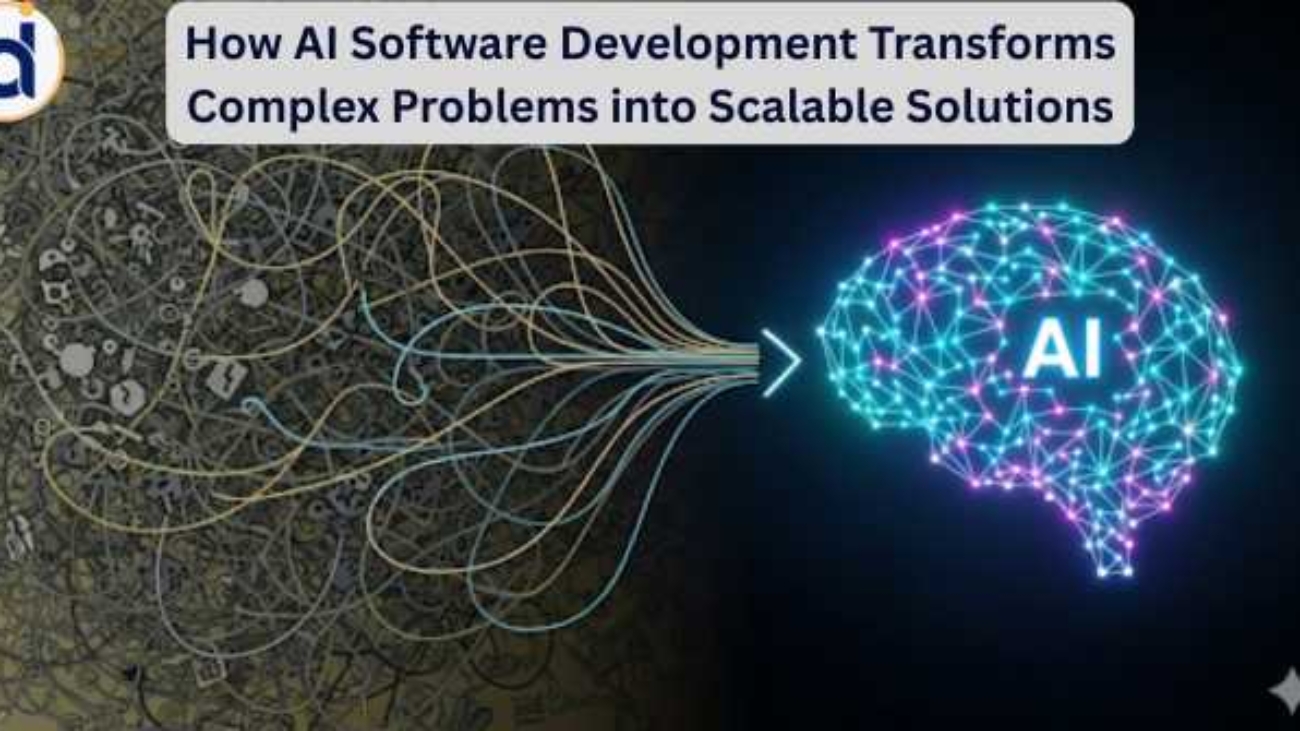
A maze-like illustration of tangled problems on one side, and a clean AI “network brain” on the other, showing AI untangling complexity into clarity.

How AI Software Development Transforms Complex Problems into Scalable Solutions

Every business today wrestles with problems that don’t have straightforward answers. Think of:

  • Banks dealing with millions of fraud attempts daily.
  • Hospitals flooded with patient data that doctors can’t manually analyze fast enough.
  • Retailers needing to predict demand when customer behavior changes overnight.

Traditional software often collapses under this weight. It works in silos, solves one part of the problem, and struggles to scale. This is where AI software development comes in—not as a buzzword, but as a practical framework for building solutions that actually grow with the problem.

From Complexity to Clarity: What AI Really Does

AI software doesn’t just “automate.” It learns. It adjusts. It uncovers patterns humans might miss.

  • In healthcare, AI scans thousands of medical images in seconds, flagging anomalies doctors might overlook.
  • In logistics, AI predicts traffic and weather disruptions, rerouting shipments in real time.
  • In education, AI tailors lessons to how fast or slow each student learns, making teaching scalable.

It takes chaos (complexity) and turns it into clarity (scalable insight and action).

The Core Ways AI Software Development Solves Problems

1. It Turns Data Into Decisions

Every organization drowns in data. AI transforms that flood into actionable decisions—whether it’s spotting fraudulent transactions in milliseconds or recommending the right product to a customer.

2. It Automates Without Losing Human Value

AI doesn’t replace human talent—it removes repetitive tasks so people can focus on creative, strategic work.

3. It Scales Without Breaking

Whether a SaaS platform grows from 1,000 to 1 million users, or a healthcare system adds hundreds of hospitals, AI ensures systems stay reliable.

4. It Learns as It Goes

Unlike traditional systems that need manual updates, AI improves with use. The more it processes, the better it gets at solving problems.

Real-World Scenarios Where AI Makes the Difference

  • Fraud Prevention: Payment platforms use AI to process millions of transactions, learning patterns of fraud in real time. Without AI, detection would be too slow.

  • Smart Education: Universities adopt AI tools to blend with LMS systems, making digital classrooms adaptive. (See: How AI Education Software Integrates with Existing LMS Effectively).

  • Customer Support at Scale: AI chatbots now resolve 80% of first-level queries, freeing human agents to handle the tough conversations.

These aren’t “future” examples—they’re happening now.

The Challenges (And How AI Overcomes Them)

  1. Data Privacy & Trust
    – Solution: AI development now embeds encryption, GDPR compliance, and secure architectures by design.

  2. Integration with Old Systems
    – Solution: APIs and middleware allow AI tools to fit into existing workflows without requiring full rebuilds.
  3. The Talent Gap
    – Solution: Partnering with experienced AI teams bridges the skills shortage, making implementation smoother.
  4. High Upfront Costs
    – Solution: Cloud-based AI services let companies start small and scale only when value is proven.

Why Scalability Matters Most

The real win with AI isn’t just solving problems—it’s solving them again and again at scale.

  • A hospital system doesn’t need one diagnosis tool for one clinic. It needs a scalable solution across 200 clinics.
  • A SaaS startup doesn’t need a chatbot for 100 users. It needs one that can handle 100,000 without breaking.

That’s the difference between AI and traditional software—one grows with you, the other falls behind.

Looking Ahead: AI as a Problem-Solving Partner

We’re moving toward a world where AI isn’t “added on” to software—it’s the foundation. Future AI development will:

  • Model climate change at city-wide scales.
  • Enable personalized medicine for every individual.
  • Run smart cities with adaptive traffic and energy systems.

Companies like Datics.ai are already helping organizations prepare for this future by building AI software development solutions that don’t just meet today’s needs but are designed to scale with tomorrow’s challenges. AI will continue to be less about “technology for technology’s sake” and more about solving the pressing human problems that matter most.

FAQs

1. What is AI software development in simple terms?


It’s the process of building software that learns and adapts to solve problems more effectively over time.

2. Why is scalability important in AI solutions?


Because problems grow—AI ensures the solution grows with them.

3. Can small businesses use AI software?


Yes. Cloud-based AI makes it affordable for startups and SMEs to adopt AI at their scale.

4. What’s the biggest barrier to AI adoption?


Integration with existing systems, which is now easier thanks to modern APIs.

5. How is AI different from traditional software?


Traditional software follows rules; AI software learns patterns and evolves.

A lightbulb transforming into a rocket (symbolizing an idea turning into impact).

From Idea to Impact: How Innovation Transforms Challenges into Opportunities

Innovation has always been the driving force behind business growth, societal progress, and human achievement. Every breakthrough begins with an idea — but what truly matters is how that idea evolves into real-world impact. For startups, enterprises, and organizations across the USA, the journey from idea to impact is where challenges are not just obstacles, but opportunities waiting to be unlocked.

In today’s fast-changing business landscape, where technology, consumer behavior, and global markets shift daily, innovation is no longer optional — it’s the bridge that transforms setbacks into growth strategies.

How Innovation Matters More Than Ever

High-growth companies and leading startups consistently prove that innovation is the key to survival and success. Whether it’s improving customer experience, cutting operational costs, or launching new digital products, innovative thinking allows businesses to adapt in a competitive environment.

  • Turning challenges into opportunities: Instead of fearing disruption, innovative companies embrace it as a chance to create something better.
  • Driving sustainable growth: Innovation doesn’t just solve immediate problems — it builds long-term resilience.
  • Creating customer-first solutions: By listening to real needs, businesses can transform even the toughest obstacles into products and services that win trust

The Journey: From Idea to Impact

Innovation isn’t just about a “big idea.” It’s a process — one that starts with imagination but thrives on execution. Let’s break it down:

1. Identifying the Challenge

Every impactful innovation begins with a challenge. For startups in the USA, these challenges often include funding limitations, market competition, or technology gaps. But within these struggles lies the seed of opportunity.

2. Ideation and Creativity

Once the challenge is clear, the brainstorming phase begins. This is where bold, out-of-the-box ideas emerge. The most successful innovators don’t settle for quick fixes — they seek scalable solutions that can disrupt industries.

3. Building and Testing

Ideas are meaningless without action. This stage transforms creativity into prototypes, MVPs (minimum viable products), or proof-of-concept solutions. Testing ensures that businesses reduce risks and identify the right market fit before scaling.

4. Scaling for Impact

Once an idea is validated, innovation expands into real-world impact. Scaling requires resources, strategy, and a customer-first approach. Businesses that scale successfully are those that integrate feedback, improve continuously, and adapt quickly.

Real-World Examples: Innovation in Action

Innovation is reshaping industries across the USA — from healthcare and education to fintech and SaaS. For instance, AI-powered software in education has dramatically improved student engagement and learning outcomes. Forward-looking companies are already exploring how artificial intelligence can personalize learning and make classrooms more interactive.

To dive deeper into this, here’s a relevant resource: How AI Software Can Improve Student Learning Outcomes from Datics.ai. It’s a perfect example of how innovation is not just theoretical — it’s creating measurable impact in real life.

How Innovation Turns Challenges into Opportunities

1. Market Disruptions → New Business Models

When traditional markets collapse, innovative businesses pivot. For example, remote work solutions turned the challenge of a pandemic into the opportunity for SaaS and collaboration tools to thrive.

2. Financial Constraints → Efficiency Gains

Startups with limited budgets often develop more efficient, scalable, and leaner solutions than big competitors.

3. Customer Complaints → Product Improvements

Listening to customer frustration often leads to building the most impactful products. Every negative review is an opportunity in disguise.

4. Technology Barriers → Digital Transformation

Where older businesses see outdated systems as limitations, innovators see the chance to rebuild processes with cloud, AI, and automation.

The Role of Innovation in U.S. Startups

The United States remains the global hub of innovation, with cities like Austin, San Francisco, and New York producing world-changing startups every year. What sets successful innovators apart?

  • Visionary leadership: Founders who view every obstacle as an opportunity.
  • Agility: The ability to adapt quickly to market changes.
  • Customer obsession: Building solutions that genuinely solve user problems.
  • Tech-first mindset: Leveraging tools like AI, automation, and cloud to scale faster.

Building Trust Through Innovation

For innovation to truly create impact, it must earn trust. Customers today are more informed than ever, and businesses must demonstrate:

  • Expertise: Backed by years of industry knowledge.
  • Authority: Proven results in delivering impactful solutions.
  • Trustworthiness: Transparent communication and ethical innovation practices.

This is where companies like Datics.ai stand out — combining expertise with a customer-first approach to ensure that innovation doesn’t just look good on paper but creates measurable, trusted impact.

Practical Takeaways for Businesses

If you’re a startup or business leader looking to innovate, here are actionable steps to transform challenges into opportunities:

  1. Listen to your customers: Every complaint is a hidden opportunity.
  2. Leverage technology: Use AI, automation, and digital transformation tools.
  3. Start small, scale fast: Build prototypes, validate, then expand.
  4. Build resilience: Prepare for disruptions by innovating continuously.
  5. Collaborate with experts: Partnering with innovation-driven companies accelerates growth.

Final Verdict

The journey from idea to impact is never easy. It’s filled with challenges, uncertainties, and risks. But when innovation drives the process, those same challenges become stepping stones to opportunity.

For startups and enterprises in the USA, innovation isn’t just a strategy — it’s survival, growth, and the key to staying relevant in an ever-changing market. Businesses that embrace creativity, agility, and trust will always find a way to turn challenges into success stories.

FAQs

  1. What does “from idea to impact” mean in innovation?
    It describes the journey of turning a simple idea into a solution that creates real-world results and value.
  2. Why is innovation important for U.S. startups?
    It helps them compete in crowded markets, attract investors, and scale faster.
  3. How can businesses turn challenges into opportunities?
    By adopting a problem-solving mindset, leveraging technology, and listening to customer needs.
  4. What role does AI play in innovation?
    AI enables smarter decision-making, automation, and personalized experiences across industries.

      5. How do I start innovating in my business?
     Begin by identifying your biggest challenge, brainstorm scalable ideas,         test prototypes, and scale with customer feedback.

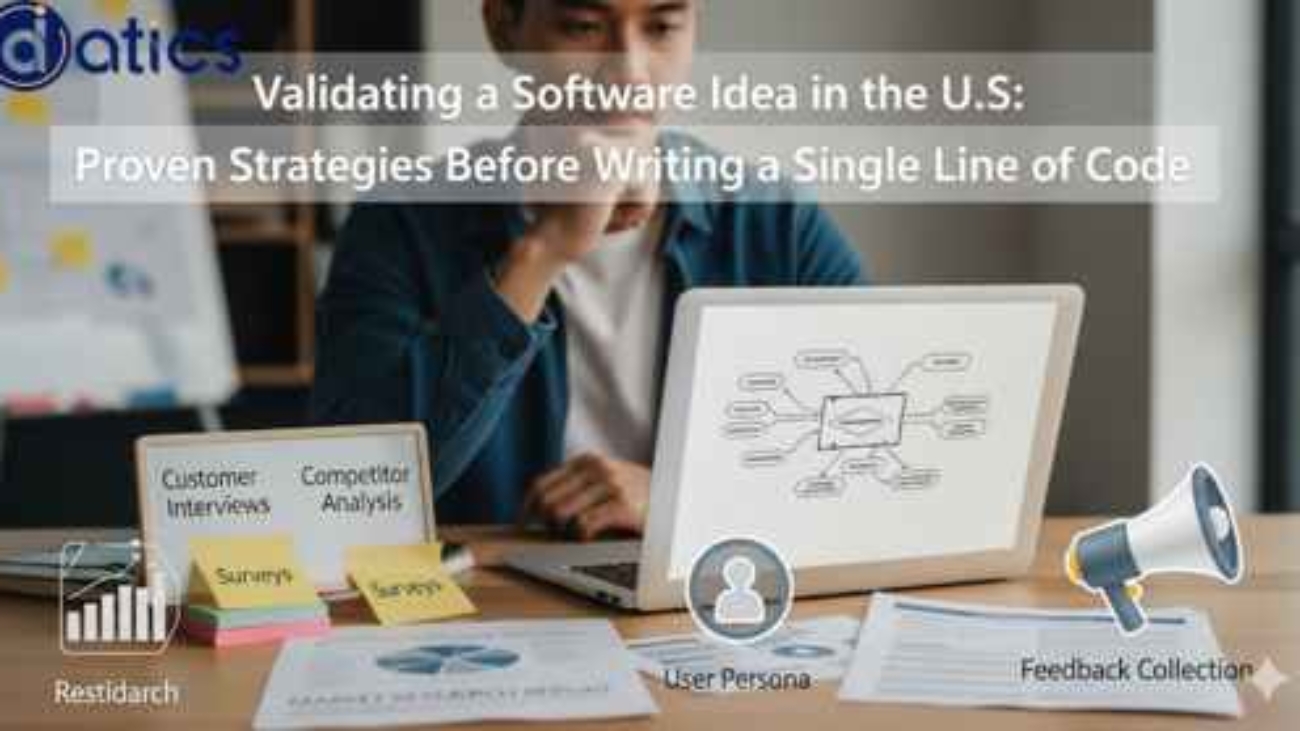
A laptop screen showing a “light bulb” (idea) connected to a flow chart with check marks — symbolizing validation before coding. Background: U.S. map outline with Austin highlighted.

Validating a Software Idea in the U.S.: Proven Strategies Before Writing a Single Line of Code

Launching a new product in the U.S. market can feel exciting but also risky. Many founders rush into development, only to discover later that their idea doesn’t solve a real problem or attract enough customers. Validating a software idea is the smartest way to avoid costly mistakes. This step ensures your concept has market demand, investor appeal, and scalability potential.

In today’s landscape, where custom software development and Custom product development are shaping the future of industries, validation isn’t just optional — it’s essential. Companies like Datics.ai emphasize that a structured validation process is what separates successful products from failed experiments.

Why Validation Matters in the U.S. Market

  • Competitive Environment: The U.S. is one of the world’s most crowded markets for tech innovation. Without proof of demand, even the smartest AI software development project can flop.
  • Investor Confidence: Investors are more likely to support startups that demonstrate traction through validation rather than just ideas.
  • Cost Efficiency: Building software is expensive; validating early saves both money and time.
  • Customer-Centric Approach: Validation ensures you’re solving a real U.S. business or consumer pain point.

Proven Strategies to Validate Your Software Idea

1. Define the Problem Clearly

Every strong software idea starts with a real problem. Ask:

  • Is this problem experienced by a significant number of people in the U.S.?
  • Is it urgent enough that they’d pay for a solution?

Tools like online forums, LinkedIn groups, and industry research reports can help identify whether your target market is truly struggling with the issue you plan to solve.

  1. Conduct Market Research

Market research remains a cornerstone of AI software development validation. Consider:

  • Competitor Analysis: Identify who else is solving the problem. Study their strengths and weaknesses.
  • Industry Trends: Look at how U.S. companies are investing in AI product development and whether similar solutions are gaining traction.
  • Customer Behavior Data: Use surveys, Google Trends, and competitor reviews to understand U.S. buyer intent.
  1. Build a Minimum Viable Product (MVP)

Instead of a full-scale platform, create a basic version of your idea that demonstrates core functionality. This allows you to:

  • Test demand with minimal investment
  • Gather real-world feedback
  • Pivot quickly if necessary

An MVP is especially valuable in AI custom software development, where data-driven improvements depend on user interaction.

  1. Leverage Landing Pages and Pre-Sales

Set up a simple landing page describing your product’s features, pricing, and benefits. Then measure interest through:

  • Email signups
  • Early access registrations
  • Paid ads targeting U.S. audiences

If users are willing to join a waitlist or pre-order, you have strong validation signals.

  1. Test with Prototypes and Wireframes

Interactive prototypes or clickable wireframes allow potential customers to visualize your idea. This helps test usability and gauge interest without heavy coding. Tools like Figma or InVision are popular for quick prototyping in AI product development.

  1. Gather Customer Feedback Early

Talk directly with U.S. customers. Organize small focus groups, one-on-one interviews, or run beta testing campaigns. Feedback during this stage helps refine both the problem and your solution.

  1. Validate Through Partnerships

Forming early partnerships with businesses or educational institutions in the U.S. gives you both credibility and proof of demand. For example, the adoption of AI education software is accelerating, and insights from case studies like AI chatbots transforming learning demonstrate how validation with real users boosts long-term product success.

  1. Track Key Metrics

Numbers don’t lie. Measure:

  • Conversion rates from landing pages
  • Pre-sales revenue
  • Customer feedback scores
  • Churn from beta testers

These metrics reveal whether your idea has enough traction to scale.

Avoiding Common Mistakes

Even with proven strategies, many U.S. founders fall into pitfalls:

  • Skipping Research: Building software based on assumptions instead of real market data.
  • Overbuilding the MVP: Spending too much time and money on features instead of focusing on the problem.
  • Ignoring Competition: Underestimating existing solutions already dominating the market
  • Not Listening to Feedback: Dismissing early customer input that could save the product.

Wrapping It Up

Validating your software idea before writing a single line of code is not just about reducing risk — it’s about building smarter. By investing time in AI custom software development validation, conducting market research, and engaging early adopters, U.S. startups can save money, attract investors, and build products that genuinely succeed.

At the end of the day, successful AI product development starts with trust. It’s about proving your idea has value in the market before you commit resources to development. When done right, validation turns uncertainty into confidence.

FAQs

Q1: What is the fastest way to validate a software idea in the U.S.?
Landing pages and pre-sales campaigns give quick insights into market interest.

Q2: Do I need a full MVP to validate my idea?
No, even wireframes and prototypes can help gauge customer reactions.

Q3: How important is competitor research in AI software development?
Extremely — it helps identify market gaps and avoid reinventing the wheel.

Q4: Can validation save costs in AI product development?
Yes, it prevents wasted development by focusing only on features customers value.

Q5: Should startups in Austin approach validation differently?
Not necessarily, but Austin’s startup ecosystem provides unique opportunities for local partnerships and testing.

About the Author:
This article is written on behalf of Datics.ai, a leading Austin-based company specializing in AI custom software development and AI product development. Since 2018, Datics AI has been helping startups and enterprises validate, design, build, and scale future-ready software solutions with a strong focus on innovation and customer success.

1__I8WA0rYCjWpoj7UAuht1Q

How Can Education Software Help Teachers Automate Grading and Feedback?

In today’s fast-paced digital world, teachers face increasing pressure to manage large classes, personalize learning, and provide timely feedback, all while balancing lesson planning and administrative tasks. Manual grading consumes hours that could otherwise be spent on engaging with students or improving teaching strategies. This is where education software powered by AI custom software development becomes a game-changer.

At Datics AI, based in Austin, TX, we specialize in building customized education software development that helps teachers save time, reduce workload, and improve learning outcomes. If you’re an educational institution or an edtech entrepreneur, the right software can completely transform how your classrooms operate.

The Challenge Teachers Face with Manual Grading

Grading assignments, quizzes, and tests manually is time-consuming. For teachers managing large groups, this process can take several hours every week. Manual grading also comes with challenges such as

  • Human error: Mistakes are natural when reviewing hundreds of papers.
  • Delayed feedback: Students may wait days or weeks for results, reducing the impact of learning.
  • Limited personalization: Teachers often struggle to give detailed, individualized feedback.

This is exactly why education software has become essential in modern classrooms.

How Education Software Automates Grading

Education software, powered by AI custom software development, leverages machine learning and automation to streamline grading and provide instant, accurate results.

Here’s how it works:

  1. Automated Test Evaluation
    Software can automatically grade multiple-choice, true/false, and even essay-type answers using AI-driven natural language processing.
  2. Instant Feedback for Students
    Instead of waiting, students receive feedback immediately, helping them identify mistakes and improve faster.
  3. Customizable Rubrics
    Teachers can set grading criteria once, and the system applies it consistently across all assignments.
  4. Data Analytics for Performance Tracking
    Teachers get insights into class-wide performance, spotting learning gaps and tailoring lessons accordingly.

Why Choose AI Custom Software Development for Education

Not all education software is the same. Off-the-shelf solutions may lack flexibility, while AI custom software development ensures your platform is tailored to your exact needs.

Benefits include:

  • Scalability: The system grows as your school or institution expands.
  • Integration: Works with existing LMS platforms like Moodle, Canvas, or Blackboard.
  • Personalization: Customized grading models for different teaching styles and subjects.
  • Future-Proofing: AI continuously learns and adapts for better accuracy.

At Datics AI, we don’t just build software, we design solutions that improve teaching efficiency while enhancing the student experience.

Real Impact: How Automated Grading Helps Teachers

  • Saves Time: Teachers can reclaim up to 10+ hours per week.
  • Enhances Accuracy: Reduces bias and grading inconsistencies.
  • Boosts Student Engagement: Faster feedback encourages continuous improvement.
  • Supports Innovation: Teachers can focus more on interactive and creative teaching methods.

By automating grading, education software empowers teachers to do what they do best: teaching and inspiring students.

Why Educational Institutions in Texas Trust Datics AI

Located in Austin, TX, Datics AI specializes in AI-driven custom software solutions for education and other industries. With proven expertise in ideation, innovation, maintaining, and scaling, our team ensures your software not only works today but also evolves with your future needs.

📍 Address: 1353, 701 Tillery Street Unit 12, Austin, TX, Travis, US 78702
📞 Call: +1 (945) 297-6257
📧 Email: business@datics.ai


Whether you’re a school district, college, or edtech startup, we’re here to help you transform your operations with custom education software.

Take Action: Transform Your Classrooms Today

The future of education is smart, automated, and personalized. Don’t let your teachers struggle with outdated manual processes. With Datics AI’s AI custom software development, you can unlock efficiency, improve student outcomes, and scale your education system for long-term success.

Q1. Can education software really grade essays accurately?
Yes. With AI-powered natural language processing, software can evaluate grammar, coherence, and content relevance. Teachers can still review results, but the system handles initial grading to save time.

Q2. How secure is student data in custom education software?
At Datics AI, data security is a top priority. Our solutions comply with FERPA and other education data privacy regulations, ensuring student records remain safe.

Q3. Is custom education software better than off-the-shelf tools?
Absolutely. While off-the-shelf solutions offer limited features, custom-built software adapts to your unique grading policies, integrates with your existing systems, and scales with your institution.

images (4)

AI in Education: Smart Solutions for the Modern Classroom

Empowering Students and Teachers with AI-Driven Education Solutions

In today’s rapidly evolving digital world, the way we teach and learn is being transformed by artificial intelligence (AI). From smart classrooms to personalized learning platforms, AI-powered education solutions are helping students, teachers, and institutions achieve more than ever before.

At Datics (Austin, TX), we specialize in AI education software development tailored to the education sector. By leveraging AI technology, we design scalable, intelligent solutions that improve learning outcomes, optimize administrative processes, and make education more accessible to all.

Get in Touch with Datics

If you’re ready to bring innovation to your educational services, we’re here to help.

 Address: 1353, 701 Tillery Street Unit 12, Austin, TX, Travis, US 78702
Call: +1 (945) 297-6257
Email: business@datics.ai

Why AI Matters in Education

Education is no longer limited to textbooks and traditional lectures. Modern students are digital natives who expect engaging, personalized, and efficient learning experiences. AI helps bridge this gap by:

  • Personalizing learning: Creating tailored learning journeys based on student strengths, weaknesses, and pace.
  • Reducing administrative workload: Automating grading, scheduling, and record-keeping so teachers can focus on teaching.
  • Improving accessibility: Tools like real-time translation and voice-to-text transcription make learning inclusive.
  • Data-driven insights: Tracking performance and providing actionable analytics to improve teaching strategies.

Key AI-Powered Education Solutions

Here are some ways AI is transforming education:

  1. Intelligent Learning Platforms
    Adaptive platforms recommend lessons, give instant feedback, and track progress in real time.
  2. Virtual Classrooms with AI Integration
    Smart attendance, automated note-taking, and adaptive teaching improve student engagement in remote learning.
  3. AI-Based Assessment Tools
    Advanced analytics move beyond multiple-choice testing to give a deeper understanding of student performance.
  4. Predictive Analytics for Student Success
    Helps identify students needing extra support, allowing early interventions and improving retention rates.
  5. Administrative Automation
    AI streamlines admissions, grading, scheduling, and parent communication, saving time and reducing errors.

Why Partner with the Right AI Experts?

Choosing the right technology partner is critical. Institutions benefit from:

  • Deep expertise in AI custom software development tailored to education.
  • Proven record of delivering scalable, reliable, and innovative solutions.
  • A people-first approach that ensures measurable results and enhances the learning experience.
  • Ongoing consultation and support for smooth AI adoption.

The Future of AI in Education

AI in education is not just a trend; it’s the future. From immersive AR-driven learning to advanced predictive lesson planning, opportunities for innovation are endless. Institutions that adopt AI today will be better prepared for tomorrow’s challenges.

Transform Education with AI: Custom Software Solutions by Datics

The education industry is undergoing a revolution, and AI is at the heart of it. Schools, universities, and training centers that embrace AI will not only stay ahead of the curve but also deliver unmatched learning experiences.

If you’re ready to transform your educational services with cutting-edge AI, Datics is here to help. With expertise in AI custom software development, we deliver solutions that empower students, teachers, and institutions to achieve new heights.

Address: 1353, 701 Tillery Street Unit 12, Austin, TX, Travis, US 78702
Call: +1 (945) 297-6257
Email: business@datics.ai

FAQs

Q1: What is AI custom software development in education?
It’s the creation of tailored AI-driven solutions that meet the specific needs of schools, universities, and training providers.

Q2: How does AI improve student learning outcomes?
By personalizing learning paths, tracking progress in real time, and offering actionable data insights to support students effectively.

Q3: Why choose Datics for AI-powered education solutions?
Because of their expertise in AI, people-first approach, and commitment to delivering scalable, innovative, and long-term results.