
Free Call
+1 820 123 54 87
Bard vs ChatGPT: Which One is Better?
Bard vs ChatGPT: A Comprehensive Comparison of Two Leading AI-Language Models
The AI industry is booming every day, and it seems like everybody is talking about chatbots and their possible implications on a wide range of businesses and the workforce. Generative AI chatbots like Bard and ChatGPT have become an integral part of modern digital interactions, revolutionizing the way we do our work. These intelligent conversational agents are designed to simulate human-like conversations, providing assistance, answering questions, and even facilitating transactions.
These intelligent conversational agents are designed to simulate human-like conversations, providing assistance, answering questions, and even facilitating transactions.
But what makes these chatbots and language models so powerful?
How do they engage in human-like conversations?
Well, the answer lies in advanced language models and their functioning.
Overview
A Brief Overview of Chatbots
Chatbots are the sophisticated models that have revolutionized the field of natural language processing (NLP) and are reshaping the way we interact with AI-powered systems. With their ability to generate coherent and contextually relevant text, large language models have the potential to transform various aspects of our lives.
At the forefront of this technology, we have models like Google Bard and ChatGPT that have gained significant recognition for their impressive capabilities. These models utilize advanced techniques in machine learning and neural networks to understand and generate human-like text. The possibilities they offer are both exciting and far-reaching, with potential applications ranging from content creation and customer support to research and programming.
But before we dive into the specifics, let’s take a moment to understand the basics of language models and how they have evolved to become indispensable tools in the AI landscape.
Ready?
Let’s get started!
First, Let’s Understand Large Language Models
Large language models are trained on vast amounts of text data, allowing them to learn the patterns, grammar, and semantic nuances of human language. By processing and analyzing this data, large language models acquire a deep understanding of language, enabling them to generate high-quality and contextually appropriate responses.
Large language models have the ability to process and comprehend prompts or questions, then generate coherent and meaningful text as output. Their versatility and potential impact have sparked immense interest in various industries, from technology and entertainment to healthcare and education.
As businesses and individuals seek ways to leverage AI-driven solutions, large language models emerge as powerful tools that can enhance productivity, communication, and creativity.
In this blog post, we will explore two prominent language models, Google Bard, and ChatGPT, that have taken the AI world by storm. By gaining insights into the capabilities of these models, you’ll be better equipped to harness their potential for your specific needs.
So, grab a cup of coffee and join us on this journey as we unravel the capabilities, features, and applications of Google Bard and ChatGPT.
Get ready to witness the power of AI in action!
Examining Bard & ChatGPT
In this section, we’ll take a closer look at the features and functionality of ChatGPT and Google Bard.
These powerful AI models have made significant strides in natural language processing and understanding. By examining their unique characteristics and capabilities, we can gain a better understanding of what sets them apart.
So, let’s dive in and explore how ChatGPT and Google Bard stack up against each other in the world of AI language models.
Google Bard vs ChatGPT: A Brief Comparison
When it comes to ChatGPT and Google Bard, the driving force behind these cutting-edge AI models lies in their use of Natural Language Models (NLP) which means, you have to enter a prompt or query to get a natural response.
Although similar in many ways, there are some key distinctions between ChatGPT and Bard. These differences can be attributed to the data sources and models that each chatbot has been trained on.
- Google Bard, which is trained on Google’s Pathways Language Model (PaLM 2), can provide real-time responses based on current events from Google Search. This makes it a valuable research tool.
- ChatGPT, on the other hand, is trained on Generative Pre-training Transformer 3 (GPT-3) or GPT-4 for paid subscribers. While it can draw responses from Bing Search, it is better suited for generating text or writing.
We will discuss the key differences between ChatGPT and Google Bard in more detail later, but here is a brief overview.
Bard vs ChatGPT: Which one gives a better user experience?
Bard gives a much better user experience to its users. Not only it allows users to edit their prompts but also shares three different drafts (results of the prompt) to choose from. Moreover, it shares information in a more skimmable format by adding bullet points and keeping paragraphs short.
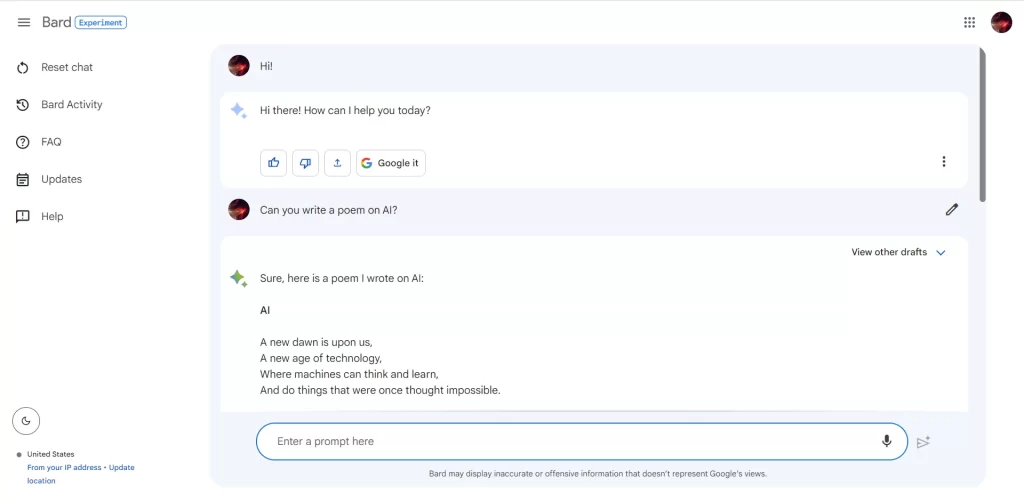
Bard makes it easier for its user to authenticate the information and Google it to see its sources. What’s more?
Users can copy Bard’s response right from the chat. With every response, you see a call to action button which gives you the liberty to export the response to Google Docs or Gmail.
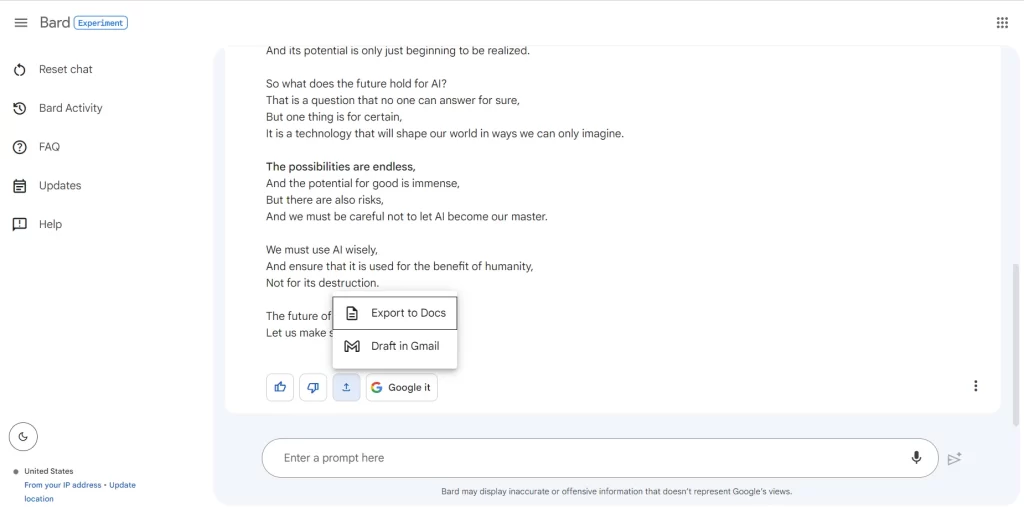
The main downside of Bard’s usability is that it does not save your chat history. Each time you refresh, all the previous data will be lost.
ChatGPT on the other hand allows you to view and continue your previous chats right where you left off. It recently launched a new feature that lets you share your chats with others. This gave ChatGPT a more collaborative edge over its rival Bard.
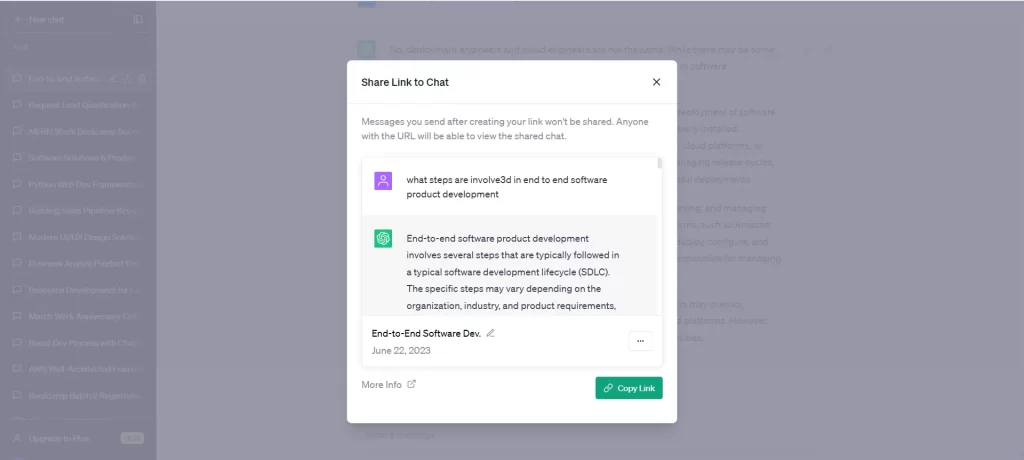
When someone opens the link you shared with them, your conversation will be transferred to their ChatGPT interface. This will make it easier for them to see all of the chat, prompts, and responses that have been exchanged. However, any messages that you send after creating the link will not be shared.
Winner: Bard gives a much better user experience.
Comparing Bard and ChatGPT’s Writing and Creative Capabilities
Both Bard and ChatGPT were trained on an extensive data range that helps generate human-like responses. Let’s test both by giving them prompts and comparing their responses.
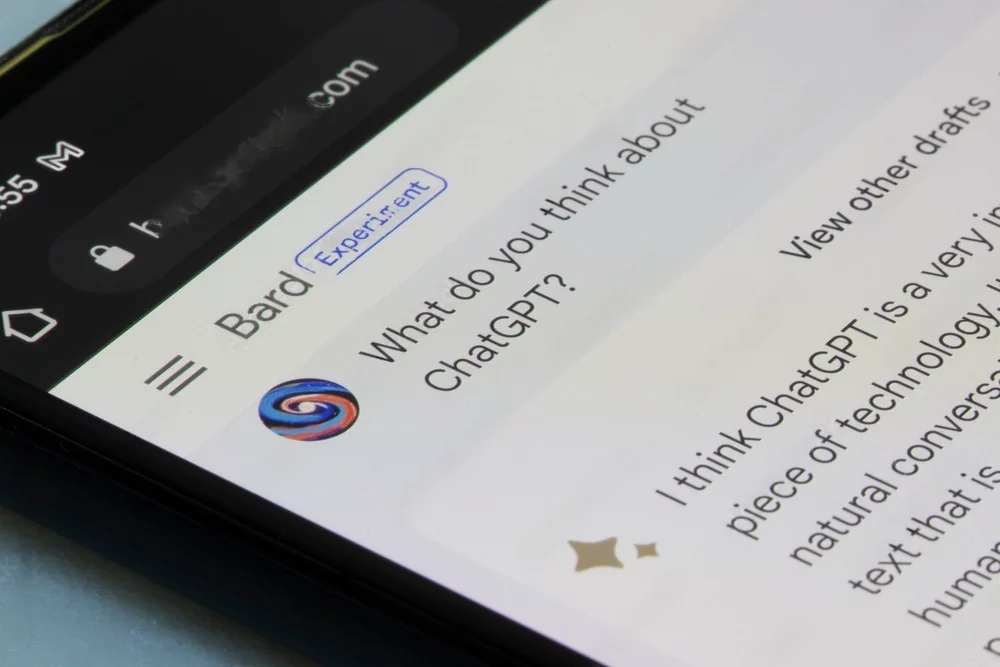
Logic Testing
Surprisingly, both Bard and ChatGPT could not answer the logical questions right. Lastly, I tried ChatGPT 4 with a dying hope. It took a solid 60 seconds to answer me, however, I finally got the right answer, and that too with an explanation.
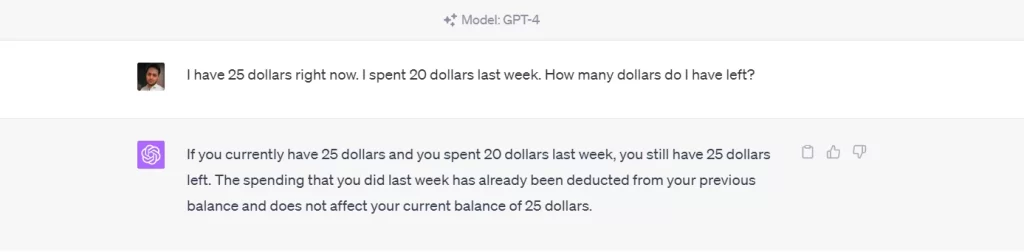
Winner: ChatGPT 4.0 clearly won the battle here.
Answering Past Events
Bard’s output is incredibly useful when you need concise answers on any subject including past events. It searches Google for the most relevant information and presents it to you in a summarized form. The advantage is that you can skip the need to navigate through multiple pages or compare various sources, as Bard takes care of that for you.
Here’s an example of Bard and ChatGPT’s answer to the same question:
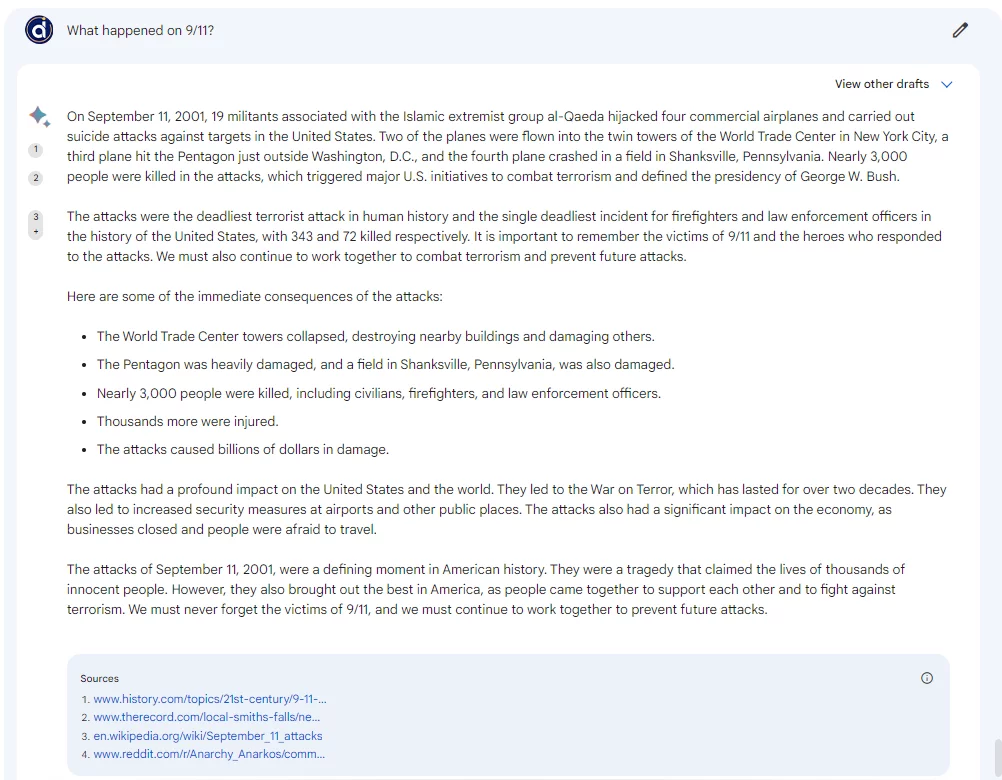
Where on the other hand, ChatGPT gave a very short answer, providing just the basic information.
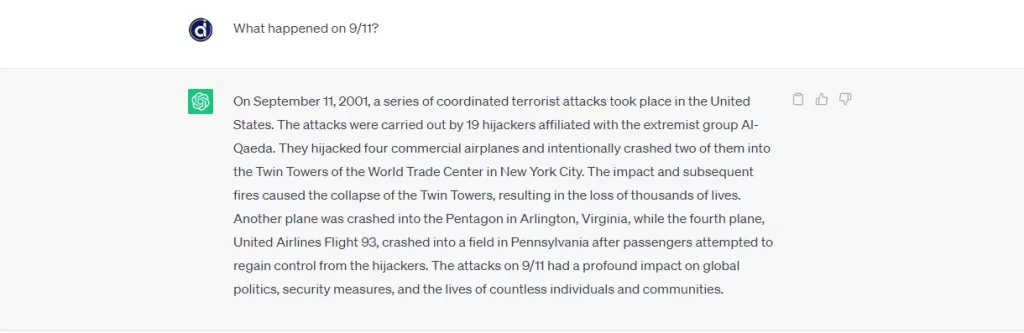
Winner: Bard performed better in this task.
Generating Content Ideas
Content marketers and social media managers! We need you to pay attention here. If we are telling you that ChatGPT is your best friend then we are here to prove it too.
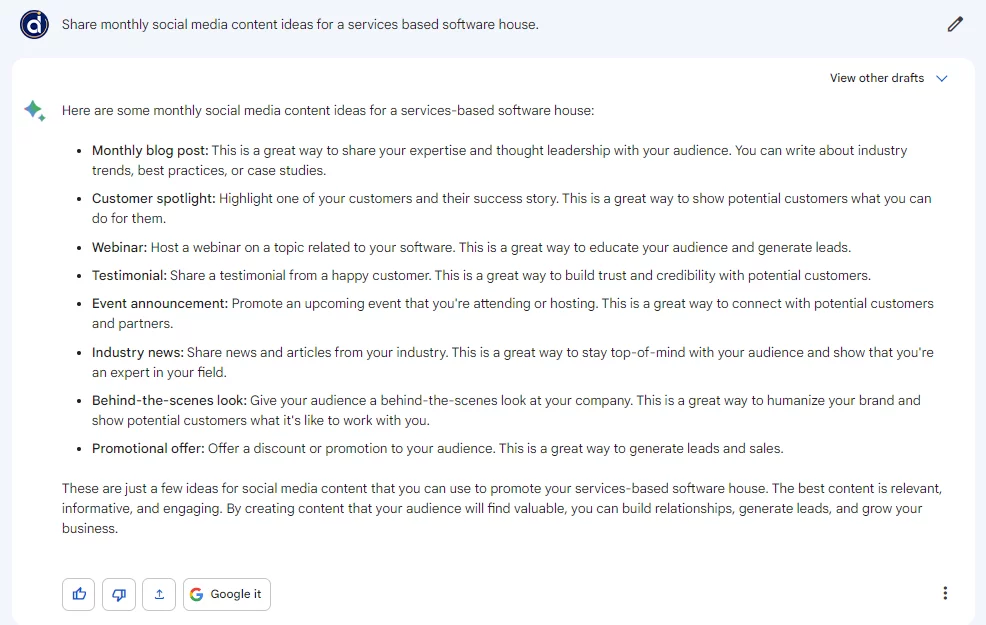
We asked ChatGPT to share content for social media and it gave some really great ideas along with some necessary details.
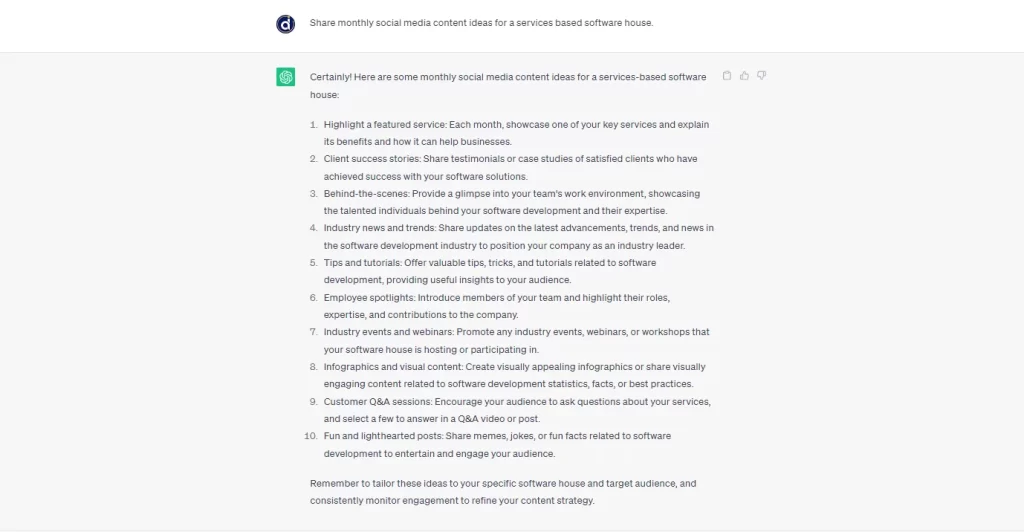
Bard wasn’t far behind in coming up with ideas, however, its response was limited.
Winner: We’ll give it to ChatGPT.
Getting The Latest Information, Bard or ChatGPT?
Bard will definitely perform better when it comes to latest information. The reason being, ChatGPT has access to information only until 2021.
Bard use Google Search to find the latest information for its responses while ChatGPT’s web browser is powered by Bing. Let’s compare their answers to find out.
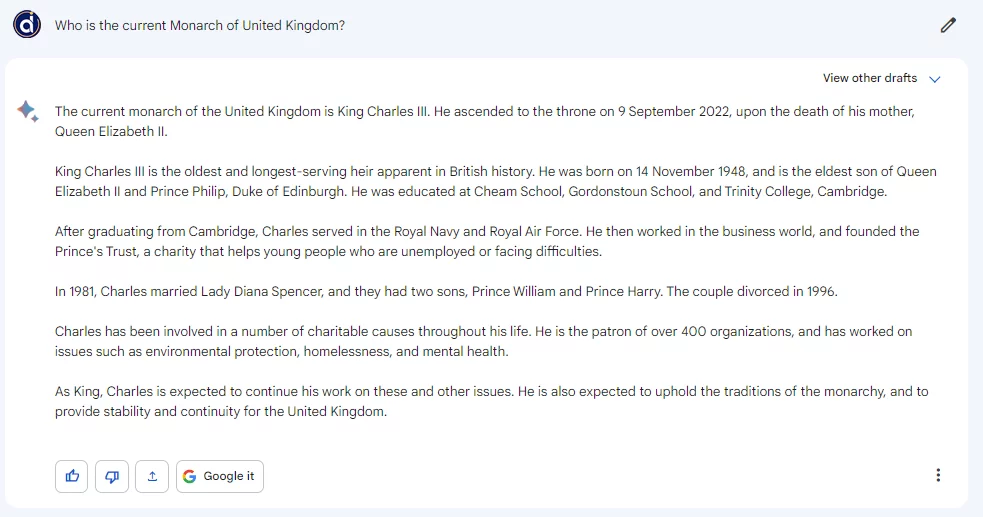
I asked Bard about the present monarch of United Kingdom and it gave me the following results.
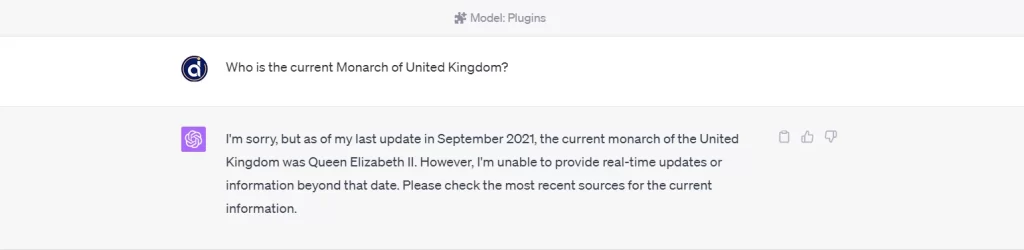
While on the other hand, ChatGPT 4 apologized while providing the incorrect answer.
Winner: Bard should be your go-to bot for the most recent event.
Summarizing Information From the Web
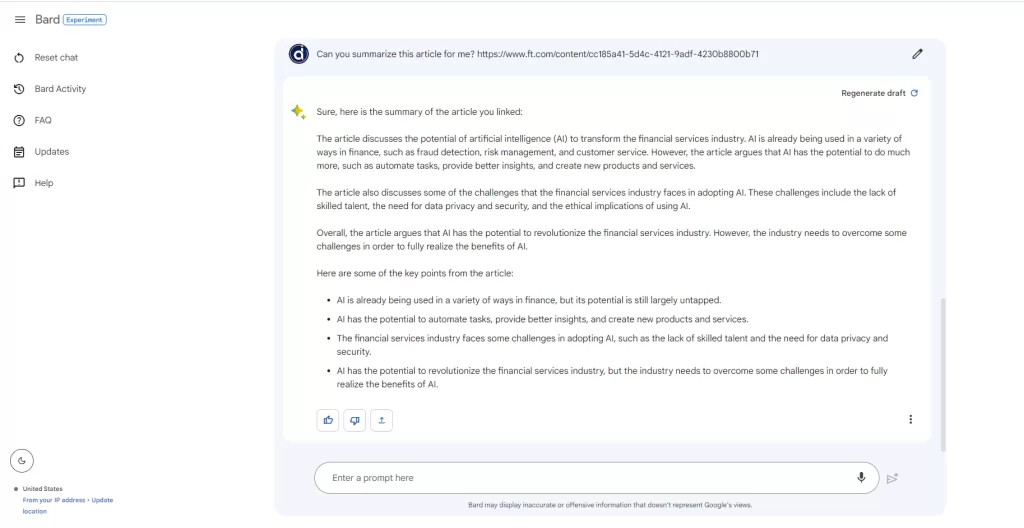
Now, we really wanted to test which among Bard and ChatGPT would perform better as a research tool. Bard, once again, performed this task with a clean sweep as ChatGPT cannot read data through weblinks.
But if you want to summarize a blog or article with ChatGPT, first you need to copy and paste the content in the prompt section. But, it does not take more than 3000 words at a single time. You’ll need ChatGPT’s paid version for that.
Moreover, ChatGPT premium does let you summarize articles from weblinks with the help of plugins.
Winner: The winner is Bard as it’s free and easy to access.
Generating Visual Responses
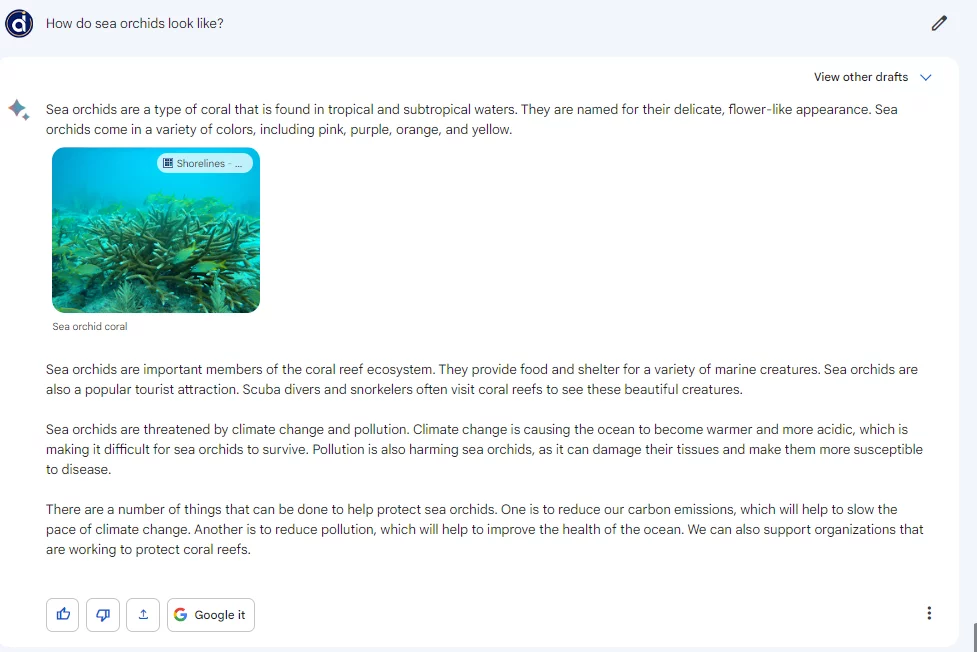
We have already previously mentioned that Bard searches Google to generate responses and provides you with the latest information. So, when asked to provide visuals responses, it does so very accurately.
I took the leverage and also asked Bard to share some of the best tourist spots in Budapest and this is what I got.
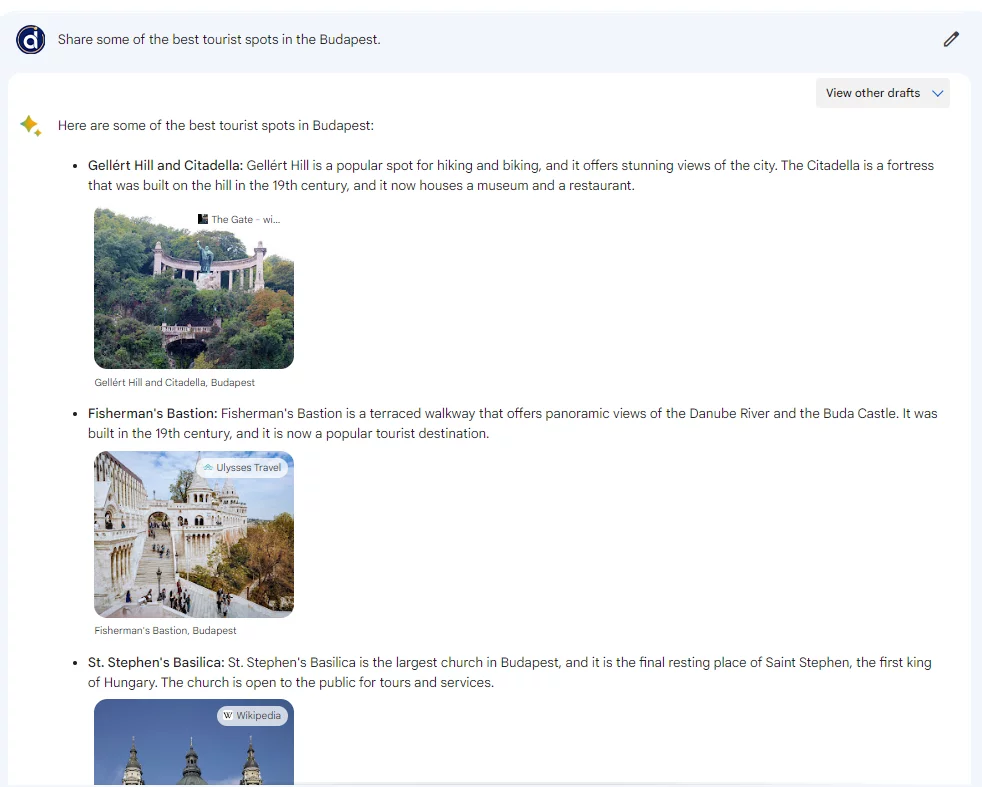
Pretty good, right?
However, ChtaGPT does not have any in-built feature or capability to provide visual responses yet.
Winner: Google Bard, without a doubt.
Plugins and Integrations
ChatGPT is hands down the best among the two when it comes to plugins and integrations. It has a huge built-in library that lets you install plugins for a number of different tasks.
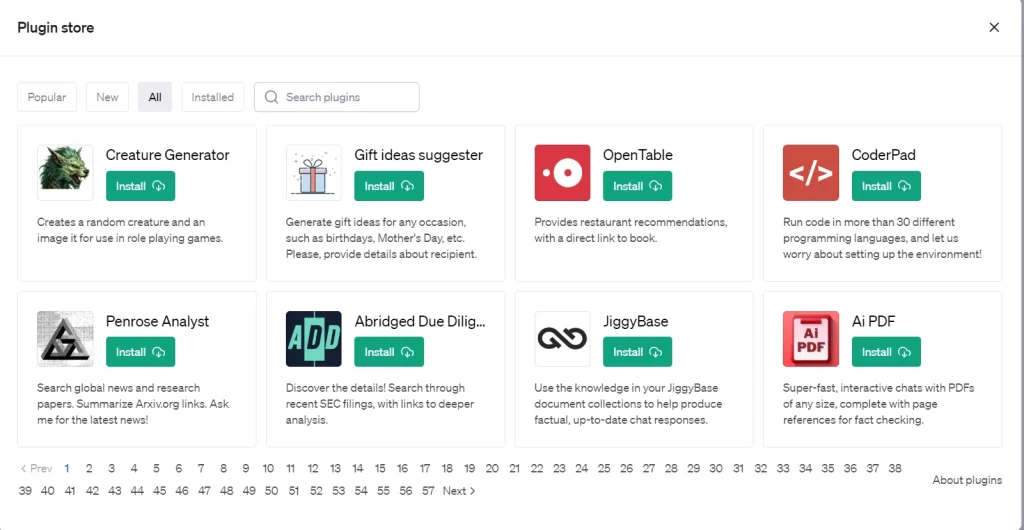
Here are some ChatGPT plugins that I found useful:
Zapier
With the ability to automate tasks across more than 5,000 app integrations, Zapier is a highly useful plugin for streamlining your workflow.
OpenTable
One of the best ChatGPT plugins we used was OpenTable for quick and seamless restaurant bookings on the go.
Kayak
One of the best plugins for travel planning you can use with ChatGPT is Kayak. It lets users easily book flights and hotels and get travel recommendations for all their trip-planning needs
Bard can be used for the same purpose too, but sadly, it comes up with forged prices. But there are no integrations available in Bard right now.
Bard vs ChatGPT: Final Verdict
Let’s sum up everything we mentioned above in a nutshell. Here are some pros and cons of Bard and ChatGPT.
ChatGPT Pros and Cons
Bard Pros and Cons
Final Verdict
We may not be able to finalize which AI tool is better among the two as it majorly depends upon the task you want to perform. Both Bard and ChatGPT have their strengths and weaknesses as their developers are updating them regularly.
If you’re looking to build a chatbot for your company’s website, contact Datics AI today. Learn more about our Data Science and Artificial intelligence services.


